Shemyakin-Ovchinnikov Institute of Bioorganic Chemistry, Russian Academy of Sciences, Moscow, Russia.
Dmitry Rogachev National Medical Research Center of Pediatric Hematology, Oncology, and Immunology, Moscow, Russia.
Dokl Biochem Biophys. 2023 Feb;508(1):17-20. doi: 10.1134/S1607672922700041. Epub 2023 Jan 18.
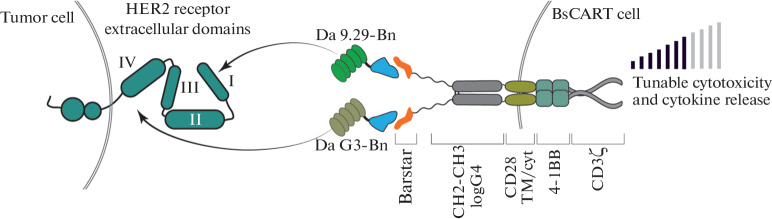
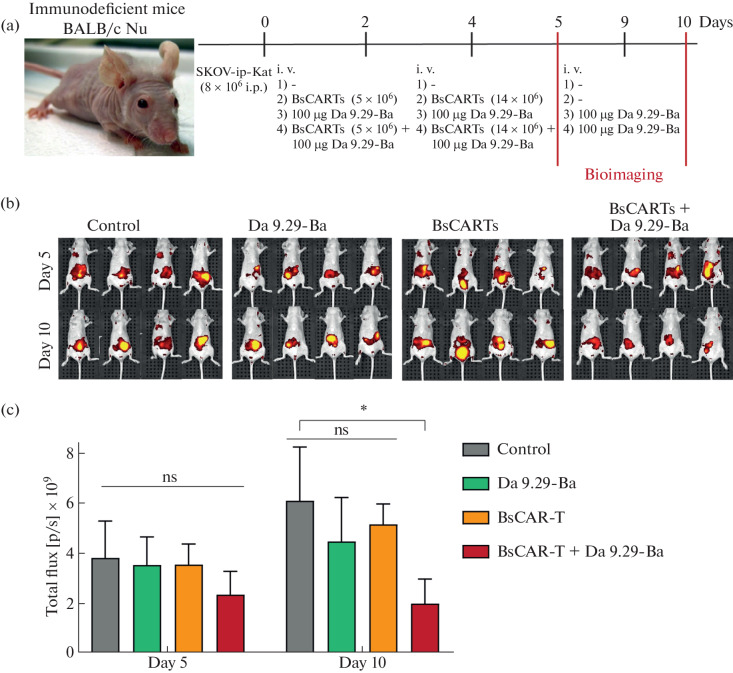
The development of CAR-T specific therapy made a revolution in modern oncology. Despite the pronounced therapeutic effects, this novel approach displayed several crucial limitations caused by the complications in pharmacokinetics and pharmacodynamics controls. The presence of the several severe medical complications of CAR-T therapy initiated a set of attempts aimed to regulate their activity in vivo. We propose to apply the barnase-barstar system to control the cytotoxic antitumor activity of CAR-T cells. To menage the regulation targeting effect of the system we propose to use barstar-modified CAR-T cells together with barnase-based molecules. Barnase was fused with designed ankyrin repeat proteins (DARPins) specific to tumor antigens HER2 (human epidermal growth factor receptor 2) The application of the system demonstrates the pronounced regulatory effects of CAR-T targeting.
嵌合抗原受体 T 细胞(CAR-T)特异性疗法的发展在现代肿瘤学中引发了一场革命。尽管这种新方法具有显著的治疗效果,但由于药代动力学和药效学控制方面的复杂性,它也显示出了几个关键的局限性。CAR-T 治疗存在多种严重的医疗并发症,这促使人们进行了一系列尝试,旨在调节其在体内的活性。我们建议应用 barnase-barstar 系统来控制 CAR-T 细胞的细胞毒性抗肿瘤活性。为了实现系统的靶向调节效果,我们建议使用 barnase 修饰的 CAR-T 细胞与基于 barnase 的分子一起使用。Barnase 与针对肿瘤抗原 HER2(人表皮生长因子受体 2)的设计锚蛋白重复蛋白(DARPins)融合。该系统的应用证明了 CAR-T 靶向的明显调节作用。