Zainuddin Ima M, Lecart Brieuc, Sudarmonowati Enny, Vanderschuren Hervé
Department of Biology, Plant Biotechnology, Eidgenössische Technische Hochschule (ETH) Zurich, Universitätstrasse 2, 8092, Zurich, Switzerland.
Department of Biosystems, KU Leuven, Willem de Croylaan 42, Box 2455, 3001, Louvain, Belgium.
Plant Methods. 2023 Jan 18;19(1):4. doi: 10.1186/s13007-022-00977-w.
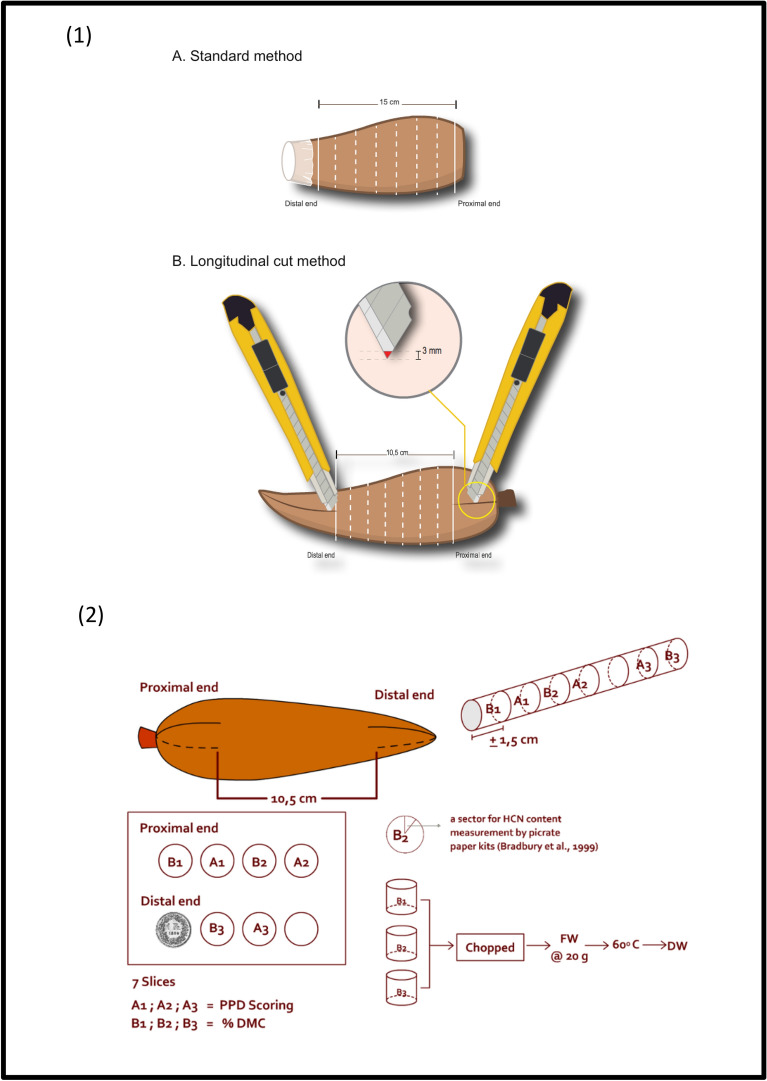
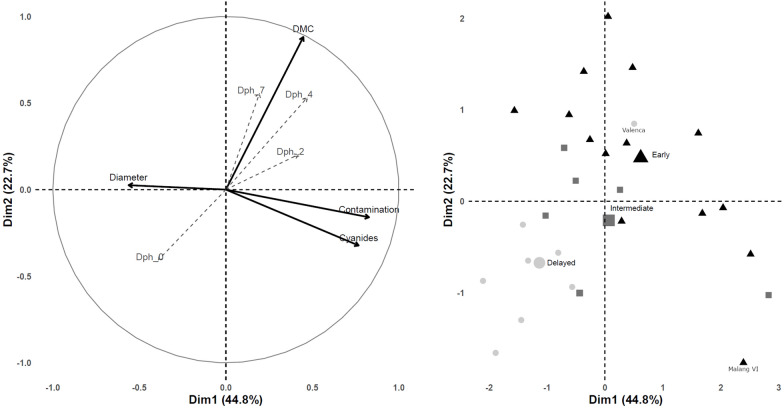
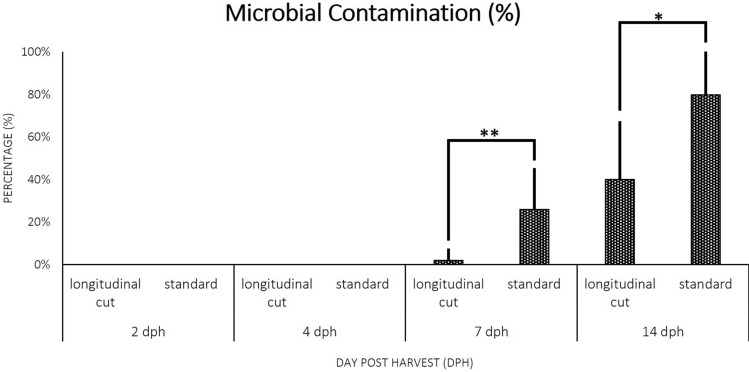
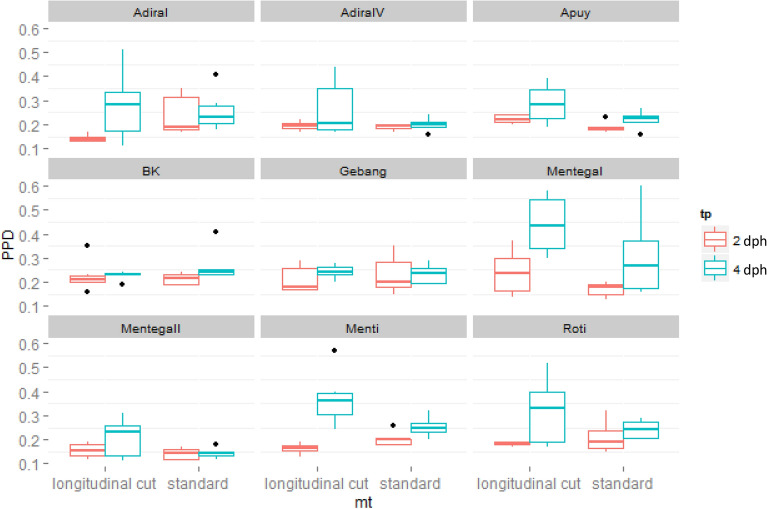
Cassava is the most cultivated and consumed root crop in the world. One of the major constraints to the cassava value chain is the short shelf life of cassava storage roots which is primarily due to the so-called post-harvest physiological deterioration (PPD). The identification of natural sources of PPD tolerance represents a key approach to mitigating PPD losses by generating farmer- and industry-preferred cassava cultivars with prolonged shelf life. In the present study, a PPD assessment method was developed to screen for PPD tolerance in the cassava germplasm. The proposed PPD assessment method displayed a reduced rate of microbial infection and allowed a rapid and homogenous development of typical PPD symptoms in the cassava storage roots. We successfully used the PPD assessment method in combination with an image-based PPD scoring method to identify and characterize PPD tolerance in 28 cassava cultivars from the Indonesian cassava germplasm. Our analysis showed a significant and positive correlation between PPD score and dry matter content (r = 0.589-0.664, p-value < 0.001). Analysis of additional root parameters showed a significant and positive correlation between PPD scores at 2 days post-harvest (dph) and root length (r = 0.388, p-value < 0.05). Our analysis identified at least 4 cultivars displaying a significantly delayed onset of PPD symptoms as compared to the other selected cultivars. The availability of cassava cultivars contrasting for tolerance to PPD will be particularly instrumental to understanding the molecular mechanisms associated with delayed PPD in cassava roots.
木薯是世界上种植和消费最多的块根作物。木薯价值链的主要制约因素之一是木薯贮藏根的货架期短,这主要是由于所谓的采后生理劣变(PPD)。鉴定PPD耐受性的天然来源是通过培育具有延长货架期的、受农民和产业青睐的木薯品种来减轻PPD损失的关键途径。在本研究中,开发了一种PPD评估方法,用于筛选木薯种质中的PPD耐受性。所提出的PPD评估方法降低了微生物感染率,并使木薯贮藏根中典型PPD症状能够快速且均匀地发展。我们成功地将PPD评估方法与基于图像的PPD评分方法结合使用,以鉴定和表征来自印度尼西亚木薯种质的28个木薯品种的PPD耐受性。我们的分析表明,PPD评分与干物质含量之间存在显著正相关(r = 0.589 - 0.664,p值 < 0.001)。对其他根参数的分析表明,收获后2天(dph)的PPD评分与根长之间存在显著正相关(r = 0.388,p值 < 0.05)。我们的分析确定了至少4个品种,与其他选定品种相比,其PPD症状的出现明显延迟。具有不同PPD耐受性的木薯品种的可得性对于理解木薯根中与PPD延迟相关的分子机制将特别有帮助。