Chang Ching-Fang, Gunawan Amanda L, Liparulo Irene, Zushin Peter-James H, Bertholet Ambre M, Kirichok Yuriy, Stahl Andreas
Department of Nutritional Sciences and Toxicology, University of California, Berkeley, CA 94720, USA.
Department of Physiology, University of California, San Francisco, San Francisco, CA 94158, USA.
Antioxidants (Basel). 2022 Dec 22;12(1):14. doi: 10.3390/antiox12010014.
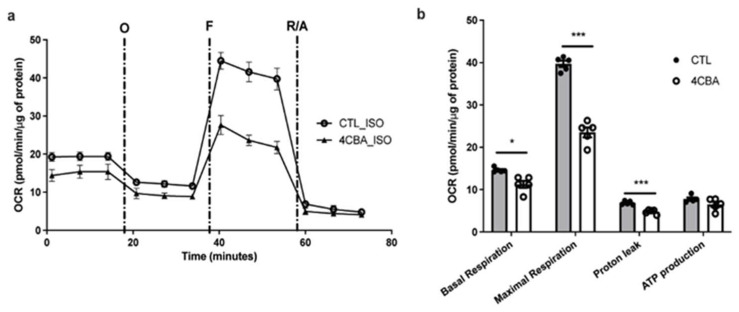
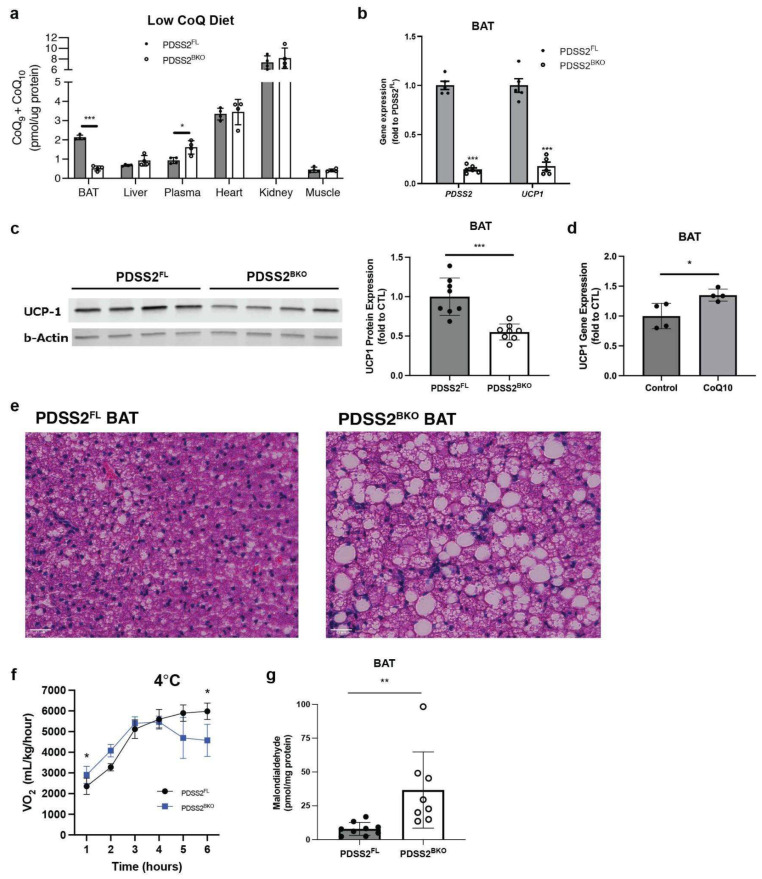
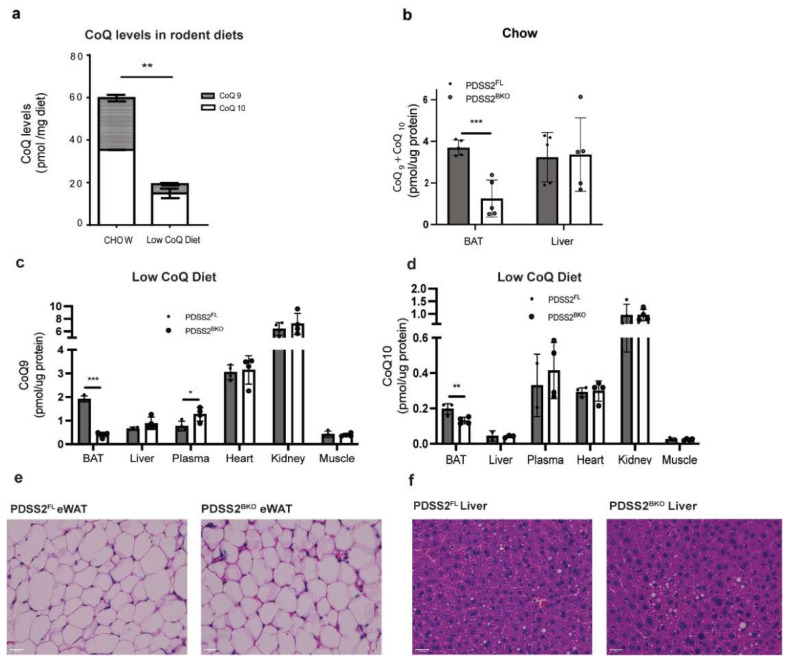
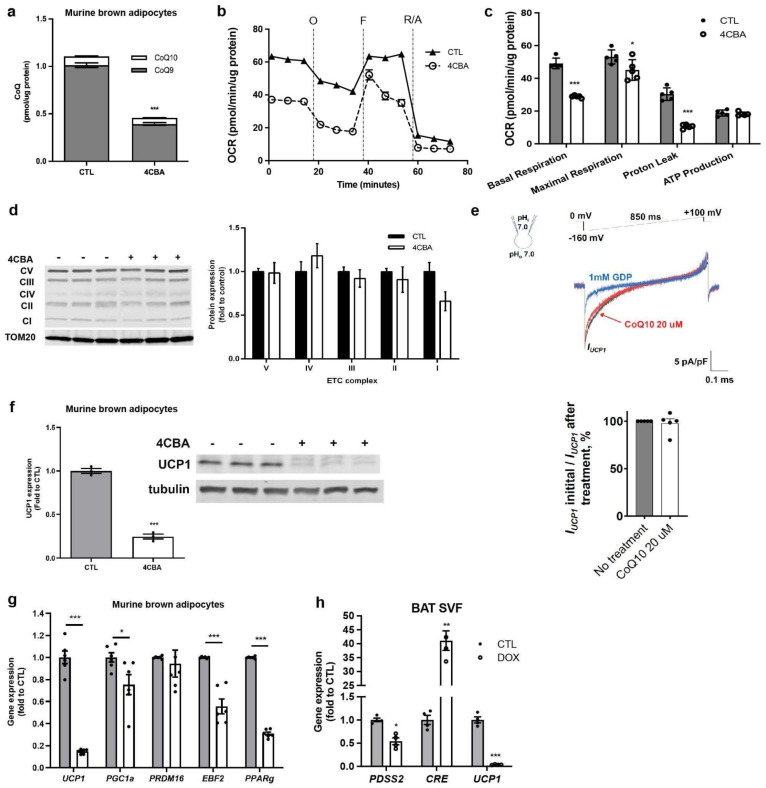
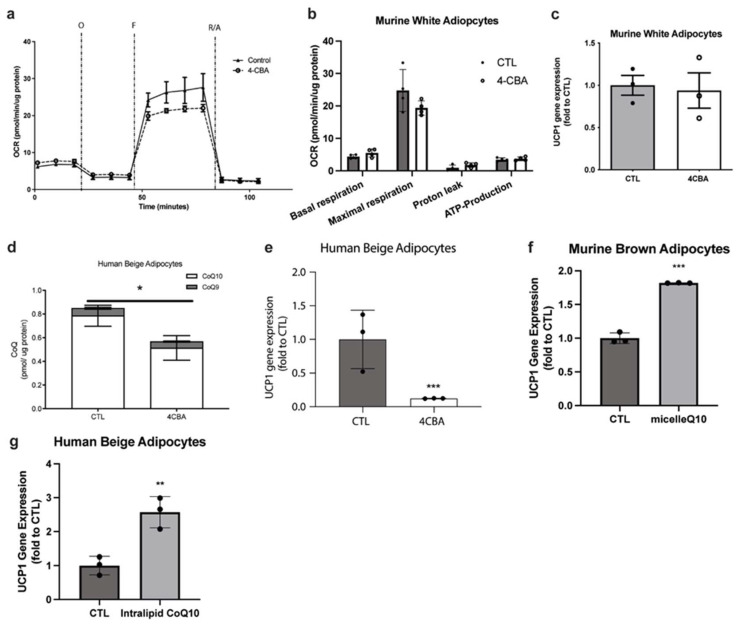
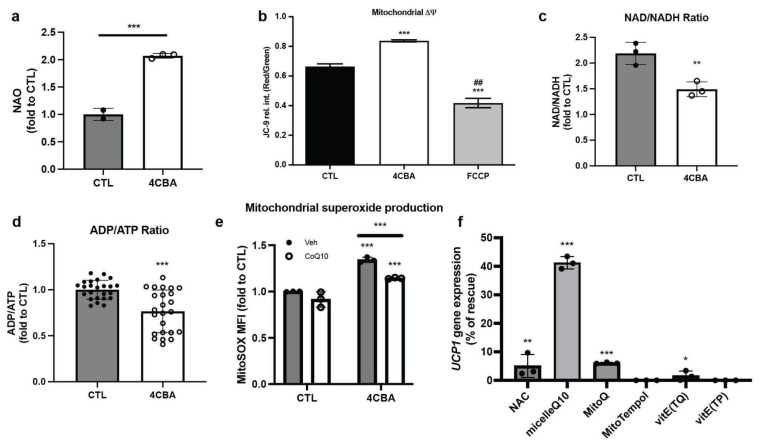
Coenzyme Q (CoQ, aka ubiquinone) is a key component of the mitochondrial electron transport chain (ETC) and membrane-incorporated antioxidant. CoQ10 deficiencies encompass a heterogeneous spectrum of clinical phenotypes and can be caused by hereditary mutations in the biosynthesis pathway or result from pharmacological interventions such as HMG-CoA Reductase inhibitors, and statins, which are widely used to treat hypercholesterolemia and prevent cardiovascular disease. How CoQ deficiency affects individual tissues and cell types, particularly mitochondrial-rich ones such as brown adipose tissue (BAT), has remained poorly understood. Here we show that pharmacological and genetic models of BAT CoQ deficiency show altered respiration that can only in part be explained by classical roles of CoQ in the respiration chain. Instead, we found that CoQ strongly impacts brown and beige adipocyte respiration via the regulation of uncoupling protein 1 (UCP1) expression. CoQ deficiency in BAT robustly decreases UCP1 protein levels and uncoupled respiration unexpectedly, resulting in increased inner mitochondrial membrane potential and decreased ADP/ATP ratios. Suppressed UCP1 expression was also observed in a BAT-specific in vivo model of CoQ deficiency and resulted in enhanced cold sensitivity. These findings demonstrate an as yet unappreciated role of CoQ in the transcriptional regulation of key thermogenic genes and functions.
辅酶Q(CoQ,又名泛醌)是线粒体电子传递链(ETC)的关键组成部分以及膜结合抗氧化剂。辅酶Q10缺乏症涵盖了一系列异质性临床表型,可由生物合成途径中的遗传突变引起,或由药物干预导致,如广泛用于治疗高胆固醇血症和预防心血管疾病的HMG-CoA还原酶抑制剂及他汀类药物。辅酶Q缺乏如何影响个体组织和细胞类型,尤其是富含线粒体的组织,如棕色脂肪组织(BAT),目前仍知之甚少。在此,我们表明棕色脂肪组织辅酶Q缺乏的药理学和遗传学模型显示呼吸作用改变,而这只能部分地由辅酶Q在呼吸链中的经典作用来解释。相反,我们发现辅酶Q通过调节解偶联蛋白1(UCP1)的表达,对棕色和米色脂肪细胞的呼吸作用有强烈影响。棕色脂肪组织中的辅酶Q缺乏会显著降低UCP1蛋白水平,并意外地减少解偶联呼吸作用,导致线粒体内膜电位升高和ADP/ATP比率降低。在辅酶Q缺乏的棕色脂肪组织特异性体内模型中也观察到UCP1表达受到抑制,并导致冷敏感性增强。这些发现证明了辅酶Q在关键产热基因和功能的转录调控中尚未被认识到的作用。