Chhouri Houssein, Alexandre David, Grumolato Luca
Univ Rouen Normandie, Inserm, NorDiC UMR 1239, 76000 Rouen, France.
Cancers (Basel). 2023 Jan 13;15(2):504. doi: 10.3390/cancers15020504.
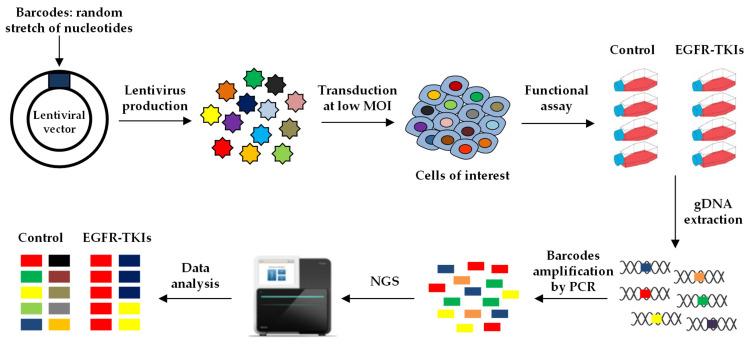
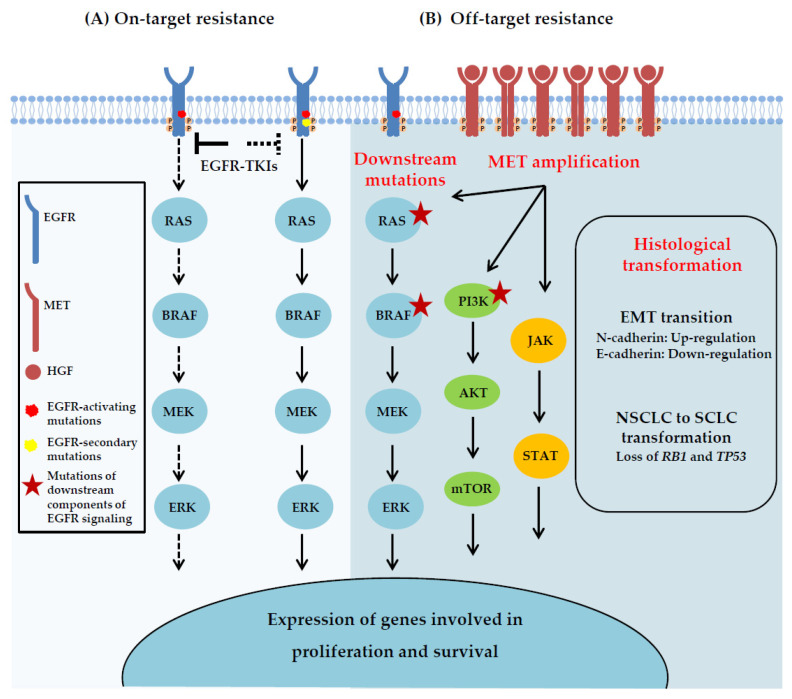
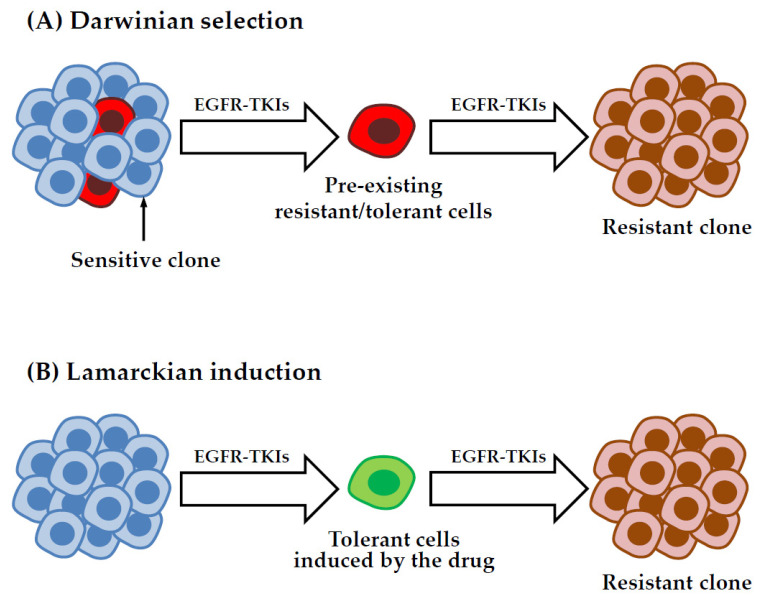
Non-small cell lung cancers (NSCLC) harboring activating mutations of the epidermal growth factor receptor (EGFR) are treated with specific tyrosine kinase inhibitors (EGFR-TKIs) of this receptor, resulting in clinically responses that can generally last several months. Unfortunately, EGFR-targeted therapy also favors the emergence of drug tolerant or resistant cells, ultimately resulting in tumor relapse. Recently, cellular barcoding strategies have arisen as a powerful tool to investigate the clonal evolution of these subpopulations in response to anti-cancer drugs. In this review, we provide an overview of the currently available treatment options for NSCLC, focusing on EGFR targeted therapy, and discuss the common mechanisms of resistance to EGFR-TKIs. We also review the characteristics of drug-tolerant persister (DTP) cells and the mechanistic basis of drug tolerance in EGFR-mutant NSCLC. Lastly, we address how cellular barcoding can be applied to investigate the response and the behavior of DTP cells upon EGFR-TKI treatment.
携带表皮生长因子受体(EGFR)激活突变的非小细胞肺癌(NSCLC)患者接受该受体的特异性酪氨酸激酶抑制剂(EGFR-TKIs)治疗,会产生通常可持续数月的临床反应。不幸的是,EGFR靶向治疗也有利于耐药或抗药细胞的出现,最终导致肿瘤复发。最近,细胞条形码策略已成为一种强大的工具,用于研究这些亚群在抗癌药物作用下的克隆进化。在这篇综述中,我们概述了目前NSCLC可用的治疗方案,重点是EGFR靶向治疗,并讨论了对EGFR-TKIs耐药的常见机制。我们还综述了耐药持久性(DTP)细胞的特征以及EGFR突变型NSCLC中耐药的机制基础。最后,我们阐述了细胞条形码如何应用于研究DTP细胞在EGFR-TKI治疗后的反应和行为。