Stampanoni Bassi Mario, Buttari Fabio, Gilio Luana, Iezzi Ennio, Galifi Giovanni, Carbone Fortunata, Micillo Teresa, Dolcetti Ettore, Azzolini Federica, Bruno Antonio, Borrelli Angela, Mandolesi Georgia, Rovella Valentina, Storto Marianna, Finardi Annamaria, Furlan Roberto, Centonze Diego, Matarese Giuseppe
IRCCS Neuromed, 86077 Pozzilli, Italy.
Neuroimmunology Unit, IRCCS Fondazione Santa Lucia, 00179 Rome, Italy.
Biomedicines. 2023 Jan 11;11(1):178. doi: 10.3390/biomedicines11010178.
Osteopontin, an extracellular matrix protein involved in bone remodeling, tissue repair and inflammation, has previously been associated with increased inflammation and neurodegeneration in multiple sclerosis (MS), promoting a worse disease course. Osteopontin is also likely involved in acute MS relapses.
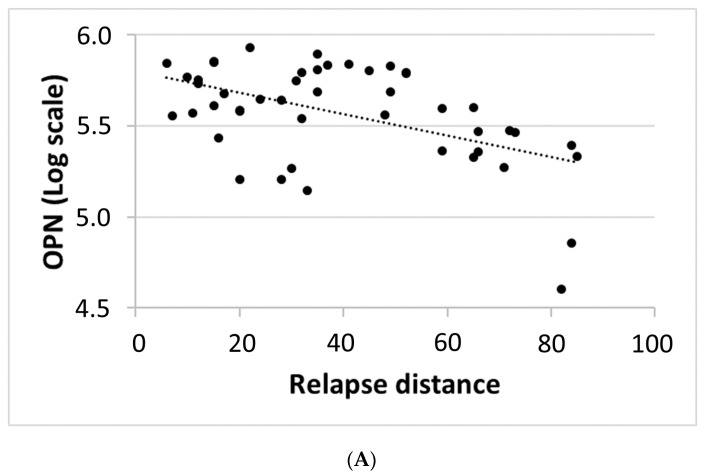
In 47 patients with relapsing-remitting MS, we explored the correlation between the time elapsed between the last clinical relapse and lumbar puncture, and the cerebrospinal fluid (CSF) levels of osteopontin and a group of inflammatory cytokines and adipokines such as resistin, plasminogen activator inhibitor-1, osteoprotegerin, interleukin (IL)-1β, IL-2, IL-6 and IL-1 receptor antagonist (IL-1ra). We also analyzed the correlations between CSF levels of osteopontin and the other CSF molecules considered.
Osteopontin CSF concentrations were higher in patients with a shorter time interval between the last clinical relapse and CSF withdrawal. In addition, CSF levels of osteopontin were positively correlated with the proinflammatory cytokines IL-2 and IL-6 and negatively correlated with the anti-inflammatory molecule IL-1ra.
Our results further suggest the role of osteopontin in acute MS relapses showing that, in proximity to relapses, osteopontin expression in CSF may be increased along with other proinflammatory mediators and correlated with decreased concentrations of anti-inflammatory molecules.
骨桥蛋白是一种参与骨重塑、组织修复和炎症反应的细胞外基质蛋白,此前已被证实与多发性硬化症(MS)中炎症增加和神经退行性变有关,会促使病情恶化。骨桥蛋白也可能参与MS急性复发。
在47例复发缓解型MS患者中,我们探究了末次临床复发与腰椎穿刺之间的时间间隔,以及骨桥蛋白、一组炎性细胞因子和脂肪因子(如抵抗素、纤溶酶原激活物抑制剂-1、骨保护素、白细胞介素(IL)-1β、IL-2、IL-6和IL-1受体拮抗剂(IL-1ra))的脑脊液(CSF)水平之间的相关性。我们还分析了骨桥蛋白的CSF水平与其他所考虑的CSF分子之间的相关性。
末次临床复发与CSF采集之间时间间隔较短的患者,其CSF中骨桥蛋白浓度较高。此外,骨桥蛋白的CSF水平与促炎细胞因子IL-2和IL-6呈正相关,与抗炎分子IL-1ra呈负相关。
我们的结果进一步表明骨桥蛋白在MS急性复发中的作用,显示在复发临近时,CSF中骨桥蛋白的表达可能与其他促炎介质一起增加,并与抗炎分子浓度降低相关。