Internal Medicine and Gastroenterology, Fondazione Policlinico Universitario Agostino Gemelli IRCCS, 00168 Rome, Italy.
Translational Medicine and Surgery Department, Università Cattolica del Sacro Cuore, 00168 Rome, Italy.
Int J Mol Sci. 2023 Jan 12;24(2):1470. doi: 10.3390/ijms24021470.
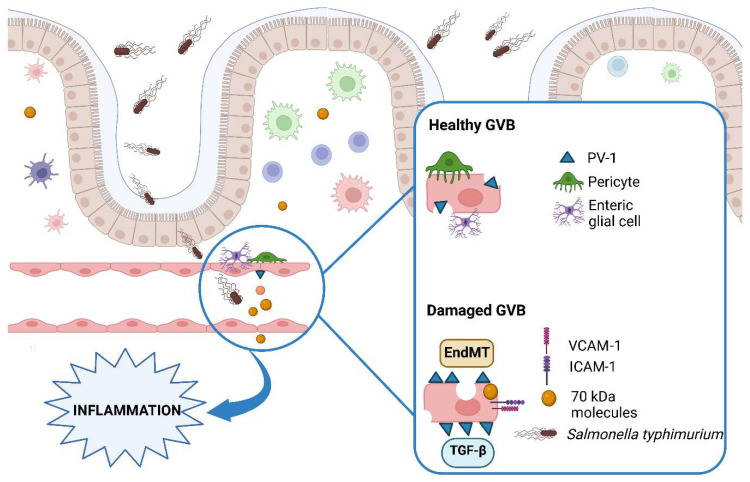
The intestinal barrier, with its multiple layers, is the first line of defense between the outside world and the intestine. Its disruption, resulting in increased intestinal permeability, is a recognized pathogenic factor of intestinal and extra-intestinal diseases. The identification of a gut-vascular barrier (GVB), consisting of a structured endothelium below the epithelial layer, has led to new evidence on the etiology and management of diseases of the gut-liver axis and the gut-brain axis, with recent implications in oncology as well. The gut-brain axis is involved in several neuroinflammatory processes. In particular, the recent description of a choroid plexus vascular barrier regulating brain permeability under conditions of gut inflammation identifies the endothelium as a key regulator in maintaining tissue homeostasis and health.
肠屏障由多层次组成,是人体内外环境之间的第一道防线。其破坏导致肠道通透性增加,是公认的肠道和肠道外疾病的致病因素。肠道-血管屏障(GVB)的发现,由上皮层下方的结构内皮组成,为肠道-肝脏轴和肠道-大脑轴疾病的病因和治疗提供了新的证据,最近在肿瘤学方面也有相关应用。肠道-大脑轴参与了多种神经炎症过程。特别是最近描述了脉络丛血管屏障在肠道炎症条件下调节大脑通透性,确定了内皮细胞是维持组织内稳态和健康的关键调节因子。