Kouzu Keita, Tsujimoto Hironori, Kishi Yoji, Ueno Hideki, Shinomiya Nariyoshi
Department of Surgery, National Defense Medical College, Tokorozawa 359-0042, Japan.
National Defense Medical College, Tokorozawa 359-0042, Japan.
Biomedicines. 2022 Feb 4;10(2):380. doi: 10.3390/biomedicines10020380.
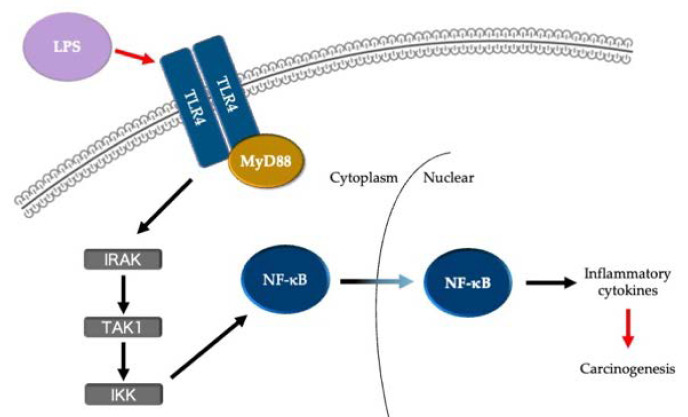
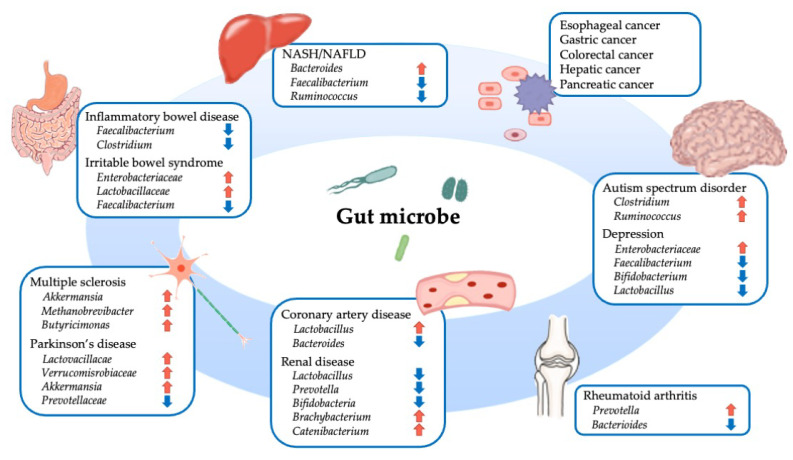
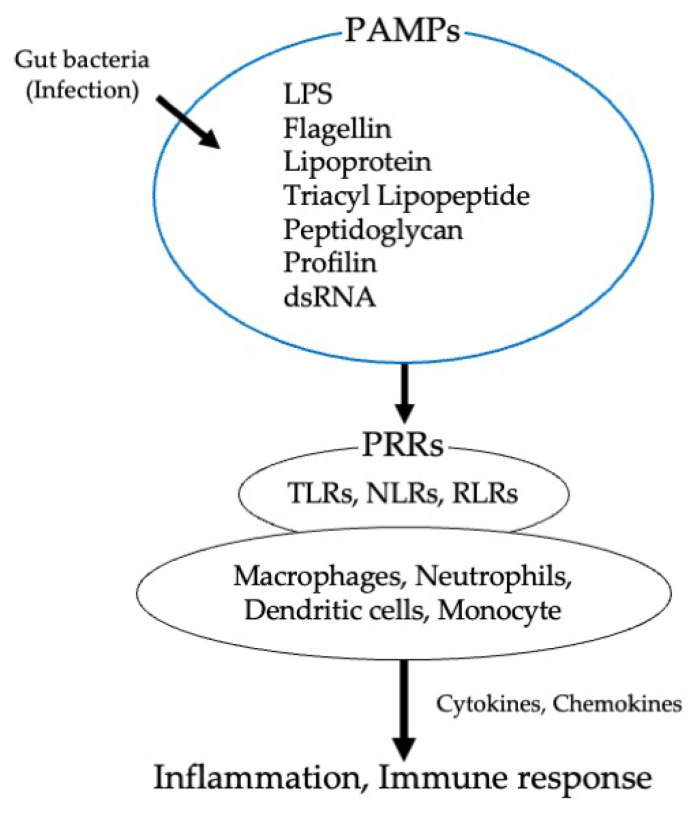
In recent years, there has been increasing evidence that gut microbiota is associated with the onset and exacerbation of various diseases, such as gastrointestinal cancer. For instance, it is well known that local inflammation of the intestinal tract in colorectal cancer that is caused by the increased number of , due to changes in the intestinal bacterial flora, is involved in carcinogenesis. In contrast, gut bacteria or their products, pathogen-associated molecular patterns, not only cause intestinal inflammation but also invade the bloodstream through dysbiosis and gut barrier dysfunction, thereby leading to systemic inflammation, namely bacterial translocation. The involvement of bacterial translocation in the carcinogenesis of gastrointestinal cancers and their prognosis is increasingly being recognized. The Toll-like receptor signaling pathways plays an important role in the carcinogenesis of such cancers. In addition, bacterial translocation influences the treatment of cancers such as surgery and chemotherapy. In this review, we outline the concept of bacterial translocation, summarize the current knowledge on the relationship between gut bacteria and gastrointestinal cancer, and provide future perspectives of this field.
近年来,越来越多的证据表明肠道微生物群与各种疾病的发生和加重有关,如胃肠道癌症。例如,众所周知,由于肠道细菌菌群的变化,结直肠癌中肠道局部炎症由 数量增加引起,参与致癌过程。相比之下,肠道细菌或其产物,即病原体相关分子模式,不仅会引起肠道炎症,还会通过生态失调和肠道屏障功能障碍侵入血液,从而导致全身炎症,即细菌移位。细菌移位在胃肠道癌症的致癌作用及其预后中的作用越来越受到认可。Toll样受体信号通路在这类癌症的致癌作用中起重要作用。此外,细菌移位会影响癌症的治疗,如手术和化疗。在这篇综述中,我们概述了细菌移位的概念,总结了目前关于肠道细菌与胃肠道癌症关系的知识,并提供了该领域的未来展望。