Ulewicz Robert, Czerwińska Karolina, Pacana Andrzej
Faculty of Management, Czestochowa University of Technology, Al. Armii Krajowej 19, 42-201 Częstochowa, Poland.
Faculty of Mechanical Engineering and Aeronautics, Rzeszow University of Technology, Al. Powstancow Warszawy 12, 35-959 Rzeszow, Poland.
Materials (Basel). 2023 Jan 11;16(2):723. doi: 10.3390/ma16020723.
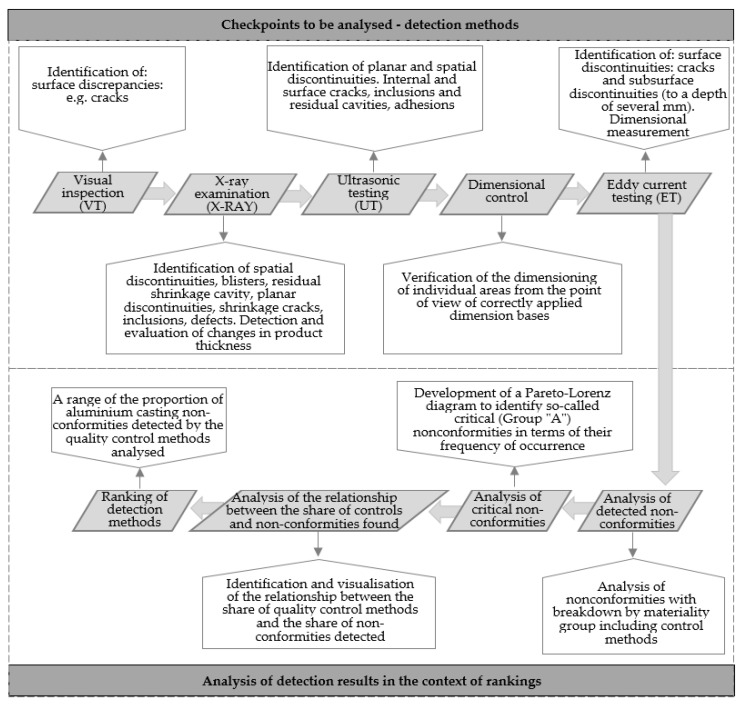
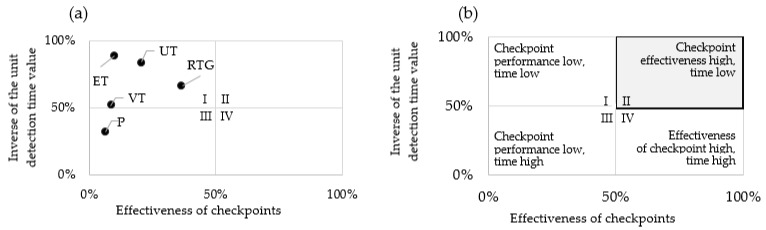
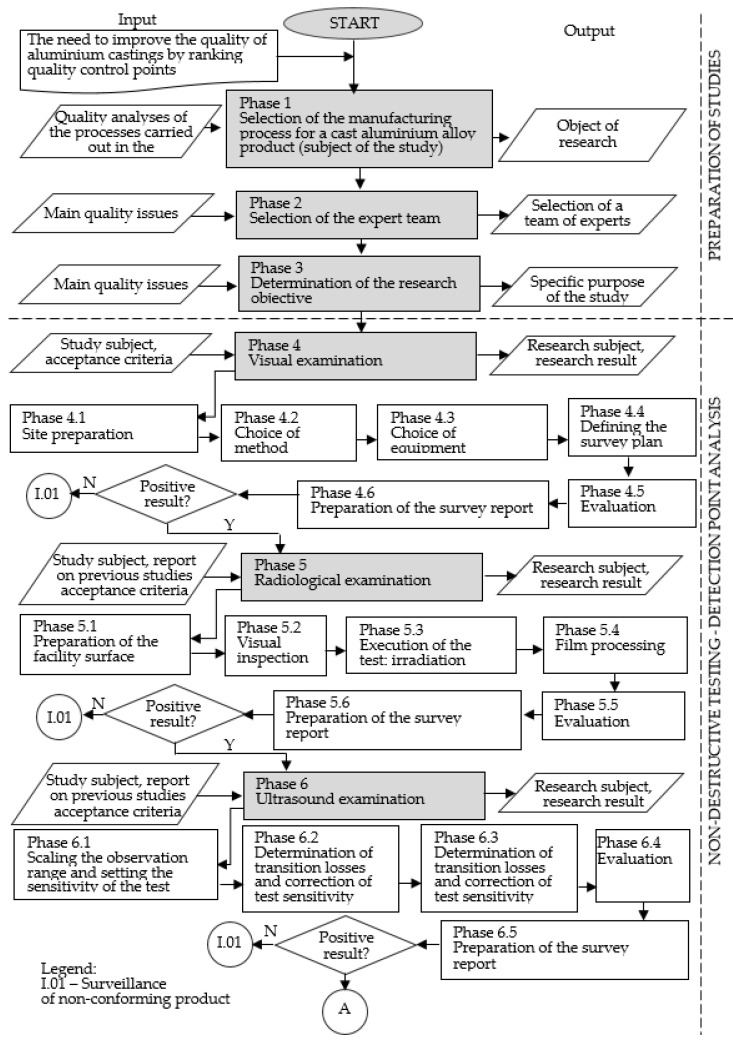
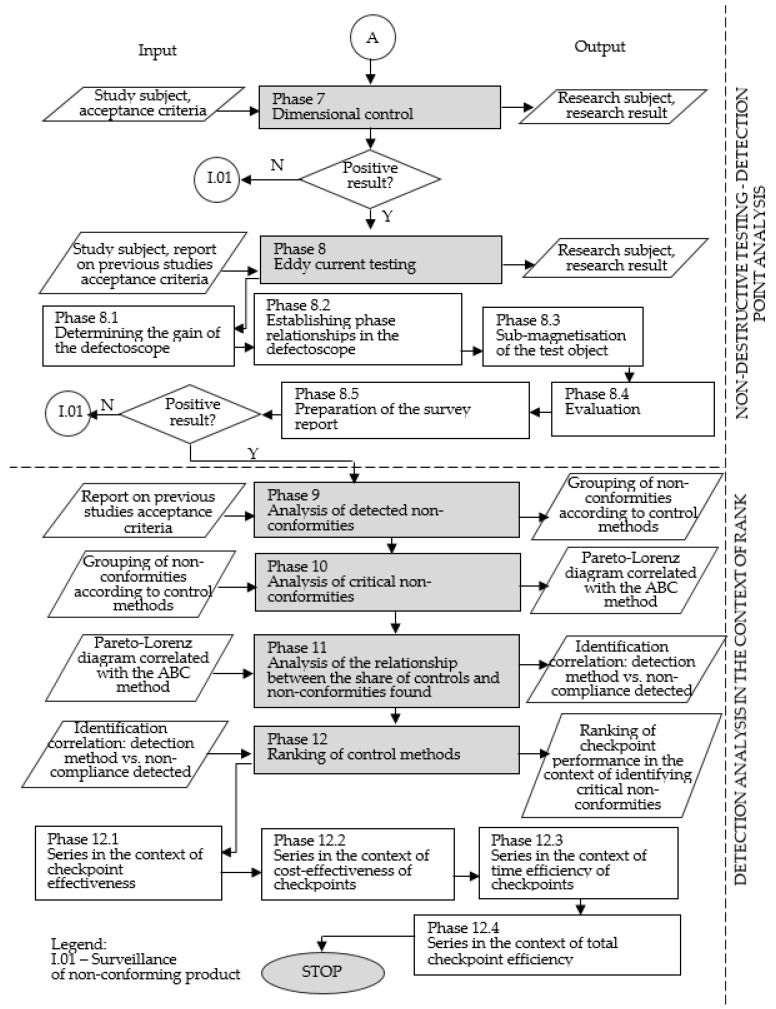
In the face of ongoing market changes, multifaceted quality analyses contribute to ensuring production continuity, increasing the quality of the products offered and maintaining a stable market position. The aim of the research was to create a unified rank model for detection methods in the identification of aluminium casting non-conformities, in line with the paradigms of the fourth industrial revolution. The originality of the model enables the creation of a rank for the effectiveness of total inspection points allowing for the optimisation of detection methods. Verification of the model was carried out against the production process of aluminium casting. The model included the integration of non-destructive testing (NDT) methods and the analysis of critical product non-conformities, along with the determination of the level of effectiveness and efficiency of inspection points. The resulting ranking of detection methods indicated the NDT method as the most effective, which was influenced by the significant detection of critical non-conformities and the automation of the process. The study observed little difference in the visual inspection and measurement efficiency parameters, which was due to the identifiability of non-conformities with a lower degree of significance and the low level of inspection cost. Further research will look at the implications of the model in other production processes.
面对不断变化的市场,多方面的质量分析有助于确保生产连续性、提高所提供产品的质量并维持稳定的市场地位。本研究的目的是根据第四次工业革命的范式,为铝铸件不合格品识别中的检测方法创建一个统一的排名模型。该模型的独创性在于能够为总检验点的有效性创建一个排名,从而实现检测方法的优化。针对铝铸件的生产过程对该模型进行了验证。该模型包括无损检测(NDT)方法的整合、关键产品不合格品的分析,以及检验点有效性和效率水平的确定。由此得出的检测方法排名表明,无损检测方法最为有效,这受到关键不合格品的大量检测以及过程自动化的影响。研究发现目视检查和测量效率参数差异不大,这是由于显著性较低的不合格品具有可识别性且检验成本较低。进一步的研究将探讨该模型在其他生产过程中的影响。