Tang Huajie, Guo Chenyue, Xu Qihao, Zhao Dongliang
School of Energy and Environment, Southeast University, Nanjing 210096, China.
Engineering Research Center of Building Equipment, Energy, and Environment, Ministry of Education, Nanjing 210096, China.
Micromachines (Basel). 2023 Jan 15;14(1):219. doi: 10.3390/mi14010219.
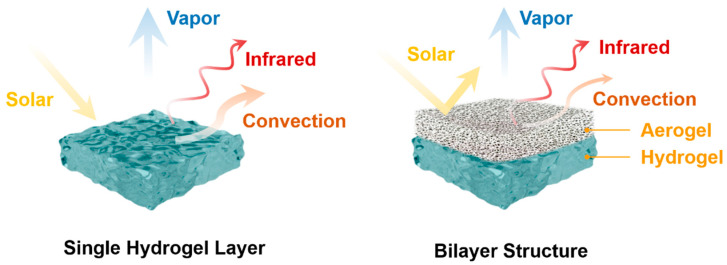
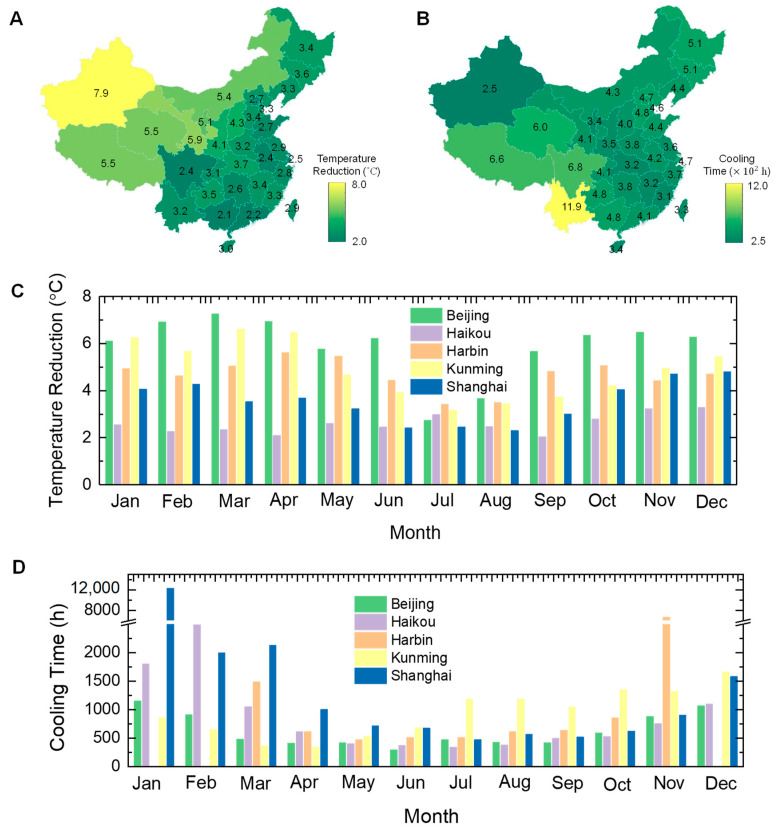
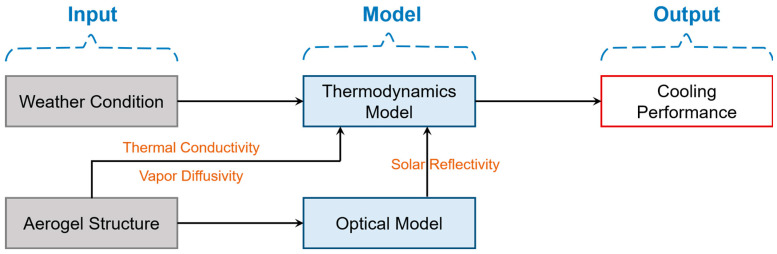
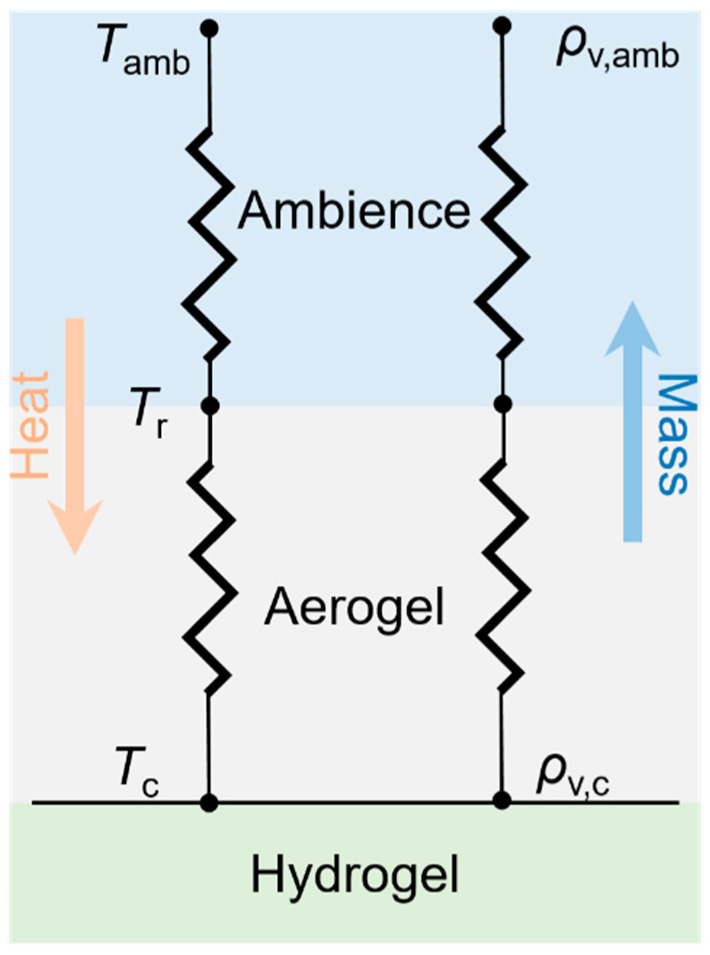
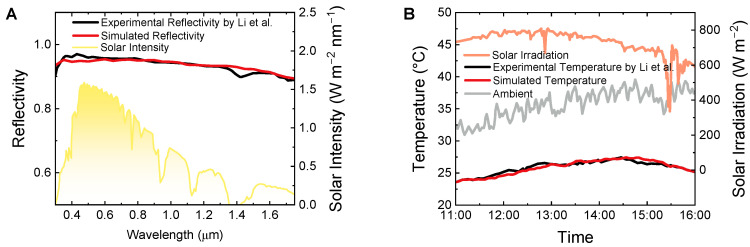
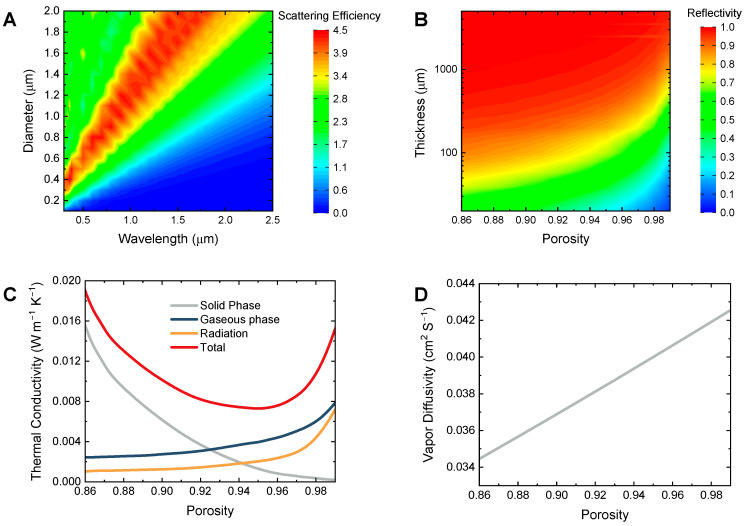
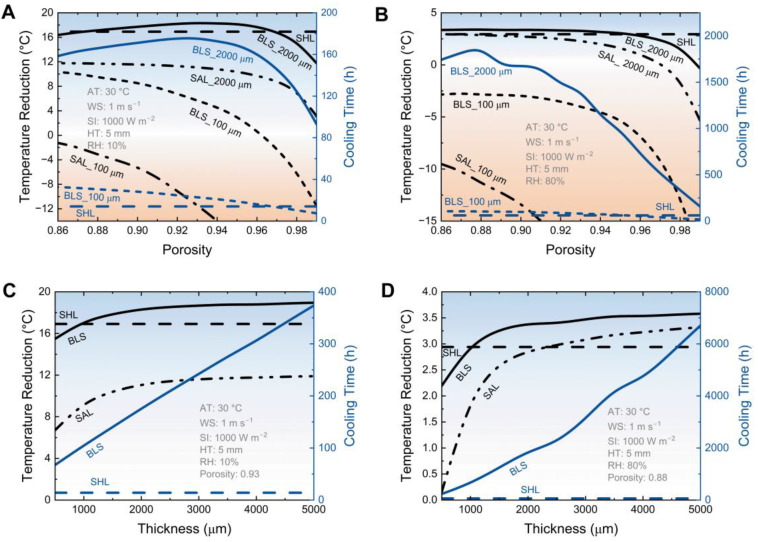
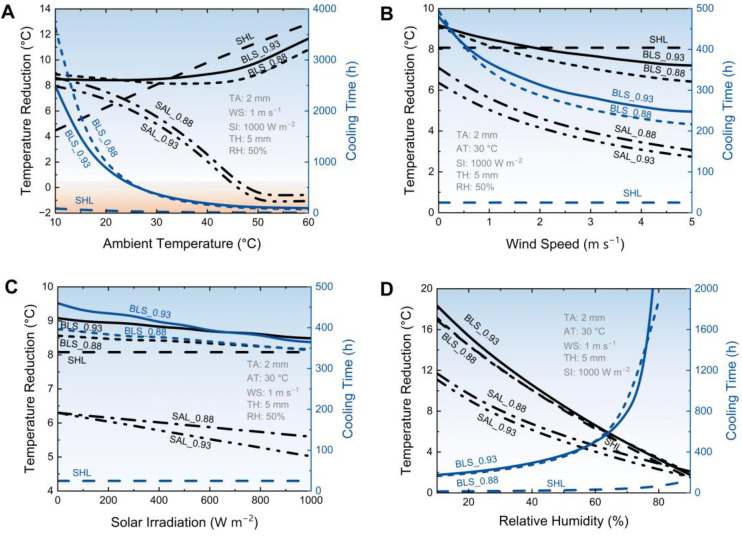
Hydrogel-based evaporative cooling with a low carbon footprint is regarded as a promising technology for thermal regulation. Yet, the efficiency of hydrogel regeneration at night generally mismatches with vapor evaporation during the day, resulting in a limited cooling time span, especially in arid regions. In this work, we propose an efficient approach to improve hydrogel cooling performance, especially the cooling time span, with a bilayer structure, which comprises a bottom hydrogel layer and an upper aerogel layer. The microporous aerogel layer can reduce the saturation vapor density at the hydrogel surface by employing daytime radiative cooling, together with increased convective heat transfer resistance by thermal insulation, thus boosting the duration of evaporative cooling. Specifically, the microstructure of porous aerogel for efficient radiative cooling and vapor transfer is synergistically optimized with a cooling performance model. Results reveal that the proposed structure with a 2-mm-thick SiO aerogel can reduce the temperature by 1.4 °C, meanwhile extending the evaporative cooling time span by 11 times compared to a single hydrogel layer.
基于水凝胶的低碳足迹蒸发冷却被视为一种很有前景的热调节技术。然而,水凝胶在夜间的再生效率通常与白天的蒸汽蒸发不匹配,导致冷却时间跨度有限,尤其是在干旱地区。在这项工作中,我们提出了一种有效的方法来提高水凝胶的冷却性能,特别是冷却时间跨度,采用双层结构,该结构由底部水凝胶层和上部气凝胶层组成。微孔气凝胶层可以通过白天的辐射冷却降低水凝胶表面的饱和蒸汽密度,同时通过隔热增加对流热阻,从而延长蒸发冷却的持续时间。具体而言,利用冷却性能模型对用于高效辐射冷却和蒸汽传输的多孔气凝胶的微观结构进行了协同优化。结果表明,所提出的具有2毫米厚SiO气凝胶的结构可以将温度降低1.4°C,同时与单一水凝胶层相比,蒸发冷却时间跨度延长了11倍。