• 文献检索
  • 文档翻译
  • 深度研究
  • 学术资讯
  • Suppr Zotero 插件Zotero 插件
  • 邀请有礼
  • 套餐&价格
  • 历史记录
应用&插件
Suppr Zotero 插件Zotero 插件浏览器插件Mac 客户端Windows 客户端微信小程序
定价
高级版会员购买积分包购买API积分包
服务
文献检索文档翻译深度研究API 文档MCP 服务
关于我们
关于 Suppr公司介绍联系我们用户协议隐私条款
关注我们

Suppr 超能文献

核心技术专利:CN118964589B侵权必究
粤ICP备2023148730 号-1Suppr @ 2026

文献检索

告别复杂PubMed语法,用中文像聊天一样搜索,搜遍4000万医学文献。AI智能推荐,让科研检索更轻松。

立即免费搜索

文件翻译

保留排版,准确专业,支持PDF/Word/PPT等文件格式,支持 12+语言互译。

免费翻译文档

深度研究

AI帮你快速写综述,25分钟生成高质量综述,智能提取关键信息,辅助科研写作。

立即免费体验

FPGA 实现雷达系统中的高效 CFAR 算法。

FPGA Implementation of Efficient CFAR Algorithm for Radar Systems.

机构信息

School of Electronics and Information Engineering, Korea Aerospace University, Goyang-si 10540, Republic of Korea.

Department of Smart Air Mobility, Korea Aerospace University, Goyang-si 10540, Republic of Korea.

出版信息

Sensors (Basel). 2023 Jan 13;23(2):954. doi: 10.3390/s23020954.

DOI:10.3390/s23020954
PMID:36679752
原文链接:https://pmc.ncbi.nlm.nih.gov/articles/PMC9861839/
Abstract

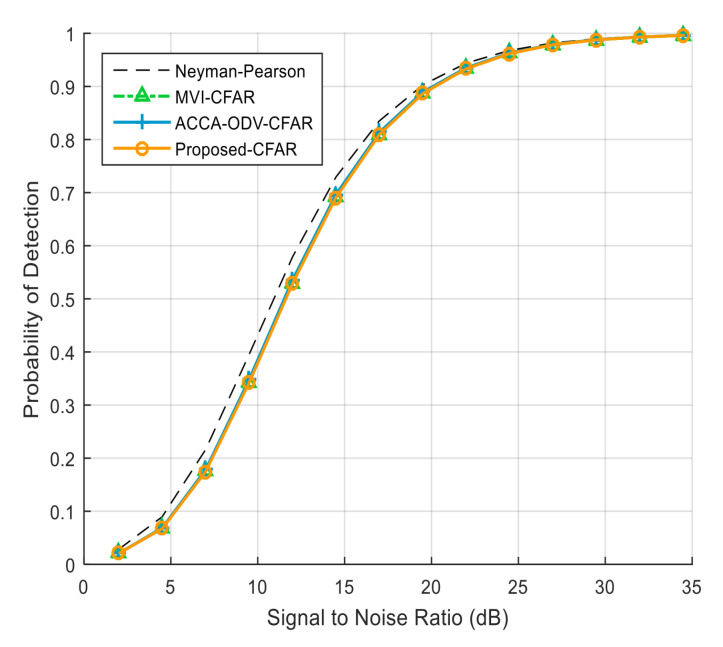
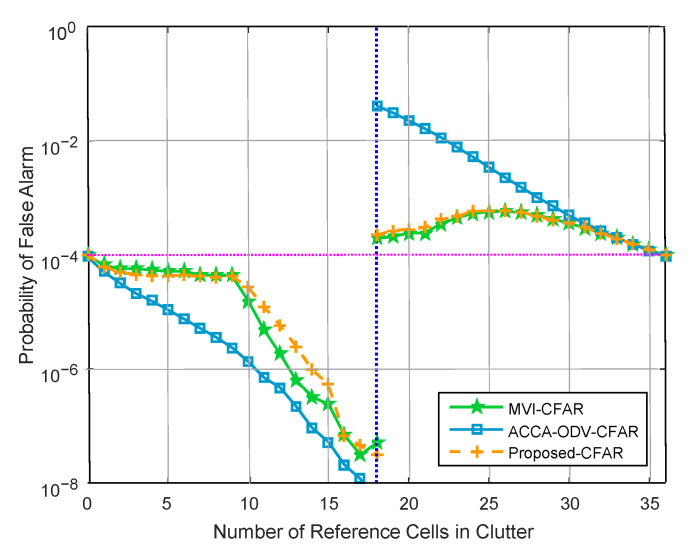
The constant false-alarm rate (CFAR) algorithm is essential for detecting targets during radar signal processing. It has been improved to accurately detect targets, especially in nonhomogeneous environments, such as multitarget or clutter edge environments. For example, there are sort-based and variable index-based algorithms. However, these algorithms require large amounts of computation, making them difficult to apply in radar applications that require real-time target detection. We propose a new CFAR algorithm that determines the environment of a received signal through a new decision criterion and applies the optimal CFAR algorithms such as the modified variable index (MVI) and automatic censored cell averaging-based ordered data variability (ACCA-ODV). The Monte Carlo simulation results of the proposed CFAR algorithm showed a high detection probability of 93.8% in homogeneous and nonhomogeneous environments based on an SNR of 25 dB. In addition, this paper presents the hardware design, field-programmable gate array (FPGA)-based implementation, and verification results for the practical application of the proposed algorithm. We reduced the hardware complexity by time-sharing sum and square operations and by replacing division operations with multiplication operations when calculating decision parameters. We also developed a low-complexity and high-speed sorter architecture that performs sorting for the partial data in leading and lagging windows. As a result, the implementation used 8260 LUTs and 3823 registers and took 0.6 μs to operate. Compared with the previously proposed FPGA implementation results, it is confirmed that the complexity and operation speed of the proposed CFAR processor are very suitable for real-time implementation.

摘要

恒虚警率(CFAR)算法在雷达信号处理中对目标检测至关重要。它已经得到了改进,可以更准确地检测目标,特别是在非均匀环境中,如多目标或杂波边缘环境。例如,有基于排序的和基于变量索引的算法。然而,这些算法需要大量的计算,因此很难应用于需要实时目标检测的雷达应用中。我们提出了一种新的 CFAR 算法,该算法通过新的决策准则来确定接收信号的环境,并应用最优的 CFAR 算法,如改进的变量索引(MVI)和基于自动屏蔽单元平均的有序数据变化(ACCA-ODV)。所提出的 CFAR 算法的蒙特卡罗模拟结果表明,在基于 SNR 为 25dB 的均匀和非均匀环境下,具有 93.8%的高检测概率。此外,本文提出了该算法的硬件设计、基于现场可编程门阵列(FPGA)的实现和实际应用的验证结果。我们通过分时求和和平方运算以及用乘法运算代替除法运算来减少硬件复杂度,在计算决策参数时。我们还开发了一种低复杂度和高速排序器架构,用于对前导和滞后窗口中的部分数据进行排序。因此,该实现使用了 8260 个 LUT 和 3823 个寄存器,操作时间为 0.6μs。与之前提出的 FPGA 实现结果相比,证实了所提出的 CFAR 处理器的复杂性和操作速度非常适合实时实现。

https://cdn.ncbi.nlm.nih.gov/pmc/blobs/036a/9861839/11303b1455c7/sensors-23-00954-g020.jpg
https://cdn.ncbi.nlm.nih.gov/pmc/blobs/036a/9861839/4ebca0771f0b/sensors-23-00954-g001.jpg
https://cdn.ncbi.nlm.nih.gov/pmc/blobs/036a/9861839/d9ad620a8472/sensors-23-00954-g002.jpg
https://cdn.ncbi.nlm.nih.gov/pmc/blobs/036a/9861839/9db1c0a5a253/sensors-23-00954-g003.jpg
https://cdn.ncbi.nlm.nih.gov/pmc/blobs/036a/9861839/7228eae38688/sensors-23-00954-g004.jpg
https://cdn.ncbi.nlm.nih.gov/pmc/blobs/036a/9861839/af8bc29a3cde/sensors-23-00954-g005.jpg
https://cdn.ncbi.nlm.nih.gov/pmc/blobs/036a/9861839/0eb402c57f1c/sensors-23-00954-g006.jpg
https://cdn.ncbi.nlm.nih.gov/pmc/blobs/036a/9861839/3e6bf3cfc7e3/sensors-23-00954-g007.jpg
https://cdn.ncbi.nlm.nih.gov/pmc/blobs/036a/9861839/c8d52bff9ef5/sensors-23-00954-g008.jpg
https://cdn.ncbi.nlm.nih.gov/pmc/blobs/036a/9861839/eaad70a2107a/sensors-23-00954-g009.jpg
https://cdn.ncbi.nlm.nih.gov/pmc/blobs/036a/9861839/38b348ee6d73/sensors-23-00954-g010.jpg
https://cdn.ncbi.nlm.nih.gov/pmc/blobs/036a/9861839/5d28b2dc19e0/sensors-23-00954-g011.jpg
https://cdn.ncbi.nlm.nih.gov/pmc/blobs/036a/9861839/ddfee8ee3478/sensors-23-00954-g012.jpg
https://cdn.ncbi.nlm.nih.gov/pmc/blobs/036a/9861839/7b5b608b1e78/sensors-23-00954-g013.jpg
https://cdn.ncbi.nlm.nih.gov/pmc/blobs/036a/9861839/3a8f9aab1844/sensors-23-00954-g014.jpg
https://cdn.ncbi.nlm.nih.gov/pmc/blobs/036a/9861839/65146d410574/sensors-23-00954-g015.jpg
https://cdn.ncbi.nlm.nih.gov/pmc/blobs/036a/9861839/c5e745efca1f/sensors-23-00954-g016.jpg
https://cdn.ncbi.nlm.nih.gov/pmc/blobs/036a/9861839/aeedee743721/sensors-23-00954-g017.jpg
https://cdn.ncbi.nlm.nih.gov/pmc/blobs/036a/9861839/f7e572ba94e4/sensors-23-00954-g018.jpg
https://cdn.ncbi.nlm.nih.gov/pmc/blobs/036a/9861839/e774299dee86/sensors-23-00954-g019.jpg
https://cdn.ncbi.nlm.nih.gov/pmc/blobs/036a/9861839/11303b1455c7/sensors-23-00954-g020.jpg
https://cdn.ncbi.nlm.nih.gov/pmc/blobs/036a/9861839/4ebca0771f0b/sensors-23-00954-g001.jpg
https://cdn.ncbi.nlm.nih.gov/pmc/blobs/036a/9861839/d9ad620a8472/sensors-23-00954-g002.jpg
https://cdn.ncbi.nlm.nih.gov/pmc/blobs/036a/9861839/9db1c0a5a253/sensors-23-00954-g003.jpg
https://cdn.ncbi.nlm.nih.gov/pmc/blobs/036a/9861839/7228eae38688/sensors-23-00954-g004.jpg
https://cdn.ncbi.nlm.nih.gov/pmc/blobs/036a/9861839/af8bc29a3cde/sensors-23-00954-g005.jpg
https://cdn.ncbi.nlm.nih.gov/pmc/blobs/036a/9861839/0eb402c57f1c/sensors-23-00954-g006.jpg
https://cdn.ncbi.nlm.nih.gov/pmc/blobs/036a/9861839/3e6bf3cfc7e3/sensors-23-00954-g007.jpg
https://cdn.ncbi.nlm.nih.gov/pmc/blobs/036a/9861839/c8d52bff9ef5/sensors-23-00954-g008.jpg
https://cdn.ncbi.nlm.nih.gov/pmc/blobs/036a/9861839/eaad70a2107a/sensors-23-00954-g009.jpg
https://cdn.ncbi.nlm.nih.gov/pmc/blobs/036a/9861839/38b348ee6d73/sensors-23-00954-g010.jpg
https://cdn.ncbi.nlm.nih.gov/pmc/blobs/036a/9861839/5d28b2dc19e0/sensors-23-00954-g011.jpg
https://cdn.ncbi.nlm.nih.gov/pmc/blobs/036a/9861839/ddfee8ee3478/sensors-23-00954-g012.jpg
https://cdn.ncbi.nlm.nih.gov/pmc/blobs/036a/9861839/7b5b608b1e78/sensors-23-00954-g013.jpg
https://cdn.ncbi.nlm.nih.gov/pmc/blobs/036a/9861839/3a8f9aab1844/sensors-23-00954-g014.jpg
https://cdn.ncbi.nlm.nih.gov/pmc/blobs/036a/9861839/65146d410574/sensors-23-00954-g015.jpg
https://cdn.ncbi.nlm.nih.gov/pmc/blobs/036a/9861839/c5e745efca1f/sensors-23-00954-g016.jpg
https://cdn.ncbi.nlm.nih.gov/pmc/blobs/036a/9861839/aeedee743721/sensors-23-00954-g017.jpg
https://cdn.ncbi.nlm.nih.gov/pmc/blobs/036a/9861839/f7e572ba94e4/sensors-23-00954-g018.jpg
https://cdn.ncbi.nlm.nih.gov/pmc/blobs/036a/9861839/e774299dee86/sensors-23-00954-g019.jpg
https://cdn.ncbi.nlm.nih.gov/pmc/blobs/036a/9861839/11303b1455c7/sensors-23-00954-g020.jpg

相似文献

1
FPGA Implementation of Efficient CFAR Algorithm for Radar Systems.FPGA 实现雷达系统中的高效 CFAR 算法。
Sensors (Basel). 2023 Jan 13;23(2):954. doi: 10.3390/s23020954.
2
Automatic Censoring CFAR Detector Based on Ordered Data Difference for Low-Flying Helicopter Safety.基于有序数据差异的自动截尾恒虚警率检测器用于低空直升机安全
Sensors (Basel). 2016 Jul 8;16(7):1055. doi: 10.3390/s16071055.
3
FPGA Implementation of the Chirp-Scaling Algorithm for Real-Time Synthetic Aperture Radar Imaging.FPGA 实现实时合成孔径雷达成像的线性调频斜率算法。
Sensors (Basel). 2023 Jan 14;23(2):959. doi: 10.3390/s23020959.
4
A New Side-Looking Scheme for Speed Estimation and Detection of Tangential Slow-Moving Targets.一种新的侧向速度估计方案及其在切向缓速运动目标检测中的应用。
Sensors (Basel). 2022 Jun 16;22(12):4535. doi: 10.3390/s22124535.
5
FPGA Implementation of an Efficient FFT Processor for FMCW Radar Signal Processing.用于FMCW雷达信号处理的高效FFT处理器的FPGA实现。
Sensors (Basel). 2021 Sep 27;21(19):6443. doi: 10.3390/s21196443.
6
Autoencoder-Based Target Detection in Automotive MIMO FMCW Radar System.基于自动编码器的汽车MIMO FMCW雷达系统目标检测
Sensors (Basel). 2022 Jul 25;22(15):5552. doi: 10.3390/s22155552.
7
A New Thresholding Method for IR-UWB Radar-Based Detection Applications.基于 IR-UWB 雷达的检测应用的一种新的阈值处理方法。
Sensors (Basel). 2020 Apr 18;20(8):2314. doi: 10.3390/s20082314.
8
High-Speed Continuous Wavelet Transform Processor for Vital Signal Measurement Using Frequency-Modulated Continuous Wave Radar.基于调频连续波雷达的生命信号测量用高速连续小波变换处理器。
Sensors (Basel). 2022 Apr 16;22(8):3073. doi: 10.3390/s22083073.
9
Radar Detection-Inspired Signal Retrieval from the Short-Time Fourier Transform.基于雷达检测的短时傅里叶变换信号提取。
Sensors (Basel). 2022 Aug 9;22(16):5954. doi: 10.3390/s22165954.
10
Signal Processing and Target Fusion Detection via Dual Platform Radar Cooperative Illumination.通过双平台雷达合作照射进行信号处理和目标融合检测。
Sensors (Basel). 2019 Dec 4;19(24):5341. doi: 10.3390/s19245341.

引用本文的文献

1
Machine learning assisted noncontact neonatal anthropometry using FMCW radar.使用调频连续波雷达的机器学习辅助非接触式新生儿人体测量法。
Sci Rep. 2025 May 8;15(1):16125. doi: 10.1038/s41598-025-99104-7.
2
Motion Clutter Suppression for Non-Cooperative Target Identification Based on Frequency Correlation Dual-SVD Reconstruction.基于频率相关双奇异值分解重构的非合作目标识别运动杂波抑制
Sensors (Basel). 2024 Aug 15;24(16):5298. doi: 10.3390/s24165298.

本文引用的文献

1
FPGA Implementation of the Chirp-Scaling Algorithm for Real-Time Synthetic Aperture Radar Imaging.FPGA 实现实时合成孔径雷达成像的线性调频斜率算法。
Sensors (Basel). 2023 Jan 14;23(2):959. doi: 10.3390/s23020959.
2
Automatic Censoring CFAR Detector Based on Ordered Data Difference for Low-Flying Helicopter Safety.基于有序数据差异的自动截尾恒虚警率检测器用于低空直升机安全
Sensors (Basel). 2016 Jul 8;16(7):1055. doi: 10.3390/s16071055.
3
A Novel Fusion-Based Ship Detection Method from Pol-SAR Images.一种基于融合的新型极化合成孔径雷达(Pol-SAR)图像舰船检测方法。
Sensors (Basel). 2015 Sep 29;15(10):25072-89. doi: 10.3390/s151025072.