College of Life Sciences, University of Chinese Academy of Sciences, Beijing, 100049, China.
China National GeneBank, BGI-Shenzhen, Shenzhen, 518120, China.
Clin Transl Med. 2023 Jan;13(1):e1175. doi: 10.1002/ctm2.1175.
Hematopoietic stem cells (HSCs) from different sources show varied repopulating capacity, and HSCs lose their stemness after long-time ex vivo culture. A deep understanding of these phenomena may provide helpful insights for HSCs.
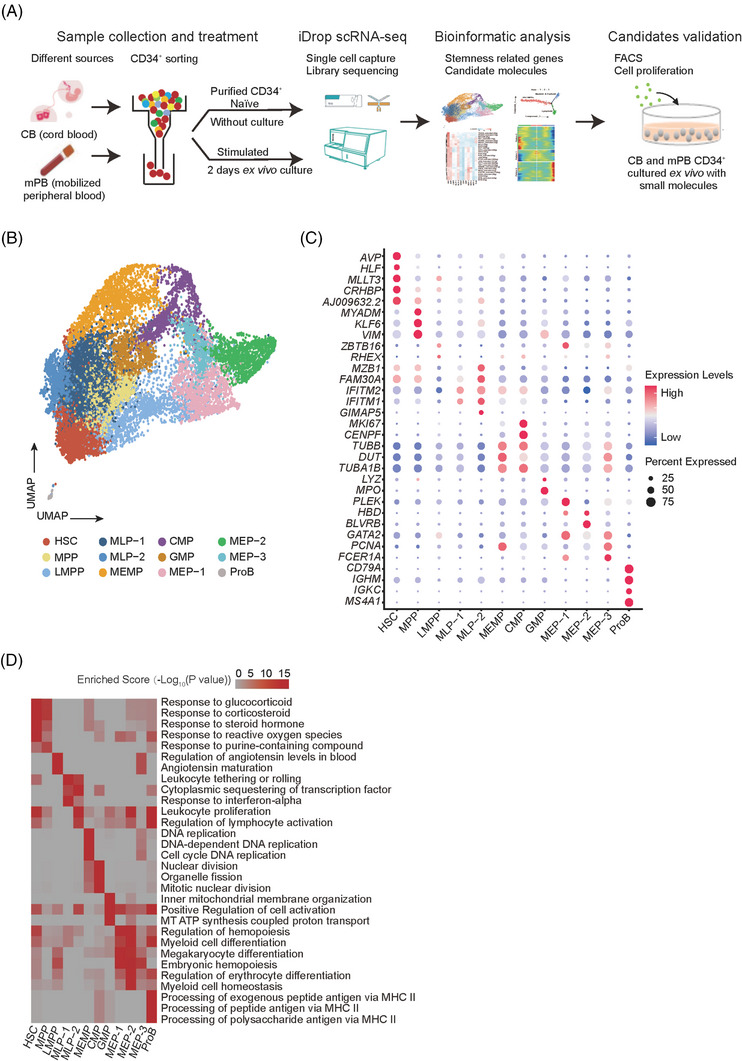
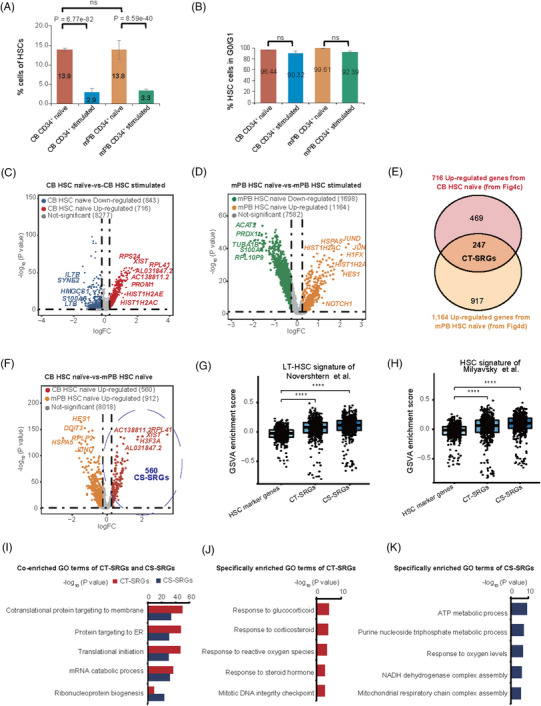
Here, we applied single-cell RNA-seq (scRNA-seq) to analyse the naïve and stimulated human CD34 cells from cord blood (CB) and mobilised peripheral blood (mPB).
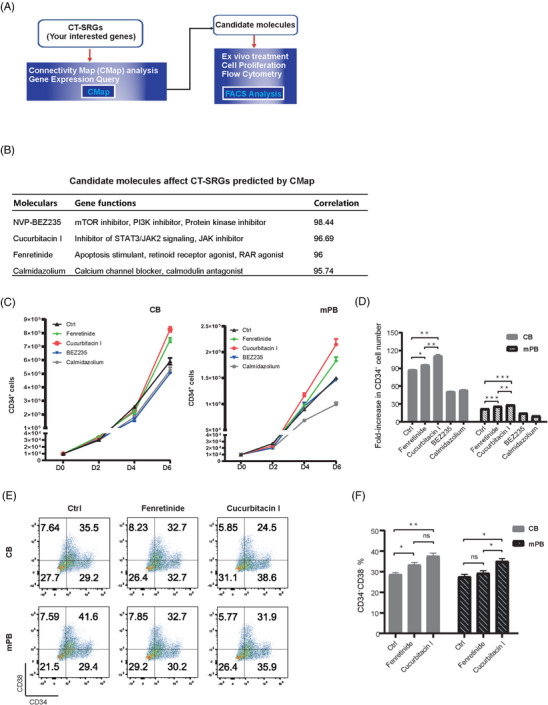
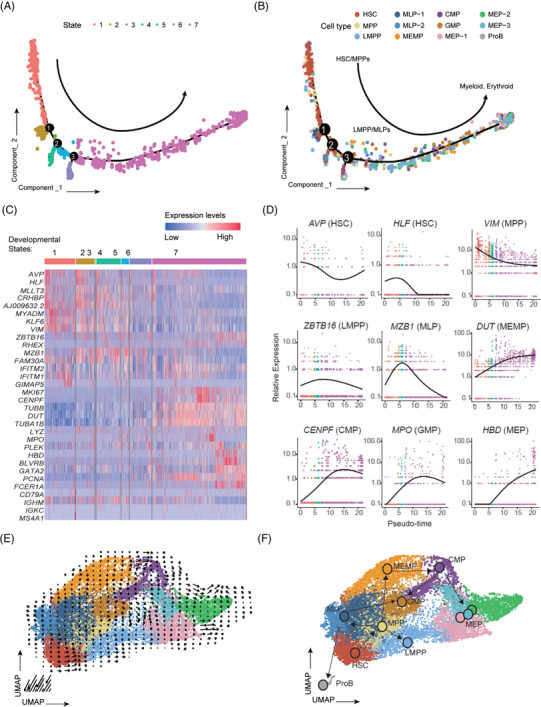
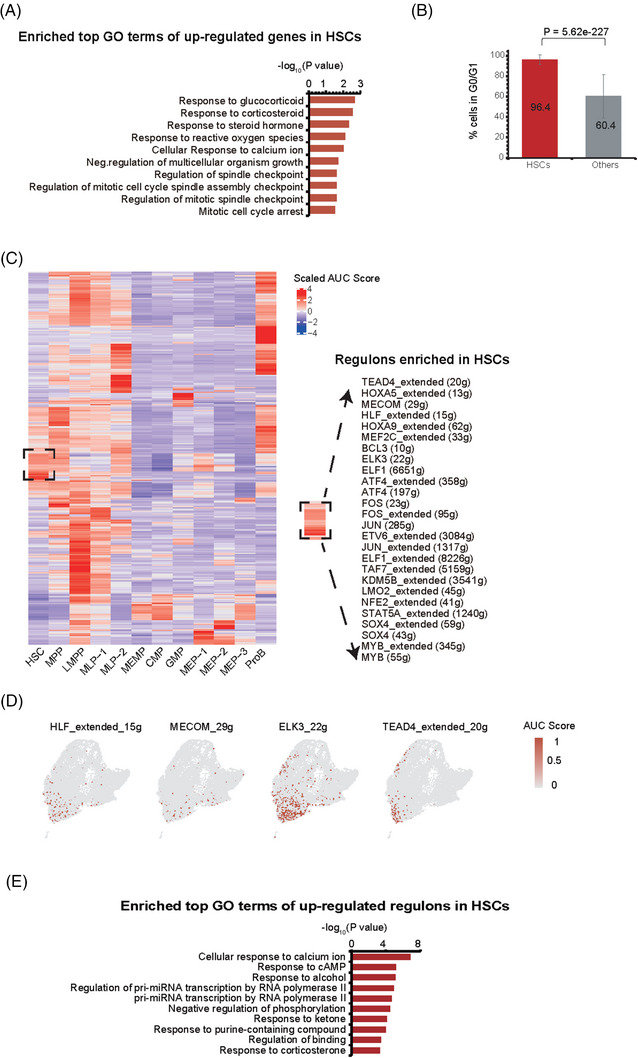
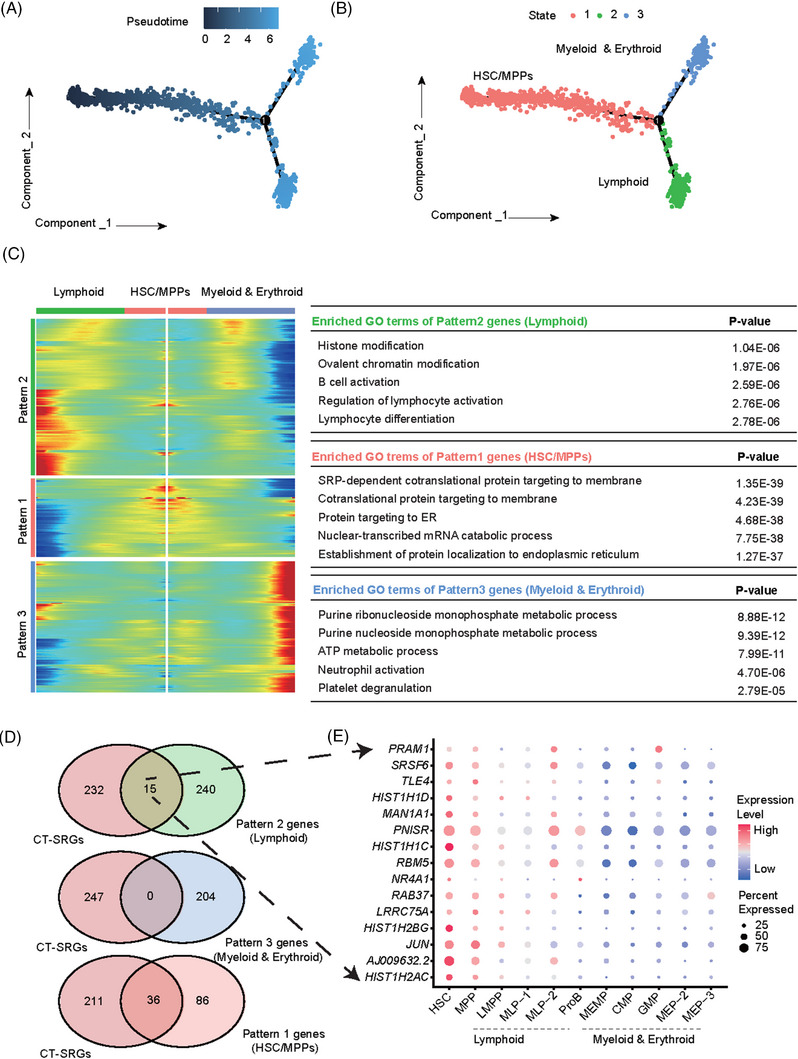
We collected over 16 000 high-quality single-cell data to construct a comprehensive inference map and characterised the HSCs under a quiescent state on the hierarchy top. Then, we compared HSCs in CB with those in mPB and HSCs of naïve samples to those of cultured samples, and identified stemness-related genes (SRGs) associated with cell source (CS-SRGs) and culture time (CT-SRGs), respectively. Interestingly, CS-SRGs and CT-SRGs share genes enriched in the signalling pathways such as mRNA catabolic process, translational initiation, ribonucleoprotein complex biogenesis and cotranslational protein targeting to membrane, suggesting dynamic protein translation and processing may be a common requirement for stemness maintenance. Meanwhile, CT-SRGs are enriched in pathways involved in glucocorticoid and corticosteroid response that affect HSCs homing and engraftment. In contrast, CS-SRGs specifically contain genes related to purine and ATP metabolic process, which is crucial for HSC homeostasis in the stress settings. Particularly, when CT-SRGs are used as reference genes for the construction of the development trajectory of CD34 cells, lymphoid and myeloid lineages are clearly separated after HSCs/MPPs. Finally, we presented an application through a small-scale drug screening using Connectivity Map (CMap) against CT-SRGs. A small molecule, cucurbitacin I, was found to efficiently expand HSCs ex vivo while maintaining its stemness.
Our findings provide new perspectives for understanding HSCs, and the strategy to identify candidate molecules through SRGs may be applicable to study other stem cells.
不同来源的造血干细胞(HSCs)表现出不同的重编程能力,并且 HSCs 在长时间的体外培养后失去其干性。深入了解这些现象可能为 HSCs 提供有帮助的见解。
在这里,我们应用单细胞 RNA 测序(scRNA-seq)分析来自脐血(CB)和动员外周血(mPB)的幼稚和刺激的人 CD34 细胞。
我们收集了超过 16000 个高质量的单细胞数据,构建了一个全面的推理图谱,并在层次结构的顶部描述了处于静止状态的 HSCs。然后,我们比较了 CB 中的 HSCs 与 mPB 中的 HSCs,以及幼稚样本中的 HSCs 与培养样本中的 HSCs,分别鉴定了与细胞来源(CS-SRGs)和培养时间(CT-SRGs)相关的干性相关基因(SRGs)。有趣的是,CS-SRGs 和 CT-SRGs 共享富含信号通路的基因,如 mRNA 分解代谢过程、翻译起始、核糖核蛋白复合物生物发生和共翻译蛋白靶向膜,这表明动态蛋白质翻译和加工可能是维持干性的共同要求。同时,CT-SRGs 富集在涉及糖皮质激素和皮质类固醇反应的途径中,这些途径影响 HSCs 的归巢和植入。相比之下,CS-SRGs 特异性包含与嘌呤和 ATP 代谢过程相关的基因,这对压力环境中的 HSC 稳态至关重要。特别是,当 CT-SRGs 被用作构建 CD34 细胞发育轨迹的参考基因时,HSCs/MPPs 后淋巴细胞和髓系明显分离。最后,我们通过使用连接图谱(CMap)针对 CT-SRGs 进行小规模药物筛选展示了一个应用。发现小分子葫芦素 I 能够有效地在体外扩增 HSCs,同时保持其干性。
我们的研究结果为理解 HSCs 提供了新的视角,并且通过 SRGs 鉴定候选分子的策略可能适用于研究其他干细胞。