Lu Kang, Tang Hong, Wang Yang, Wang Liyuan, Zhou Mei, He Gang, Lu Hao, Tang Chuyue, Chen Wan, Ma Xiaoqing, Tang Kanglai, Deng Zhongliang
Department of Orthopedics-Spine Surgery Center, the Second Affiliated Hospital, Chongqing Medical University, Chongqing, China.
Department of Orthopedics/Sports Medicine Center, State Key Laboratory of Trauma, Burn, and Combined Injury, Southwest Hospital, Army Medical University (Third Military Medical University), Chongqing, China.
Stem Cells Int. 2023 Jan 13;2023:2915826. doi: 10.1155/2023/2915826. eCollection 2023.
Tendon injuries are common clinical disorders. Due to the limited regeneration ability of tendons, tissue engineering technology is often used as an adjuvant treatment. This study explored the molecular pathways underlying micropattern SF film-regulated TSPC propensity and their repairing effects to highlight the application value of micropattern SF films.
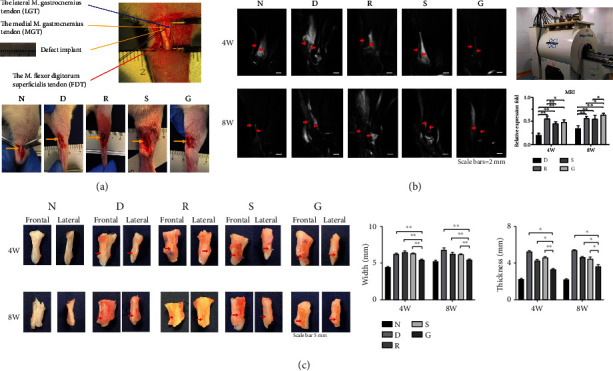
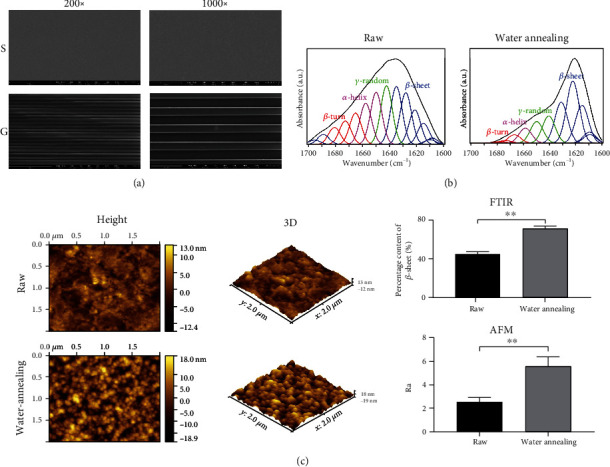
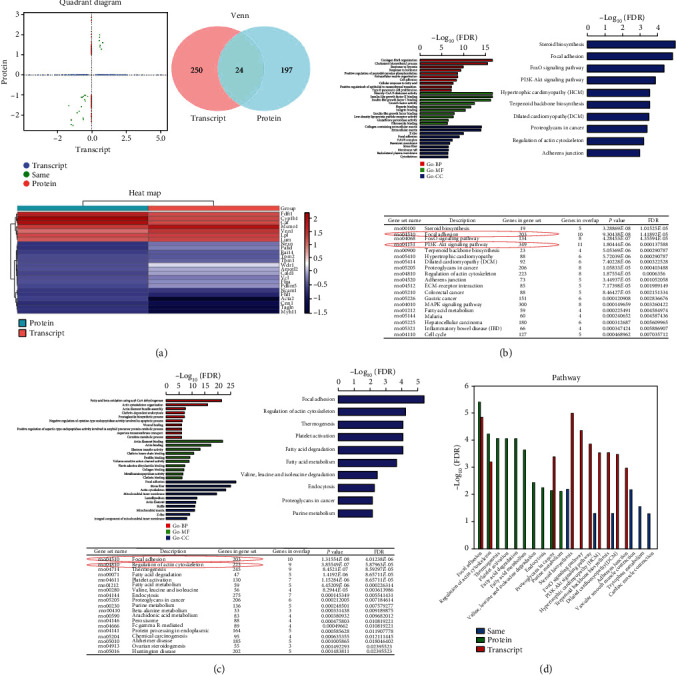
First, we characterized the physical properties of the micropattern SF films and explored their repairing effects on the injured tendons . Then, we seeded TSPCs on SF films and determined the micropattern SF film-induced gene expression and activation of signaling pathways in TSPCs through high-throughput RNA sequencing and proteomics assays.
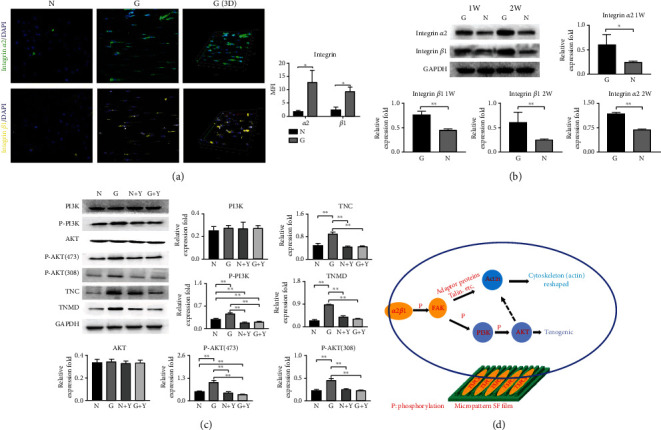
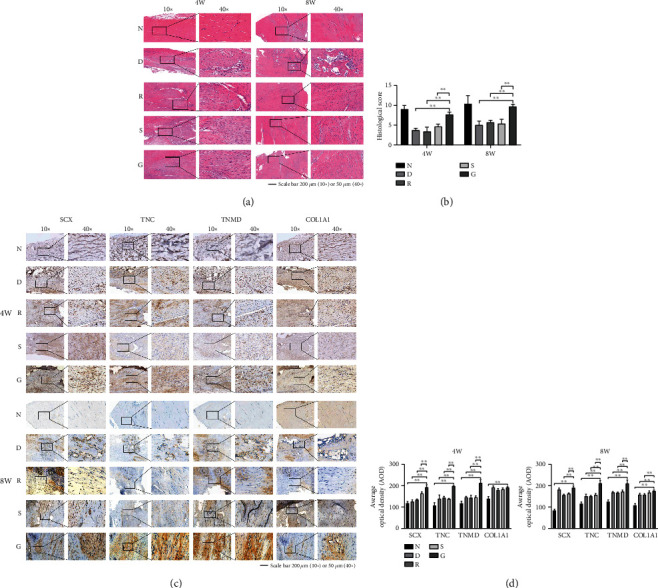
The results of studies suggested that micropattern SF films can promote remodeling of the injured tendon. In addition, immunohistochemistry (IHC) results showed that tendon marker genes were significantly increased in the micropattern SF film repair group. Transcriptomic and proteomic analyses demonstrated that micropattern SF film-induced genes and proteins in TSPCs were mainly enriched in the focal adhesion kinase (FAK)/actin and phosphoinositide 3-kinase (PI3K)/AKT pathways. Western blot analysis showed that the expression of integrins 21, tenascin-C (TNC), and tenomodulin (TNMD) and the phosphorylation of AKT were significantly increased in the micropattern SF film group, which could be abrogated by applying PI3K/AKT inhibitors.
Micropattern SF films modified by water annealing can promote remodeling of the injured tendon and regulate the tendon differentiation of TSPCs through the 21/FAK/PI3K/AKT signaling pathway . Therefore, they have great medical value in tendon repair.
肌腱损伤是常见的临床病症。由于肌腱的再生能力有限,组织工程技术常被用作辅助治疗手段。本研究探索了微图案丝素蛋白(SF)膜调节肌腱干细胞(TSPC)倾向的分子途径及其修复效果,以突出微图案SF膜的应用价值。
首先,我们对微图案SF膜的物理特性进行了表征,并探究了其对损伤肌腱的修复效果。然后,我们将TSPC接种于SF膜上,并通过高通量RNA测序和蛋白质组学分析确定微图案SF膜诱导的TSPC基因表达及信号通路激活情况。
研究结果表明,微图案SF膜可促进损伤肌腱的重塑。此外,免疫组织化学(IHC)结果显示,微图案SF膜修复组中肌腱标记基因显著增加。转录组和蛋白质组分析表明,微图案SF膜在TSPC中诱导的基因和蛋白质主要富集于粘着斑激酶(FAK)/肌动蛋白和磷脂酰肌醇3激酶(PI3K)/蛋白激酶B(AKT)信号通路。蛋白质免疫印迹分析显示,微图案SF膜组中整合素β1、肌腱蛋白C(TNC)和肌腱调节蛋白(TNMD)的表达以及AKT的磷酸化显著增加,应用PI3K/AKT抑制剂可消除这种增加。
水退火修饰的微图案SF膜可促进损伤肌腱的重塑,并通过β1/FAK/PI3K/AKT信号通路调节TSPC的肌腱分化。因此,它们在肌腱修复中具有巨大的医学价值。