Li Man-Man, Su Qing-Lian, Zu Jun-Rui, Xie Li, Wei Qian, Guo He-Rong, Chen Jianjun, Zeng Rui-Zhen, Zhang Zhi-Sheng
Guangdong Province Key Laboratory of Plant Molecular Breeding, College of Forestry and Landscape Architecture, South China Agricultural University, Guangzhou, China.
Guangzhou Flower Research Center, Guangzhou, China.
Front Plant Sci. 2022 Oct 11;13:1029915. doi: 10.3389/fpls.2022.1029915. eCollection 2022.
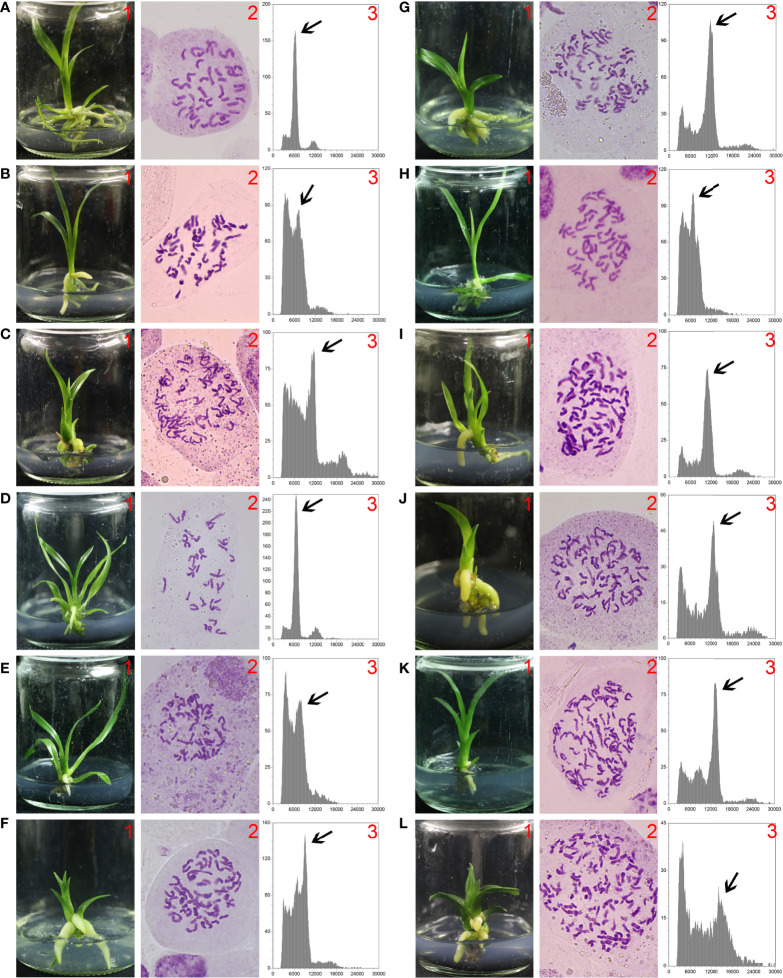
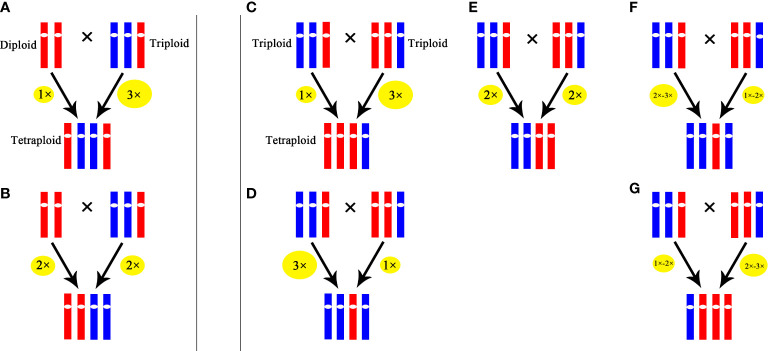
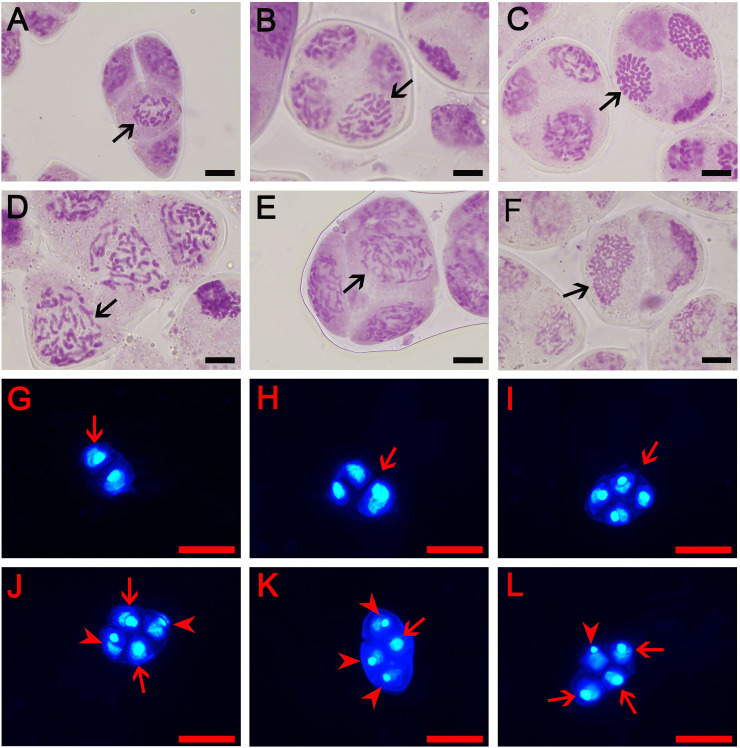
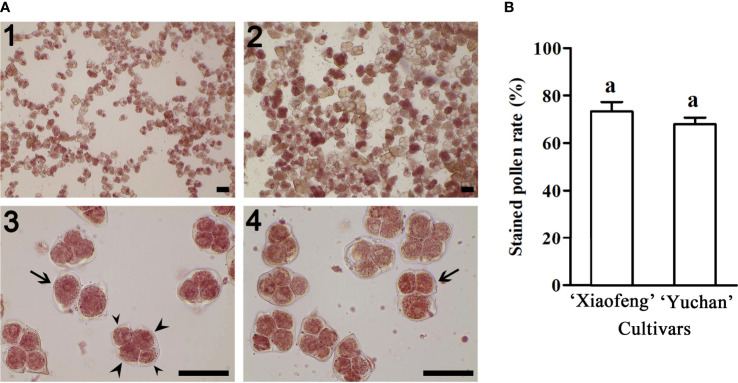
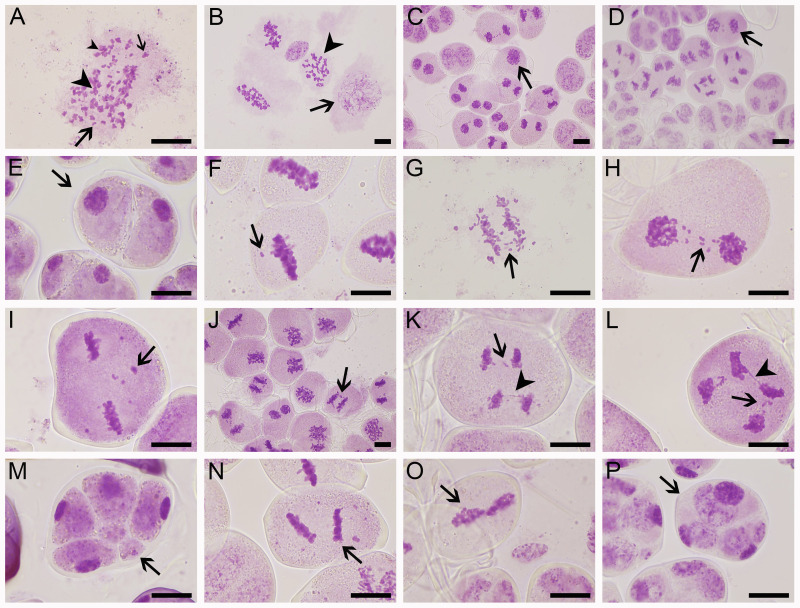
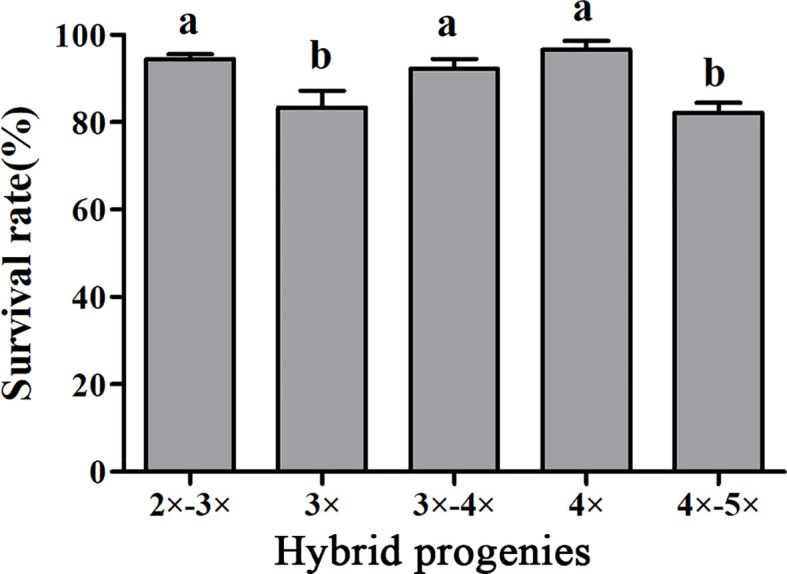
Triploid is considered a reproductive barrier and also a bridge in the formation of polyploids. However, few reports are available in . In this study, diploid 'Xiaofeng', sexual triploid 'Yuchan' and 'Huanghe' of were used to evaluate hybridization compatibility of the triploids. Results showed that the sexual triploids were fertile whether they were used as male or female parents. 'Yuchan' produced male gametes of 1, 12, 2, 23, and 3 at frequencies of 8.89%, 77.78%, 6.67%, 3.33%, and 3.33%, respectively; while 'Huanghe' produced 3.33% 1, 80.00% 12, 8.89% 2, 5.56% 23, and 2.22% 3 male gametes. The cross of 'Xiaofeng' with 'Yuchan' produced progenies with a wide range of ploidy levels, including one diploid, 34 2×3× aneuploids, 12 triploids, and one tetraploid, indicating that male gametes produced by sexual triploid were fertile and could be transmitted and fused with egg cells. On the other hand, 10 progenies obtained from the cross of 'Yuchan' × 'Xiaofeng' were all aneuploids. The cross of 'Yuchan' with 'Huanghe' produced 40 progenies including three 2×3× aneuploids, nine 3×4× aneuploids, 21 tetraploids, six 4×5× aneuploids, and one pentaploid, suggesting that 2 gametes, instead of the unreduced ones played a more important role in the formation of tetraploids. The survival rates of the hybrids were all above 80.00%, with the tetraploids at 96.67%. Cytological analysis revealed that during meiosis of sexual polyploids, two chromosome sets of the 2 gamete were inclined to enter into the same daughter cell, resulting in the production of 2 gametes. Our results indicate that the triploid cymbidiums are not reproductive barrier but serve as a bridge in the formation of polyploid plants.
三倍体被认为是一种生殖障碍,也是多倍体形成过程中的一座桥梁。然而,关于[此处缺失相关内容]的报道却很少。在本研究中,以二倍体‘小凤’、有性三倍体‘玉蝉’和‘黄河’为材料,评估三倍体的杂交亲和性。结果表明,有性三倍体无论是作为父本还是母本都是可育的。‘玉蝉’产生的雄配子中,染色体数为1、12、2、23和3的配子频率分别为8.89%、77.78%、6.67%、3.33%和3.33%;而‘黄河’产生的雄配子中,染色体数为1、12、2、23和3的配子频率分别为3.33%、80.00%、8.89%、5.56%和2.22%。‘小凤’与‘玉蝉’杂交产生的后代具有广泛的倍性水平,包括1个二倍体、34个2×3×非整倍体、12个三倍体和1个四倍体,这表明有性三倍体产生的雄配子是可育的,能够传递并与卵细胞融合。另一方面,‘玉蝉’ב小凤’杂交获得的10个后代均为非整倍体。‘玉蝉’与‘黄河’杂交产生了40个后代,包括3个2×3×非整倍体、9个3×4×非整倍体、21个四倍体、6个4×5×非整倍体和1个五倍体,这表明在四倍体形成过程中,2配子而非未减数配子发挥了更重要的作用。杂种的成活率均在80.00%以上,四倍体的成活率为96.67%。细胞学分析表明,在有性多倍体减数分裂过程中,2配子的两组染色体倾向于进入同一个子细胞,从而产生2配子。我们的结果表明,三倍体大花蕙兰不是生殖障碍,而是多倍体植物形成过程中的一座桥梁。