Hawley Dana M, Thomason Courtney A, Aberle Matt A, Brown Richard, Adelman James S
Department of Biological Sciences, Virginia Tech, Blacksburg, VA 24061-0131, USA.
Department of Biological Sciences, The University of Memphis, Memphis, TN 38152, USA.
R Soc Open Sci. 2023 Jan 11;10(1):220975. doi: 10.1098/rsos.220975. eCollection 2023 Jan.
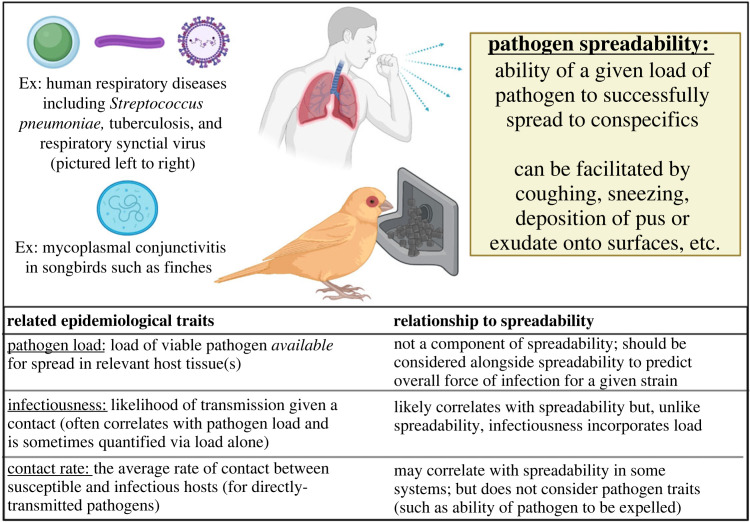
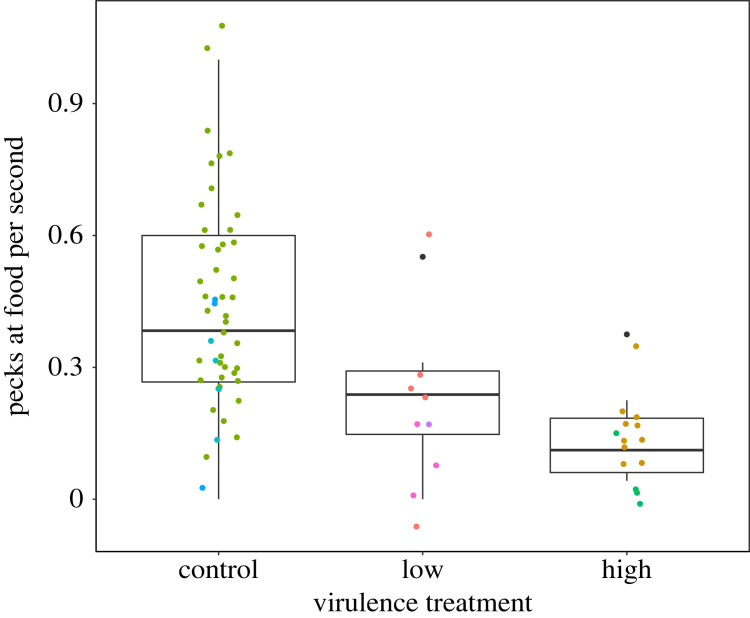
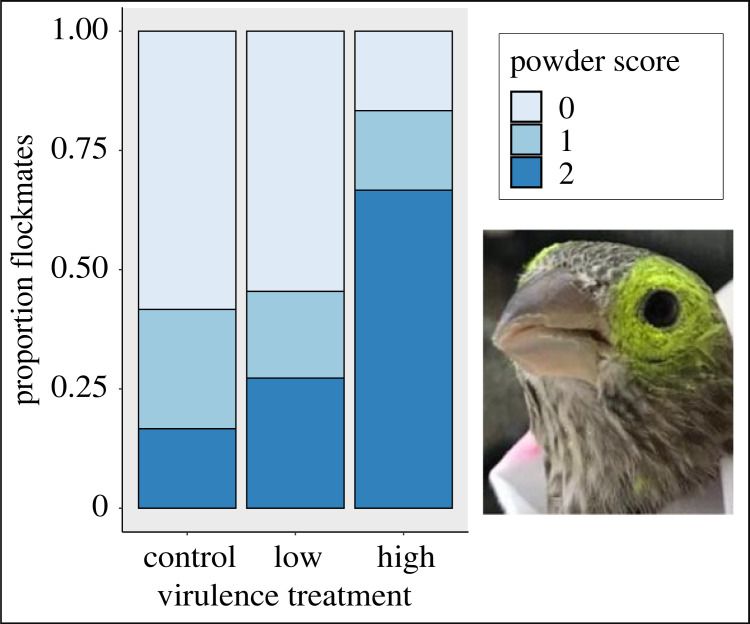
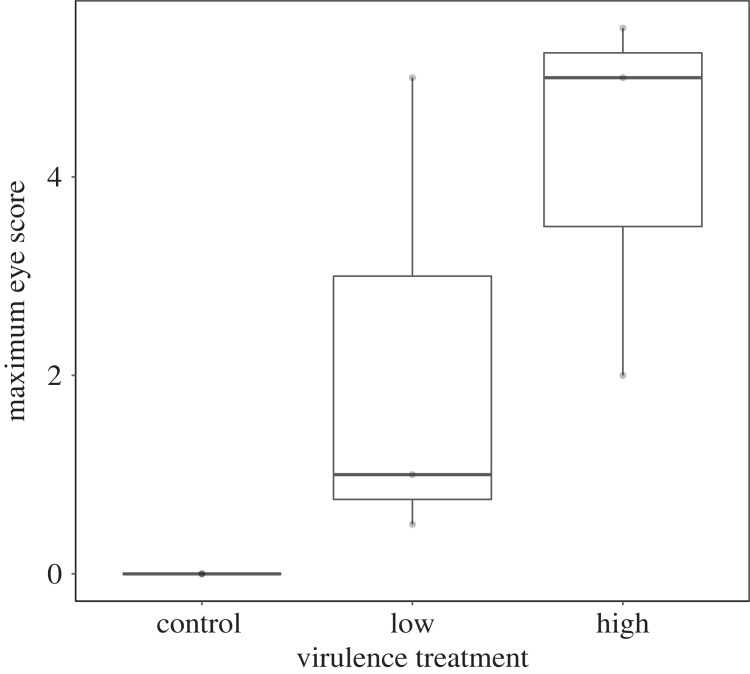
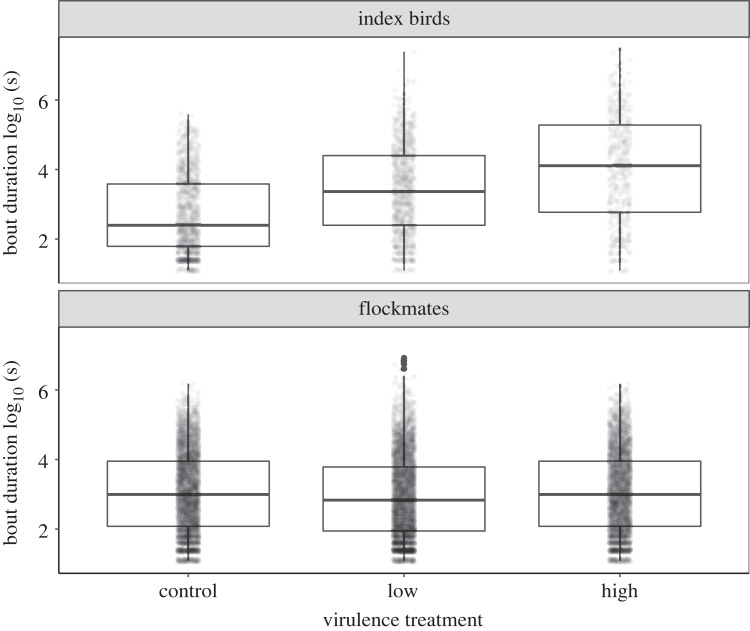
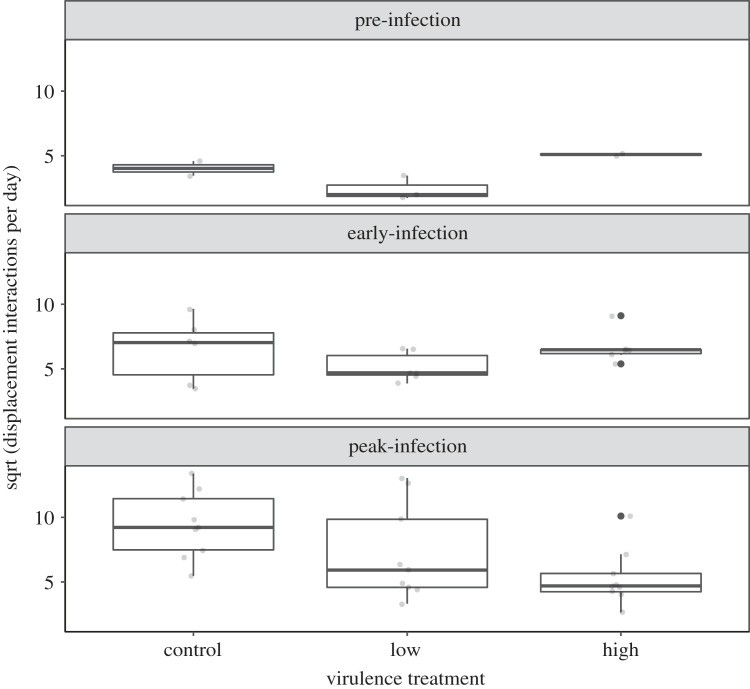
How directly transmitted pathogens benefit from harming hosts is key to understanding virulence evolution. It is recognized that pathogens benefit from high within-host loads, often associated with virulence. However, high virulence may also directly augment spread of a given amount of pathogen, here termed 'spreadability'. We used house finches and the conjunctival pathogen to test whether two components of virulence-the severity of conjunctival inflammation and behavioural morbidity produced-predict pathogen spreadability. We applied ultraviolet powder around the conjunctiva of finches that were inoculated with pathogen treatments of distinct virulence and measured within-flock powder spread, our proxy for 'spreadability'. When compared to uninfected controls, birds infected with a high-virulence, but not low-virulence, pathogen strain, spread significantly more powder to flockmates. Relative to controls, high-virulence treatment birds both had more severe conjunctival inflammation-which potentially facilitated powder shedding-and longer bouts on feeders, which serve as fomites. However, food peck rates and displacements with flockmates were lowest in high-virulence treatment birds relative to controls, suggesting inflammatory rather than behavioural mechanisms likely drive augmented spreadability at high virulence. Our results suggest that inflammation associated with virulence can facilitate pathogen spread to conspecifics, potentially favouring virulence evolution in this system and others.
直接传播的病原体如何从伤害宿主中获益是理解毒力进化的关键。人们认识到病原体从宿主体内的高载量中获益,这通常与毒力相关。然而,高毒力也可能直接增加一定量病原体的传播,这里称之为“传播能力”。我们使用家朱雀和结膜病原体来测试毒力的两个组成部分——结膜炎症的严重程度和产生的行为发病率——是否能预测病原体的传播能力。我们在接种了不同毒力病原体处理的朱雀结膜周围涂抹紫外线粉末,并测量群体内粉末的传播情况,以此作为“传播能力”的指标。与未感染的对照组相比,感染高毒力而非低毒力病原体菌株的鸟类向同伴传播的粉末明显更多。相对于对照组,高毒力处理组的鸟类结膜炎症更严重——这可能有助于粉末脱落——并且在作为传染源的喂食器上停留的时间更长。然而,高毒力处理组的鸟类相对于对照组,食物啄食率和与同伴的互动最少,这表明在高毒力情况下,炎症而非行为机制可能驱动了传播能力的增强。我们的结果表明,与毒力相关的炎症可以促进病原体向同种个体传播,这可能有利于该系统及其他系统中毒力的进化。