Translational Cancer Medicine Research Program, Faculty of Medicine, University of Helsinki, Helsinki, Finland.
Department of Microbiology, University of Washington, Seattle, WA, United States of America.
PLoS Pathog. 2023 Jan 23;19(1):e1010753. doi: 10.1371/journal.ppat.1010753. eCollection 2023 Jan.
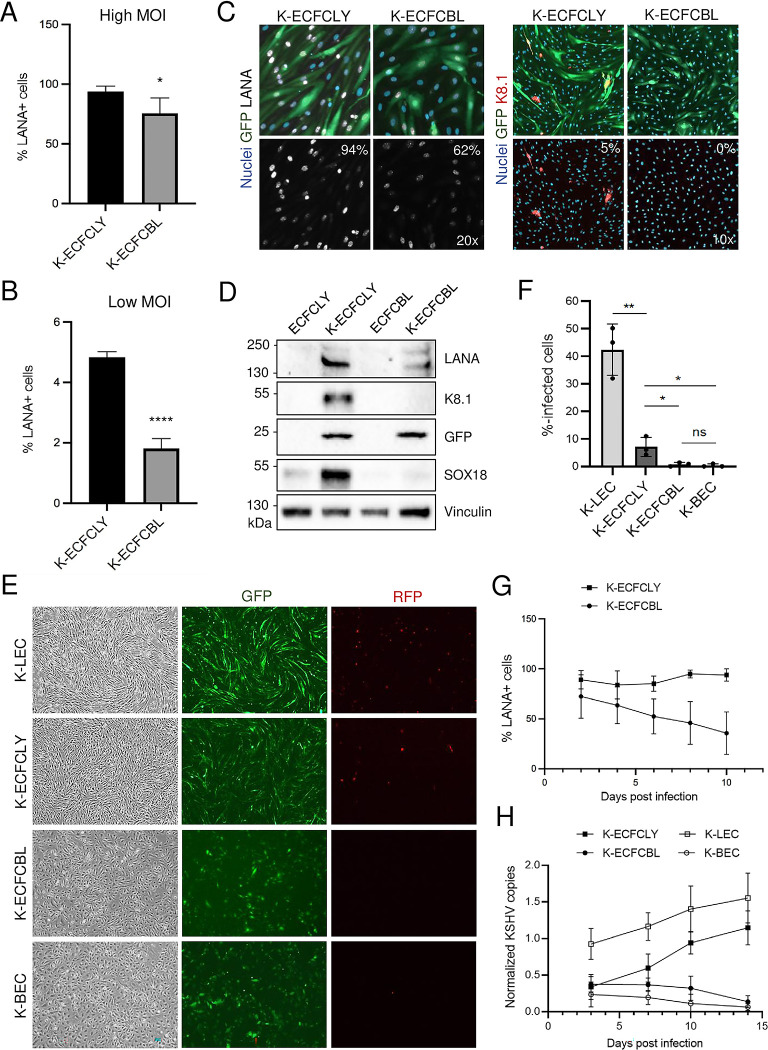
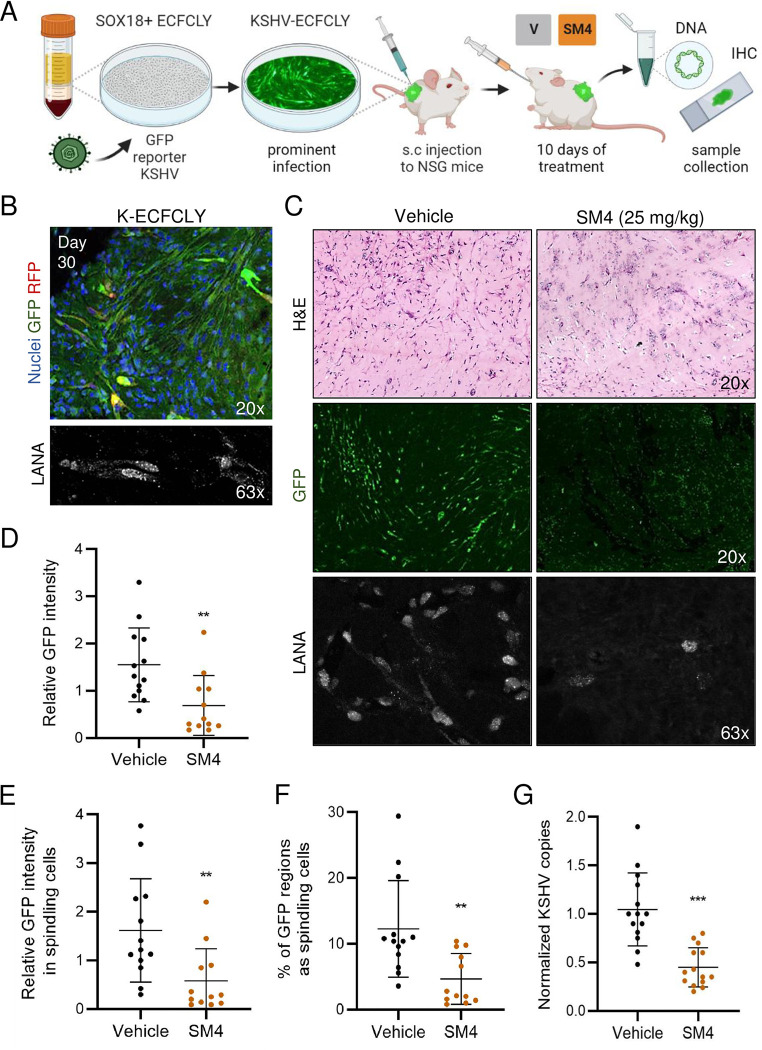
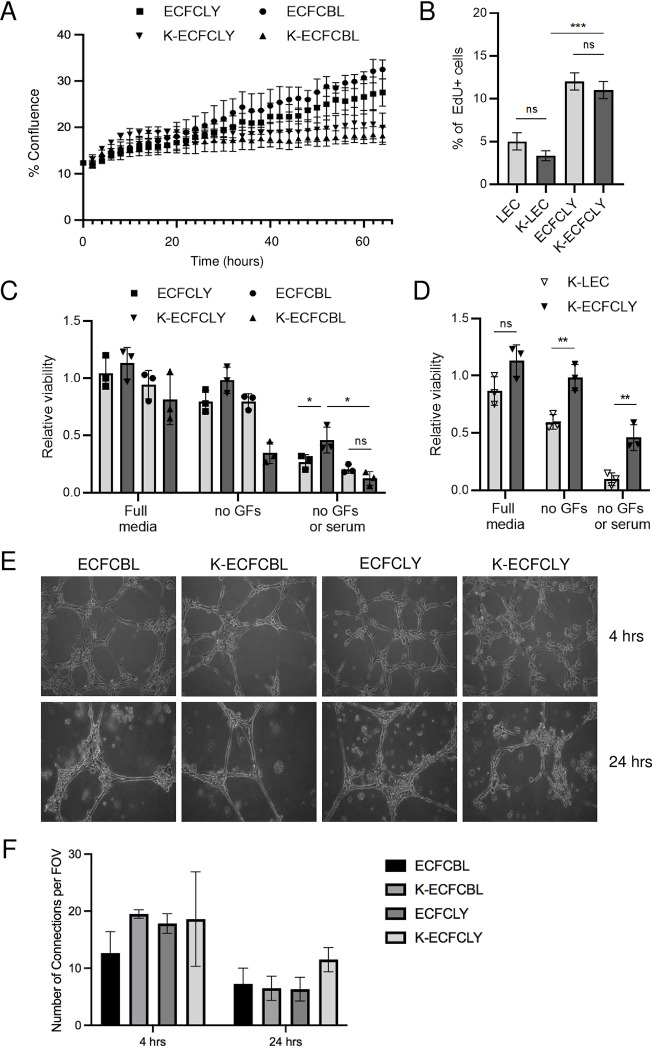
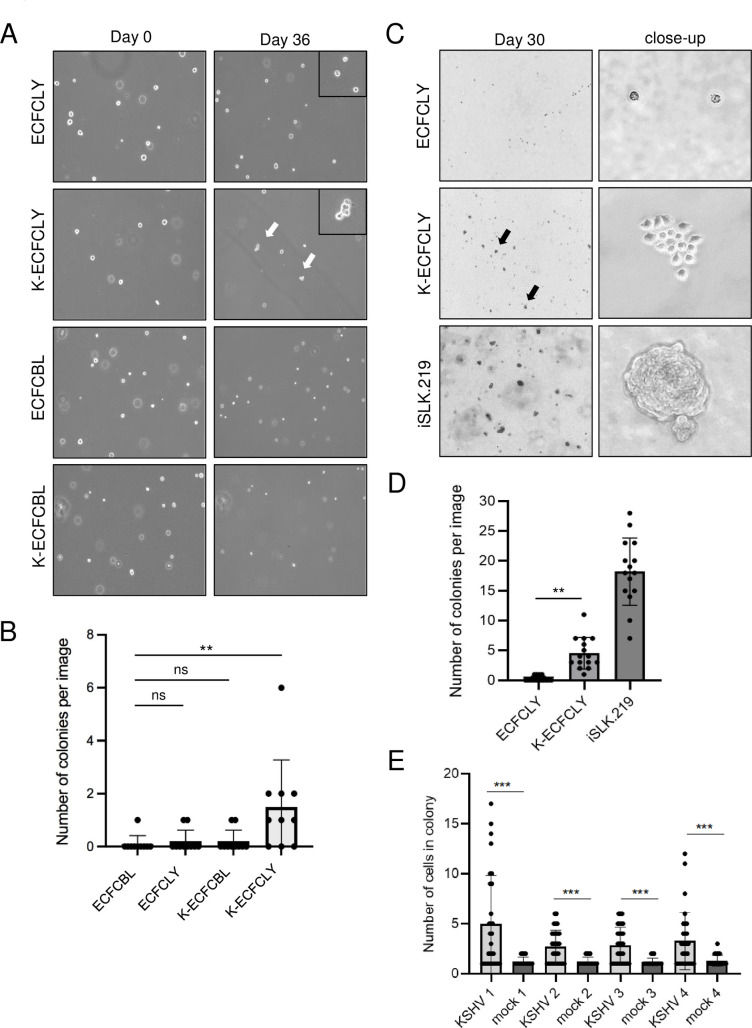
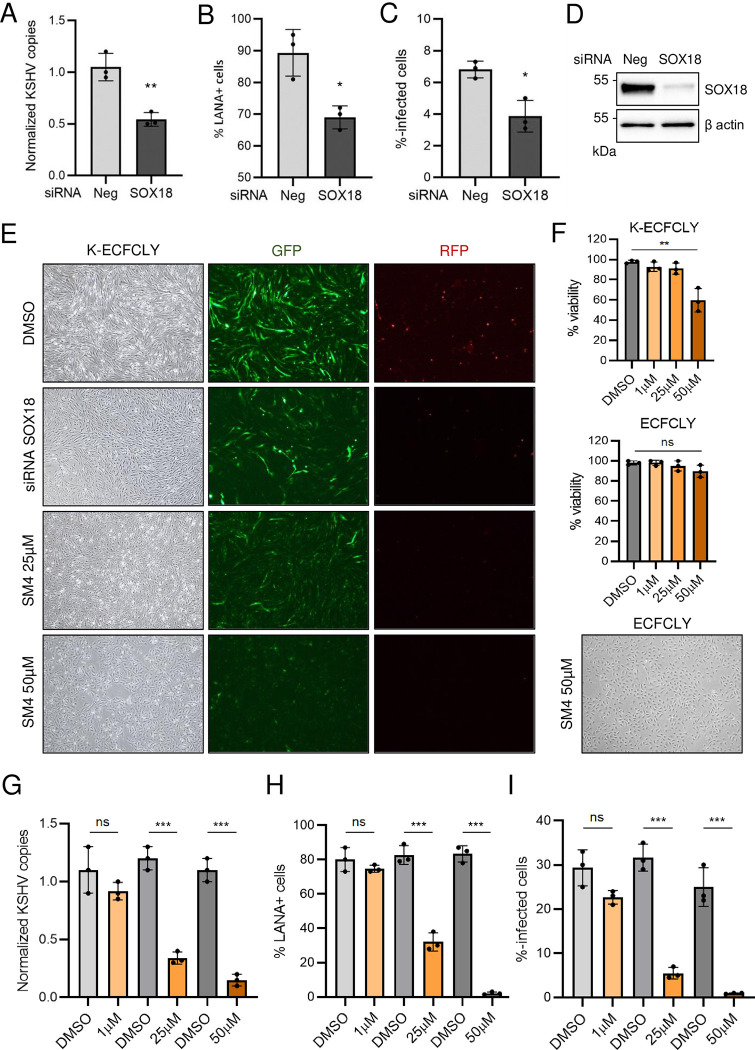
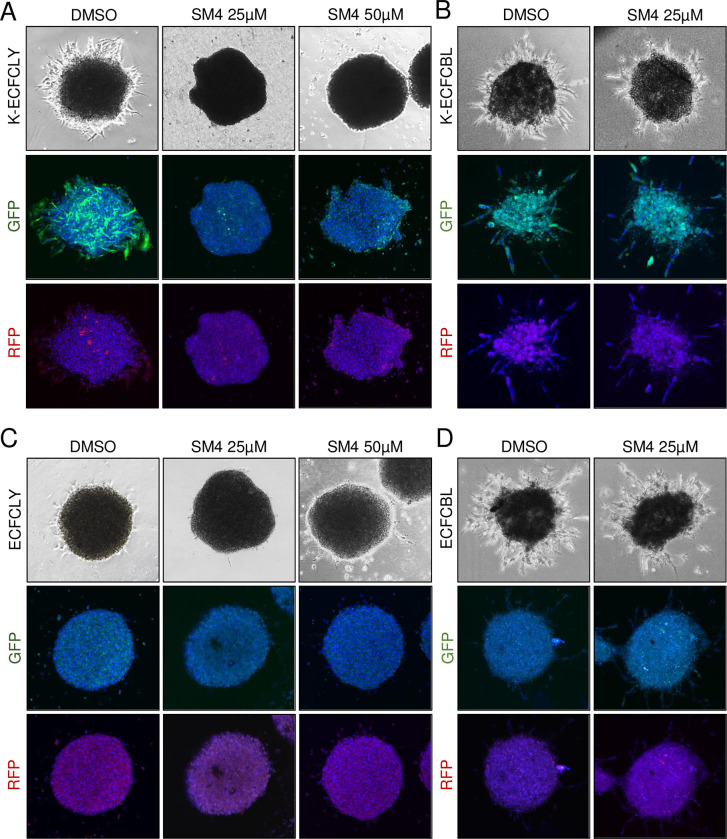
Kaposi's sarcoma herpesvirus (KSHV) is the etiologic agent of Kaposi's sarcoma (KS), a hyperplasia consisting of enlarged malformed vasculature and spindle-shaped cells, the main proliferative component of KS. While spindle cells express markers of lymphatic and blood endothelium, the origin of spindle cells is unknown. Endothelial precursor cells have been proposed as the source of spindle cells. We previously identified two types of circulating endothelial colony forming cells (ECFCs), ones that expressed markers of blood endothelium and ones that expressed markers of lymphatic endothelium. Here we examined both blood and lymphatic ECFCs infected with KSHV. Lymphatic ECFCs are significantly more susceptible to KSHV infection than the blood ECFCs and maintain the viral episomes during passage in culture while the blood ECFCs lose the viral episome. Only the KSHV-infected lymphatic ECFCs (K-ECFCLY) grew to small multicellular colonies in soft agar whereas the infected blood ECFCs and all uninfected ECFCs failed to proliferate. The K-ECFCLYs express high levels of SOX18, which supported the maintenance of high copy number of KSHV genomes. When implanted subcutaneously into NSG mice, the K-ECFCLYs persisted in vivo and recapitulated the phenotype of KS tumor cells with high number of viral genome copies and spindling morphology. These spindle cell hallmarks were significantly reduced when mice were treated with SOX18 inhibitor, SM4. These data suggest that KSHV-infected lymphatic ECFCs can be utilized as a KSHV infection model for in vivo translational studies to test novel inhibitors representing potential treatment modalities for KS.
卡波济肉瘤疱疹病毒(KSHV)是卡波济肉瘤(KS)的病原体,KS 是一种由增大的畸形血管和梭形细胞组成的增生,是 KS 的主要增殖成分。虽然梭形细胞表达淋巴管和血液内皮的标志物,但梭形细胞的来源尚不清楚。有人提出内皮前体细胞是梭形细胞的来源。我们之前鉴定了两种循环内皮祖细胞(ECFC),一种表达血液内皮标志物,另一种表达淋巴管内皮标志物。在这里,我们研究了感染 KSHV 的血液和淋巴管 ECFC。与血液 ECFC 相比,淋巴管 ECFC 更容易被 KSHV 感染,并且在培养过程中保持病毒外显子,而血液 ECFC 则失去病毒外显子。只有感染了 KSHV 的淋巴管 ECFC(K-ECFCLY)在软琼脂中生长为小的多细胞集落,而感染的血液 ECFC 和所有未感染的 ECFC 则无法增殖。K-ECFCLYs 表达高水平的 SOX18,这支持了 KSHV 基因组高拷贝数的维持。当将 K-ECFCLYs 皮下植入 NSG 小鼠时,它们在体内持续存在,并重现了 KS 肿瘤细胞的表型,具有高拷贝数的病毒基因组和纺锤形形态。当用 SOX18 抑制剂 SM4 处理时,这些梭形细胞特征显著减少。这些数据表明,感染了 KSHV 的淋巴管 ECFC 可被用作 KSHV 感染模型,用于体内转化研究,以测试代表 KS 潜在治疗方法的新型抑制剂。