Division of Immunology and Allergy, Department of Medicine, Brigham and Women's Hospital, Boston, Mass.
Division of Immunology, Boston Children's Hospital, Boston, Mass.
J Allergy Clin Immunol. 2023 May;151(5):1296-1306.e7. doi: 10.1016/j.jaci.2023.01.011. Epub 2023 Jan 21.
Atopic dermatitis (AD) is characterized by T2-dominated skin inflammation and systemic response to cutaneously encountered antigens. The T2 cytokines IL-4 and IL-13 play a critical role in the pathogenesis of AD. The Q576->R576 polymorphism in the IL-4 receptor alpha (IL-4Rα) chain common to IL-4 and IL-13 receptors alters IL-4 signaling and is associated with asthma severity.
We sought to investigate whether the IL-4Rα R576 polymorphism is associated with AD severity and exaggerates allergic skin inflammation in mice.
Nighttime itching interfering with sleep, Rajka-Langeland, and Eczema Area and Severity Index scores were used to assess AD severity. Allergic skin inflammation following epicutaneous sensitization of mice 1 or 2 IL-4Rα R576 alleles (QR and RR) and IL-4Rα Q576 (QQ) controls was assessed by flow cytometric analysis of cells and quantitative RT-PCR analysis of cytokines in skin.
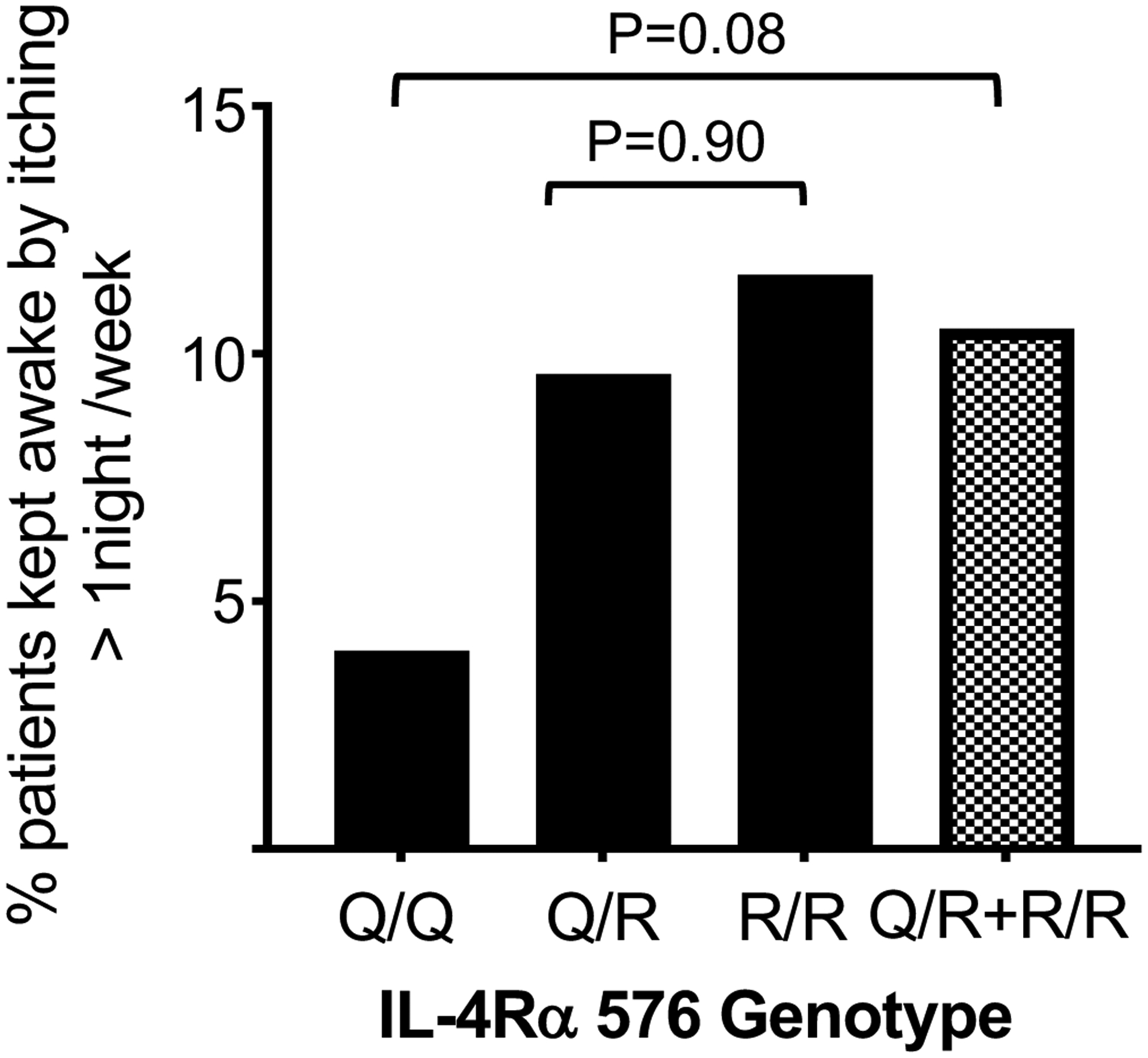
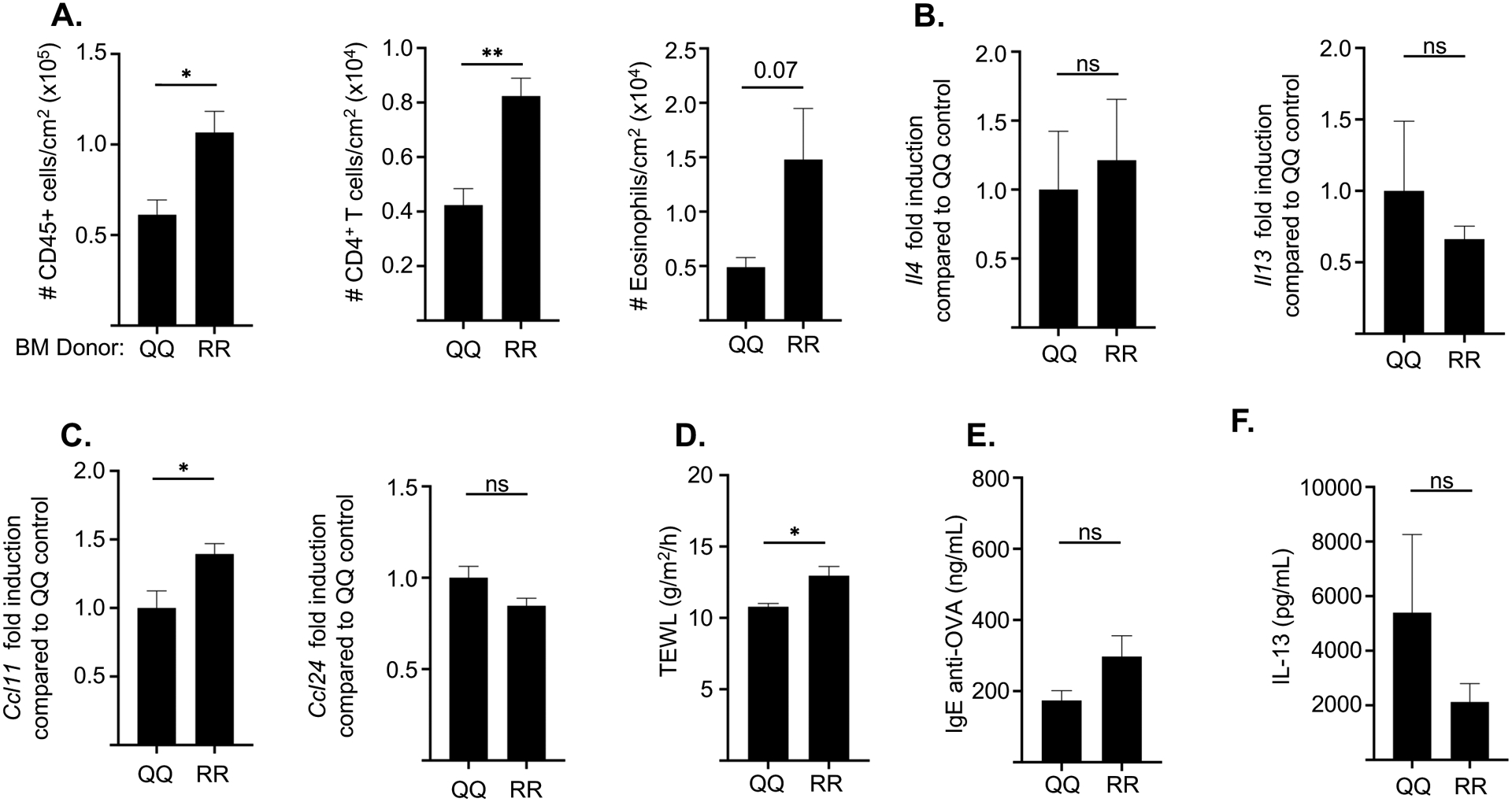
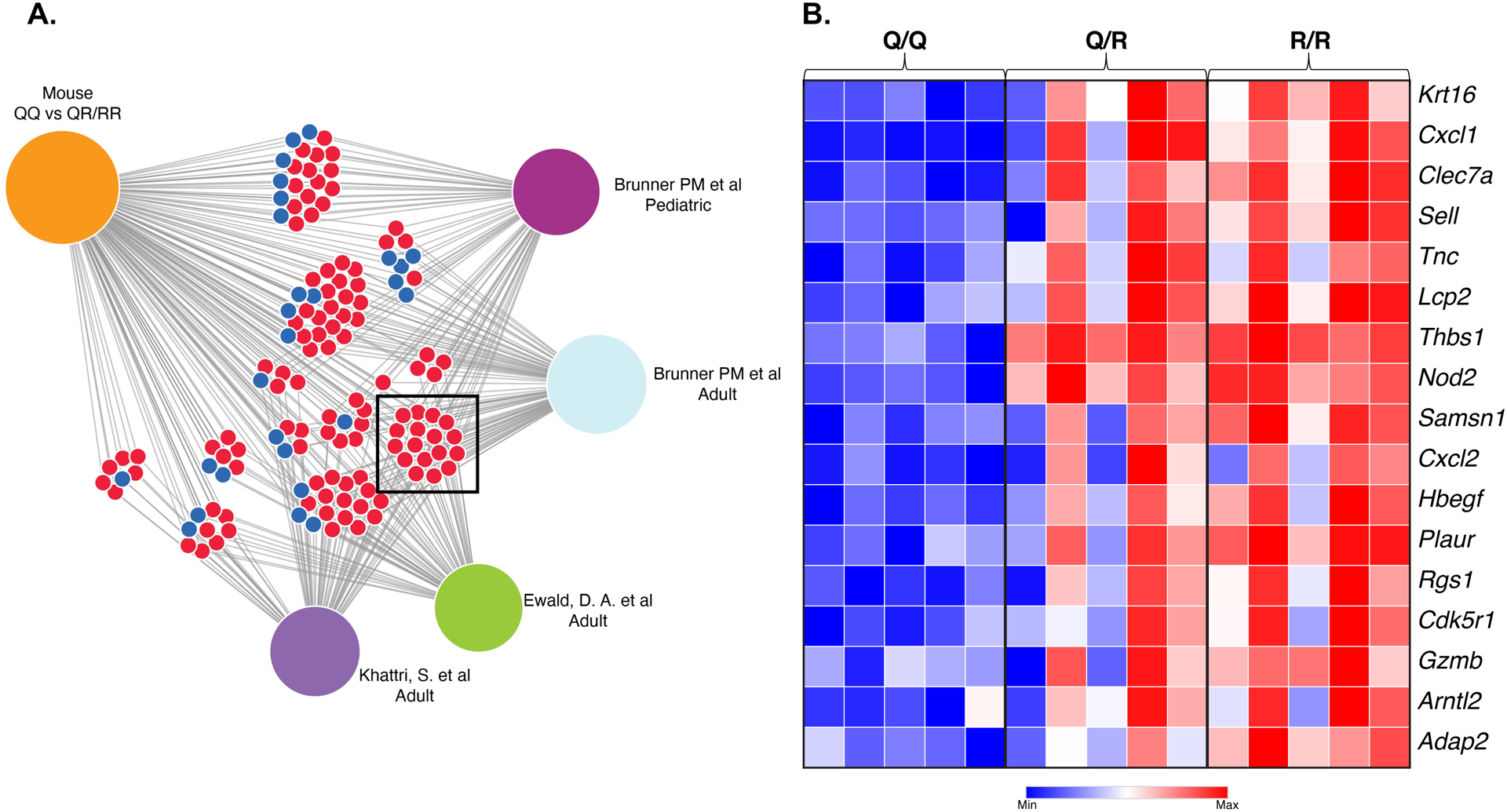
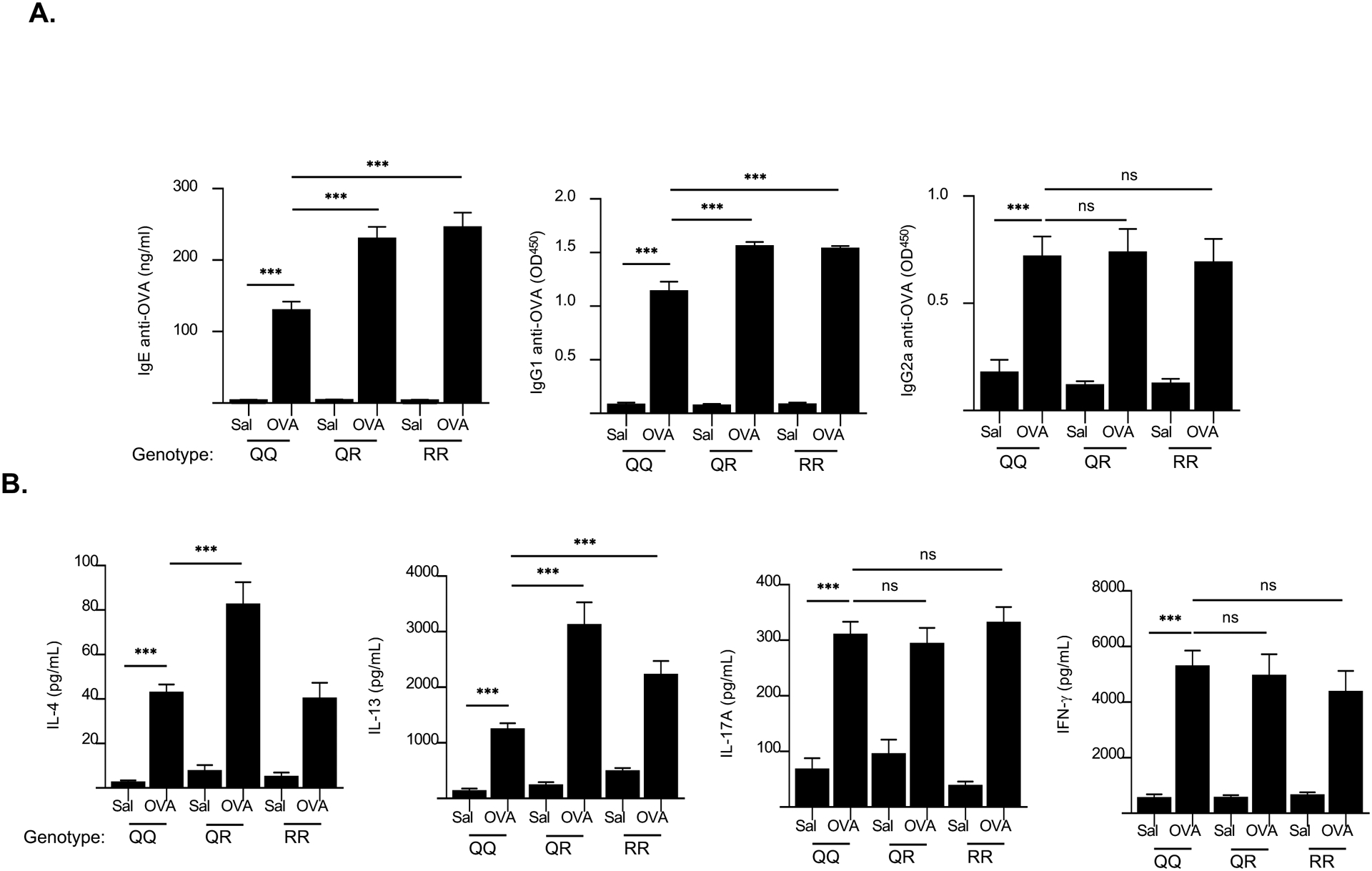
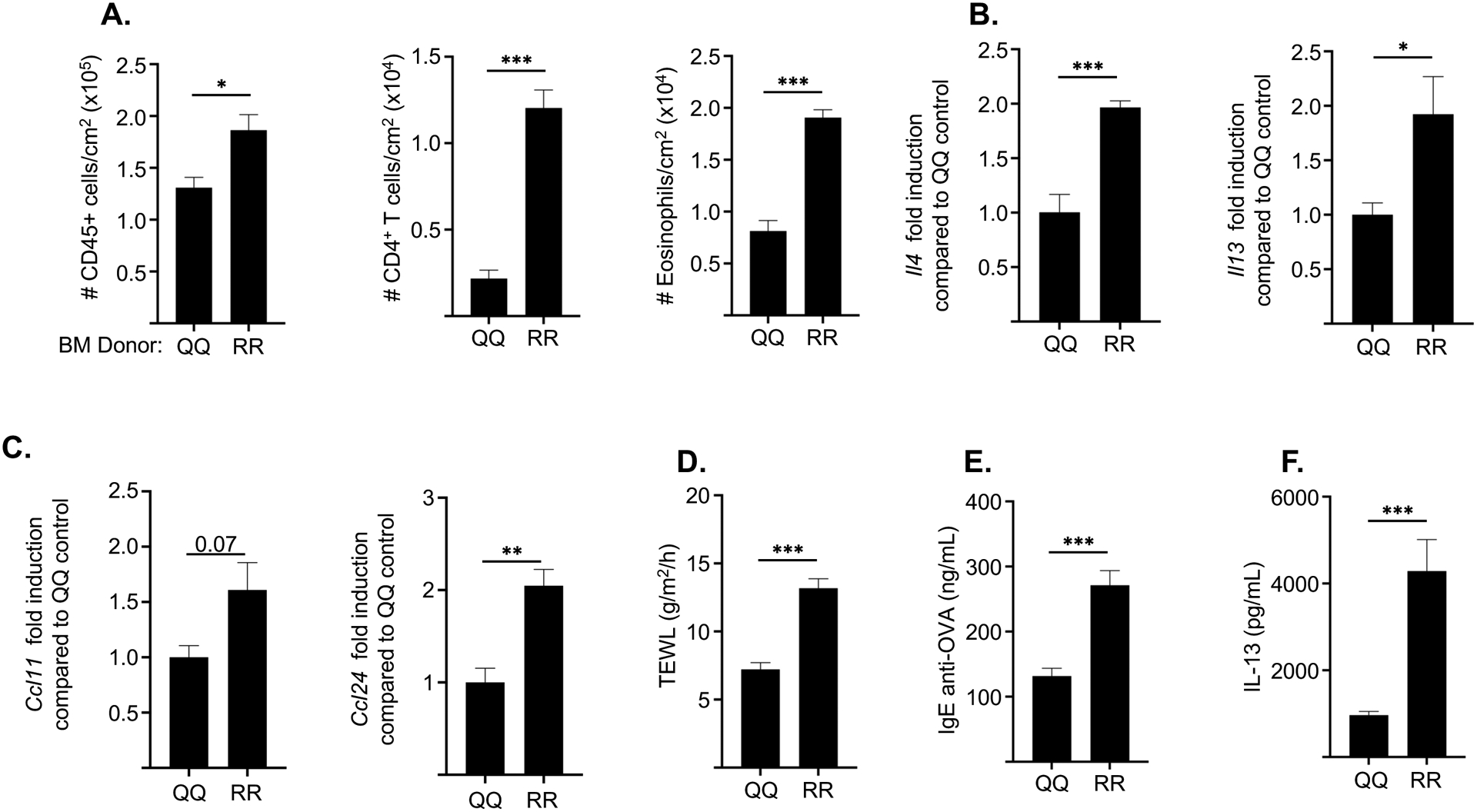
The frequency of nighttime itching in 190 asthmatic inner-city children with AD, as well as Rajka-Langeland and Eczema Area and Severity Index scores in 1116 White patients with AD enrolled in the Atopic Dermatitis Research Network, was higher in subjects with the IL-4Rα R576 polymorphism compared with those without, with statistical significance for the Rajka-Langeland score. Following epicutaneous sensitization of mice with ovalbumin or house dust mite, skin infiltration by CD4 cells and eosinophils, cutaneous expression of Il4 and Il13, transepidermal water loss, antigen-specific IgE antibody levels, and IL-13 secretion by antigen-stimulated splenocytes were significantly higher in RR and QR mice compared with QQ controls. Bone marrow radiation chimeras demonstrated that both hematopoietic cells and stromal cells contribute to the mutants' exaggerated allergic skin inflammation.
The IL-4Rα R576 polymorphism predisposes to more severe AD and increases allergic skin inflammation in mice.
特应性皮炎(AD)的特征是 T2 主导的皮肤炎症和全身性对皮肤接触抗原的反应。T2 细胞因子 IL-4 和 IL-13 在 AD 的发病机制中起着关键作用。IL-4 和 IL-13 受体共同的 IL-4 受体 alpha(IL-4Rα)链中的 Q576->R576 多态性改变了 IL-4 信号转导,并与哮喘严重程度相关。
我们旨在研究 IL-4Rα R576 多态性是否与 AD 严重程度相关,并在小鼠中加重过敏皮肤炎症。
夜间瘙痒干扰睡眠、Rajka-Langeland 和 Eczema Area and Severity Index 评分用于评估 AD 严重程度。通过流式细胞术分析细胞和皮肤细胞因子的定量 RT-PCR 分析,评估 1 或 2 个 IL-4Rα R576 等位基因(QR 和 RR)和 IL-4Rα Q576(QQ)对照小鼠经皮致敏后过敏皮肤炎症。
190 名患有 AD 的城市中心区哮喘儿童的夜间瘙痒频率以及 1116 名患有 AD 的白种人患者的 Rajka-Langeland 和 Eczema Area and Severity Index 评分,在具有 IL-4Rα R576 多态性的患者中高于无多态性的患者,Rajka-Langeland 评分具有统计学意义。在卵白蛋白或屋尘螨致敏的小鼠中,CD4 细胞和嗜酸性粒细胞浸润、皮肤 Il4 和 Il13 表达、经表皮水分流失、抗原特异性 IgE 抗体水平以及抗原刺激脾细胞分泌的 IL-13,RR 和 QR 小鼠明显高于 QQ 对照组。骨髓辐射嵌合体表明,造血细胞和基质细胞均有助于突变体的过敏皮肤炎症加剧。
IL-4Rα R576 多态性易患更严重的 AD,并增加了小鼠的过敏皮肤炎症。