• 文献检索
  • 文档翻译
  • 深度研究
  • 学术资讯
  • Suppr Zotero 插件Zotero 插件
  • 邀请有礼
  • 套餐&价格
  • 历史记录
应用&插件
Suppr Zotero 插件Zotero 插件浏览器插件Mac 客户端Windows 客户端微信小程序
定价
高级版会员购买积分包购买API积分包
服务
文献检索文档翻译深度研究API 文档MCP 服务
关于我们
关于 Suppr公司介绍联系我们用户协议隐私条款
关注我们

Suppr 超能文献

核心技术专利:CN118964589B侵权必究
粤ICP备2023148730 号-1Suppr @ 2026

文献检索

告别复杂PubMed语法,用中文像聊天一样搜索,搜遍4000万医学文献。AI智能推荐,让科研检索更轻松。

立即免费搜索

文件翻译

保留排版,准确专业,支持PDF/Word/PPT等文件格式,支持 12+语言互译。

免费翻译文档

深度研究

AI帮你快速写综述,25分钟生成高质量综述,智能提取关键信息,辅助科研写作。

立即免费体验

烟草公司是否有激励推广“减害”产品?竞争的作用。

Do Tobacco Companies Have an Incentive to Promote "Harm Reduction" Products?: The Role of Competition.

机构信息

Oncology Department, Lombardi Comprehensive Center, Georgetown University, Washington, DC, USA.

Sociology Department, University of York, Heslington, York, UK.

出版信息

Nicotine Tob Res. 2023 Nov 22;25(12):1810-1821. doi: 10.1093/ntr/ntad014.

DOI:10.1093/ntr/ntad014
PMID:36692328
原文链接:https://pmc.ncbi.nlm.nih.gov/articles/PMC10664083/
Abstract

INTRODUCTION

Some cigarette companies have started to talk about replacing cigarettes with less harmful alternatives, which might include nicotine vaping products (NVPs), heated tobacco products (HTPs), and oral nicotine delivery products. We consider market competition as a primary driver of whether cigarette companies follow through on their stated intentions.

AIMS AND METHODS

We focus on the behavior of cigarette companies in the United States. We compare competition in the pre- and post-2012 time periods, analyze the impact of the growth in NVPs on smoking prevalence and cigarette company profits, and examine the potential future role of competition.

RESULTS

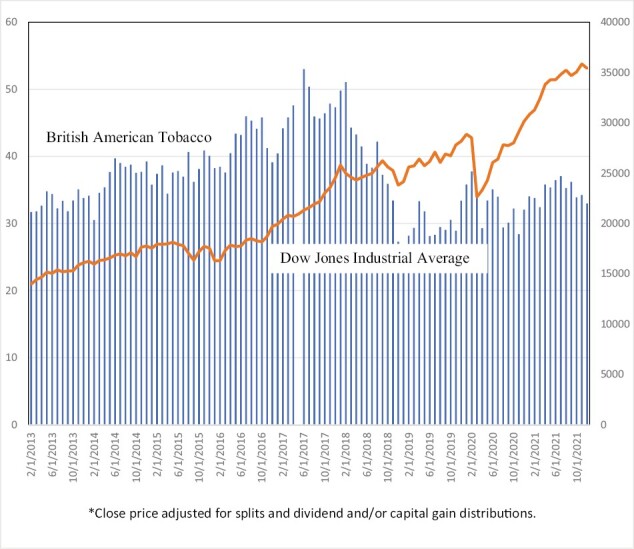
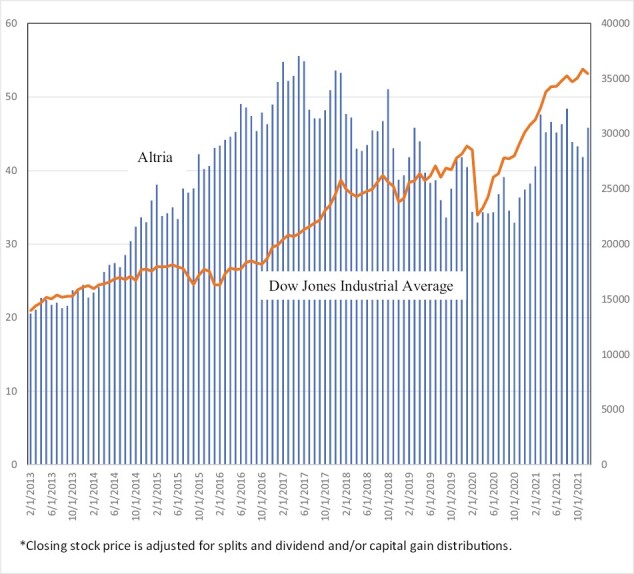
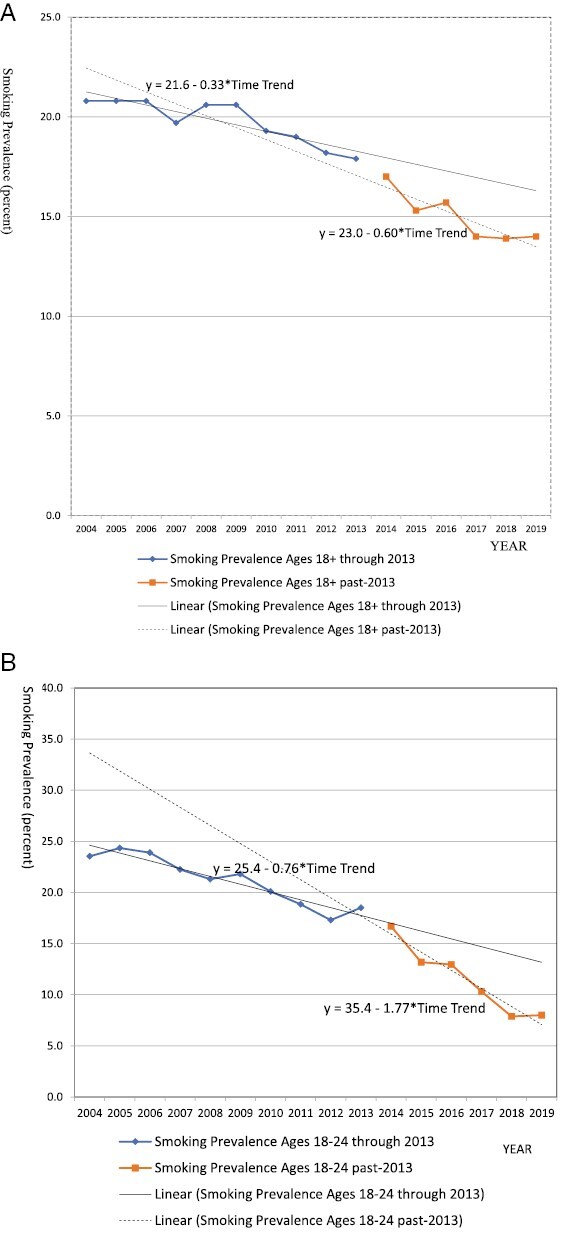
Since 2006, consumers have broadened their use of non-combustible nicotine delivery products (NCNDPs) to include, inter alia, NVPs, HTPs, and oral nicotine pouches. U.S. cigarette companies have acquired major stakes in each of these product categories which corresponds to a period of rapidly declining adult smoking prevalence, especially among younger adults (ages 18-24 years). The shifting dynamics of the nicotine product marketplace are also reflected in cigarette company stock prices. While cigarette companies are likely to promote HTPs and nicotine delivery products over NVPs, their incentives will be directly related to competition from independent firms, which in turn will depend on government regulation.

CONCLUSIONS

Although cigarette companies will back alternatives to combusted tobacco when threatened by competition, the prospects for their lasting conversion to NCNDPs will depend on the extent of such competition, which will be influenced by government regulation of tobacco products.

IMPLICATIONS

Regulations that limit competition from independent firms while also protecting cigarette company profits risk slowing or even reversing recent declines in smoking, especially among youth and young adults. Regulations that reduce the appeal and addictiveness of combusted tobacco products, such as higher cigarette taxes or a reduced nicotine standard, will encourage smokers to quit and/or switch to less harmful non-combusted forms of tobacco. The regulation of non-combustible nicotine delivery products and cigarettes should be proportionate to their relative risks, so that smokers have incentives to switch from combustibles to safer alternatives, and cigarette companies have incentives to promote safer products.

摘要

引言

一些烟草公司开始谈论用危害较小的替代品替代香烟,其中可能包括尼古丁雾化产品(NVP)、加热烟草产品(HTP)和口服尼古丁输送产品。我们认为市场竞争是烟草公司是否会落实其声明意图的主要驱动因素。

目的和方法

我们专注于美国烟草公司的行为。我们比较了 2012 年前后的竞争情况,分析了 NVP 增长对吸烟率和烟草公司利润的影响,并研究了竞争的潜在未来作用。

结果

自 2006 年以来,消费者扩大了对非燃烧尼古丁输送产品(NCNDP)的使用,包括尼古丁雾化产品、加热烟草产品和口服尼古丁袋等。美国烟草公司在这些产品类别中都持有主要股份,这与成人吸烟率,尤其是年轻人(18-24 岁)吸烟率迅速下降的时期相对应。尼古丁产品市场动态的变化也反映在烟草公司的股票价格上。虽然烟草公司可能会推广 HTP 和尼古丁输送产品而不是 NVP,但它们的激励措施将直接与其面临的来自独立公司的竞争相关,而这又将取决于政府对烟草产品的监管。

结论

尽管烟草公司在受到竞争威胁时会支持替代燃烧烟草的产品,但它们持久地转向 NCNDP 的前景将取决于竞争的程度,而这又将受到烟草产品监管的影响。

意义

限制独立公司竞争而又保护烟草公司利润的法规可能会减缓甚至逆转最近吸烟率的下降,尤其是在年轻人和年轻人中。降低可燃烟草产品吸引力和成瘾性的法规,如提高香烟税或降低尼古丁标准,将鼓励吸烟者戒烟和/或转而使用危害较小的非燃烧烟草形式。对非燃烧尼古丁输送产品和香烟的监管应与其相对风险相称,以便吸烟者有动力从可燃产品转向更安全的替代品,而烟草公司也有动力推广更安全的产品。
https://cdn.ncbi.nlm.nih.gov/pmc/blobs/3e35/10664083/af5ef4d0670b/ntad014_fig3.jpg
https://cdn.ncbi.nlm.nih.gov/pmc/blobs/3e35/10664083/cb8f7199c7c9/ntad014_fig1.jpg
https://cdn.ncbi.nlm.nih.gov/pmc/blobs/3e35/10664083/bea2617a7d3d/ntad014_fig2.jpg
https://cdn.ncbi.nlm.nih.gov/pmc/blobs/3e35/10664083/af5ef4d0670b/ntad014_fig3.jpg
https://cdn.ncbi.nlm.nih.gov/pmc/blobs/3e35/10664083/cb8f7199c7c9/ntad014_fig1.jpg
https://cdn.ncbi.nlm.nih.gov/pmc/blobs/3e35/10664083/bea2617a7d3d/ntad014_fig2.jpg
https://cdn.ncbi.nlm.nih.gov/pmc/blobs/3e35/10664083/af5ef4d0670b/ntad014_fig3.jpg

相似文献

1
Do Tobacco Companies Have an Incentive to Promote "Harm Reduction" Products?: The Role of Competition.烟草公司是否有激励推广“减害”产品?竞争的作用。
Nicotine Tob Res. 2023 Nov 22;25(12):1810-1821. doi: 10.1093/ntr/ntad014.
2
Patterns of Non-Cigarette Tobacco and Nicotine Use Among Current Cigarette Smokers and Recent Quitters: Findings From the 2020 ITC Four Country Smoking and Vaping Survey.当前吸烟者和近期戒烟者中非香烟烟草和尼古丁使用模式:来自 2020 年 ITC 四国吸烟和电子烟调查的发现。
Nicotine Tob Res. 2021 Aug 18;23(9):1611-1616. doi: 10.1093/ntr/ntab040.
3
Characterizing Heated Tobacco Product Use Among Adult Cigarette Smokers and Nicotine Vaping Product Users in the 2018 ITC Four Country Smoking & Vaping Survey. characterizing 加热烟草制品在 2018 年国际烟草控制四国家吸烟和电子烟调查中成年吸烟者和尼古丁电子烟使用者中的使用情况。
Nicotine Tob Res. 2022 Mar 1;24(4):493-502. doi: 10.1093/ntr/ntab217.
4
A Decision-Theoretic Public Health Framework for Heated Tobacco and Nicotine Vaping Products.基于决策论的加热烟草和尼古丁电子烟公共卫生框架。
Int J Environ Res Public Health. 2022 Oct 18;19(20):13431. doi: 10.3390/ijerph192013431.
5
Effects of reduced-risk nicotine-delivery products on smoking prevalence and cigarette sales: an observational study.降低风险尼古丁传递产品对吸烟率和香烟销售的影响:一项观察性研究。
Public Health Res (Southampt). 2023 Sep;11(7):1-39. doi: 10.3310/RPDN7327.
6
How do users compare the costs between nicotine vaping products and cigarettes? Findings from the 2016-2020 International Tobacco Control United States surveys.用户如何比较尼古丁电子烟产品和香烟的成本?2016-2020 年国际烟草控制美国调查的结果。
Addiction. 2024 May;119(5):885-897. doi: 10.1111/add.16425. Epub 2024 Jan 7.
7
Perceptions of harmfulness of heated tobacco and nicotine vaping products compared to cigarettes, and the association of advertising exposure on harm perceptions among adults who smoke in South Korea: Cross-sectional findings from the 2020 ITC Korea Survey.与香烟相比,韩国成年吸烟者对加热烟草和尼古丁电子烟产品危害的认知,以及广告曝光与危害认知之间的关联:2020年国际烟草控制韩国调查的横断面研究结果
Tob Induc Dis. 2023 Sep 28;21:121. doi: 10.18332/tid/170252. eCollection 2023.
8
Cue Reactivity Effects of Heated Tobacco Product Use in Current, Former, and Never Smokers in the United States.加热烟草制品使用对当前、曾经和从不吸烟者的线索反应影响:来自美国的研究。
Nicotine Tob Res. 2023 Apr 6;25(5):1014-1021. doi: 10.1093/ntr/ntac228.
9
Do Smokers' Perceptions of the Harmfulness of Nicotine Replacement Therapy and Nicotine Vaping Products as Compared to Cigarettes Influence Their Use as an Aid for Smoking Cessation? Findings from the ITC Four Country Smoking and Vaping Surveys.吸烟者对尼古丁替代疗法和尼古丁蒸气产品危害程度的认知与香烟相比,是否会影响他们将这些产品作为戒烟辅助手段的使用?来自 ITC 四国吸烟与蒸气调查的研究结果。
Nicotine Tob Res. 2022 Aug 6;24(9):1413-1421. doi: 10.1093/ntr/ntac087.
10
Switching behavior and changes in smoking behavior by menthol cigarette preference and menthol heated tobacco product use among adults in the United States who smoke cigarettes: an actual use study.美国吸烟成年人中按薄荷醇香烟偏好和薄荷醇加热烟草制品使用情况划分的吸烟行为转变及变化:一项实际使用情况研究。
Harm Reduct J. 2025 Feb 20;22(1):19. doi: 10.1186/s12954-025-01170-7.

引用本文的文献

1
Evaluating trends in cigarette and HTP use in Japan and measurement issues in the National Health and Nutrition Survey.评估日本卷烟和加热烟草制品使用趋势及国民健康与营养调查中的测量问题。
Tob Control. 2024 Jun 21. doi: 10.1136/tc-2023-058526.
2
How to Identify e-Cigarette Brands Available in the United States During 2020-2022: Development and Usability Study.如何识别2020年至2022年美国市场上的电子烟品牌:开发与可用性研究
JMIR Form Res. 2024 Feb 28;8:e47570. doi: 10.2196/47570.
3
How cigarette excise tax pass-through to prices responds to the uptake and evolution of e-cigarettes (ECs).

本文引用的文献

1
The Economics of Tobacco Regulation: A Comprehensive Review.烟草管制经济学:全面综述
J Econ Lit. 2022 Sep;60(3):883-970. doi: 10.1257/jel.20201482.
2
Bridging: Accelerating Regulatory Acceptance of Reduced-Risk Tobacco and Nicotine Products.弥合差距:加快降低风险烟草和尼古丁产品的监管准入。
Nicotine Tob Res. 2022 Aug 6;24(9):1371-1378. doi: 10.1093/ntr/ntac041.
3
Follow the money: a closer look at US tobacco industry marketing expenditures.追根溯源:深入剖析美国烟草业营销支出。
香烟消费税转嫁至价格的情况如何应对电子烟(EC)的普及和发展。
Tob Control. 2025 Jan 2;34(1):85-91. doi: 10.1136/tc-2023-058078.
4
Subculture wars: The struggle for the vape industry.次文化战争:电子烟行业的斗争。
Br J Sociol. 2023 Jan;74(1):3-16. doi: 10.1111/1468-4446.12981. Epub 2022 Nov 3.
Tob Control. 2023 Sep;32(5):575-582. doi: 10.1136/tobaccocontrol-2021-056971. Epub 2022 Jan 24.
4
Cigar Sales in Convenience Stores in the US, 2009-2020.2009-2020 年美国便利店雪茄销售情况。
JAMA. 2021 Dec 21;326(23):2429-2432. doi: 10.1001/jama.2021.19692.
5
Philip Morris International purchases Vectura.菲利普·莫里斯国际公司收购了威克特拉公司。
Lancet Respir Med. 2021 Dec;9(12):e122. doi: 10.1016/S2213-2600(21)00445-8. Epub 2021 Sep 30.
6
Public health impact of a US ban on menthol in cigarettes and cigars: a simulation study.美国禁止薄荷醇在香烟和雪茄中的使用对公共卫生的影响:一项模拟研究。
Tob Control. 2023 Apr;32(e1):e37-e44. doi: 10.1136/tobaccocontrol-2021-056604. Epub 2021 Sep 2.
7
An Analysis of the Altria-Juul Labs Deal: Antitrust and Population Health Implications.奥驰亚与尤尔实验室交易分析:反垄断及对人群健康的影响
J Compet Law Econ. 2021 Jan 23;17(2):458-492. doi: 10.1093/joclec/nhaa033. eCollection 2021 Jun.
8
Industry profits continue to drive the tobacco epidemic: A new endgame for tobacco control?行业利润持续推动烟草流行:烟草控制的新结局?
Tob Prev Cessat. 2021 Jun 10;7:45. doi: 10.18332/tpc/138232. eCollection 2021.
9
US Nicotine Vaping Product Simulation Model: The Effect of Vaping and Tobacco Control Policies on Smoking Prevalence and Smoking-Attributable Deaths.美国尼古丁蒸气产品模拟模型:蒸气使用和烟草控制政策对吸烟流行率和与吸烟有关的死亡人数的影响。
Int J Environ Res Public Health. 2021 May 3;18(9):4876. doi: 10.3390/ijerph18094876.
10
The effects of traditional cigarette and e-cigarette tax rates on adult tobacco product use.传统香烟和电子烟税率对成人烟草制品使用的影响。
J Risk Uncertain. 2020 Jun;60(3):229-258. doi: 10.1007/s11166-020-09330-9. Epub 2020 Jul 24.