Faculty of Agricultural and Veterinarian Sciences, Department of Agricultural Production Sciences, São Paulo State University (UNESP), Jaboticabal, Via de Acesso Prof. Paulo Donato Castellane, São Paulo, 14884900, Brazil.
Nuclear Energy Center in Agriculture, University of São Paulo (USP), Av. Centenário, 303, Piracicaba, São Paulo, 13400-970, Brazil.
BMC Plant Biol. 2023 Jan 24;23(1):51. doi: 10.1186/s12870-023-04077-2.
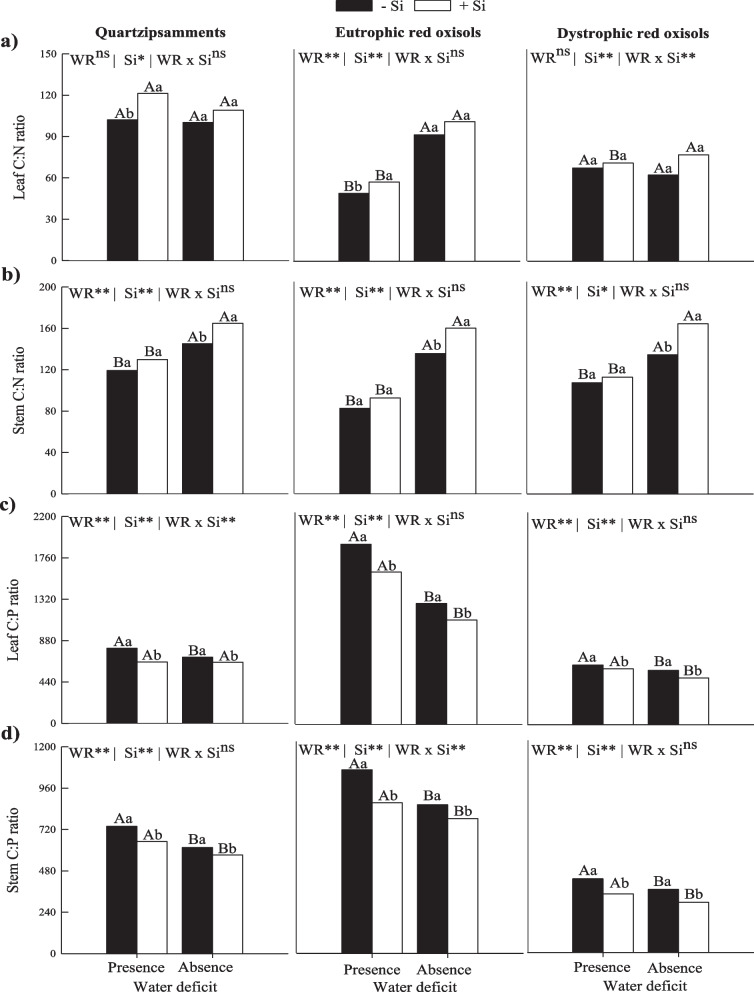
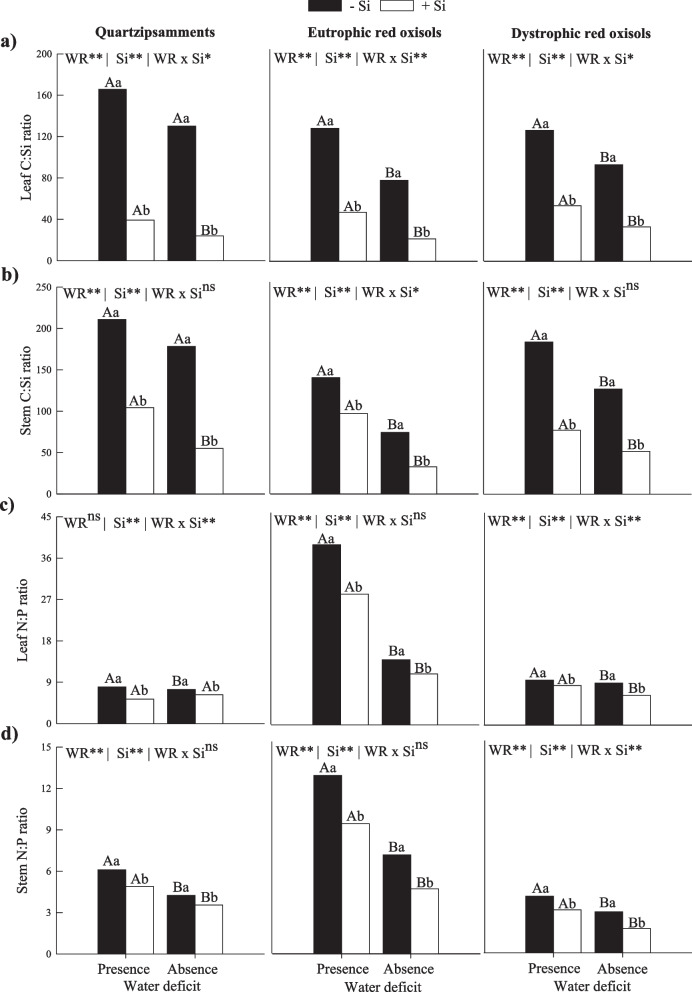
C:N:P homeostasis in plants guarantees optimal levels of these nutrients in plant metabolism. H However, one of the causes to the effects of deficit irrigation is the loss of C:N:P homeostasis in leaves and stems that causes reduction in the growth of sugarcane. Being able to measure the impact of water deficit on C:N:P homeostasis in plants from the stoichiometric ratios of the concentrations of these nutrients in leaves and stems. This loss causes a decrease in nutritional efficiency, but can be mitigated with the use of silicon. Silicon favors the homeostasis of these nutrients and crop productivity. The magnitude of this benefit depends on the absorption of Si by the plant and Si availability in the soil, which varies with the type of soil used. Thus, this study aims to evaluate whether the application of Si via fertigation is efficient in increasing the absorption of Si and whether it is capable of modifying the homeostatic balance of C:N:P of the plant, causing an increase in nutritional efficiency and consequently in the production of biomass in leaves and stems of sugarcane ratoon cultivated with deficient and adequate irrigations in different tropical soils.
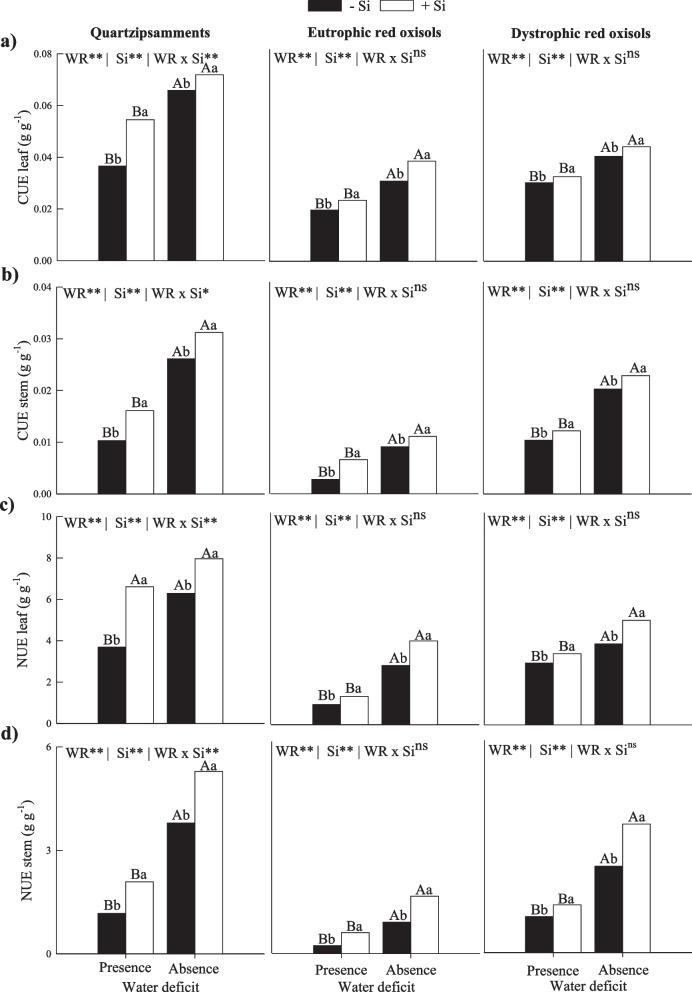
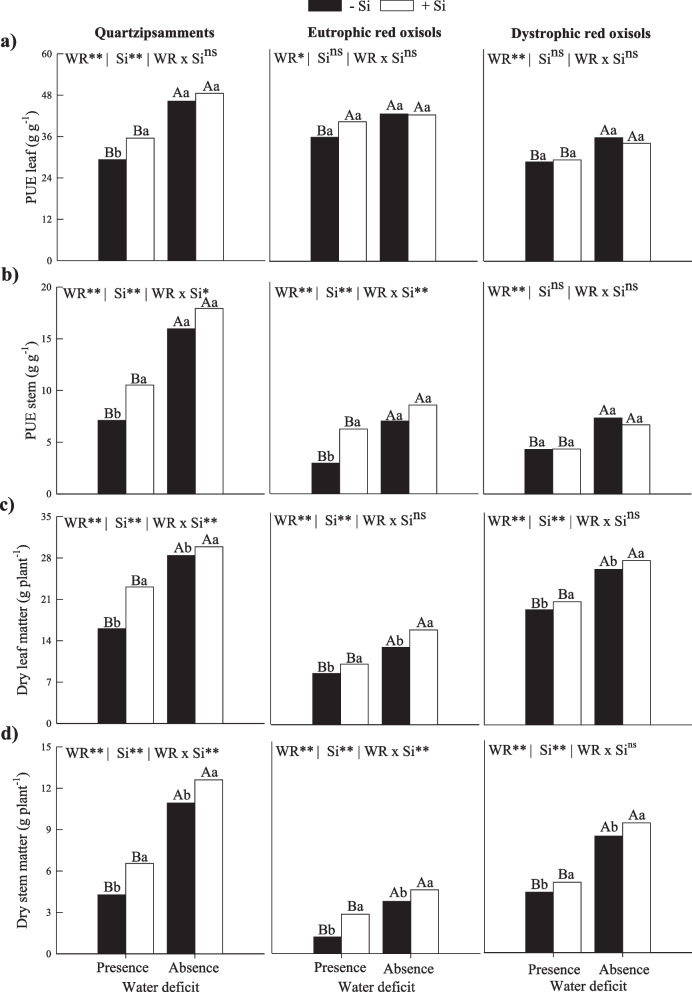
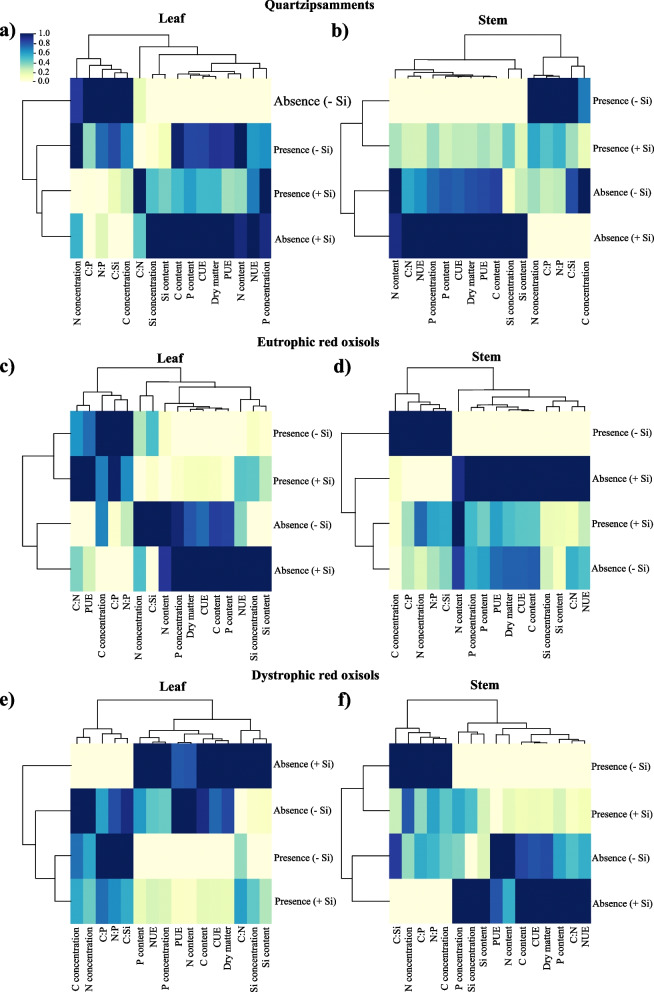
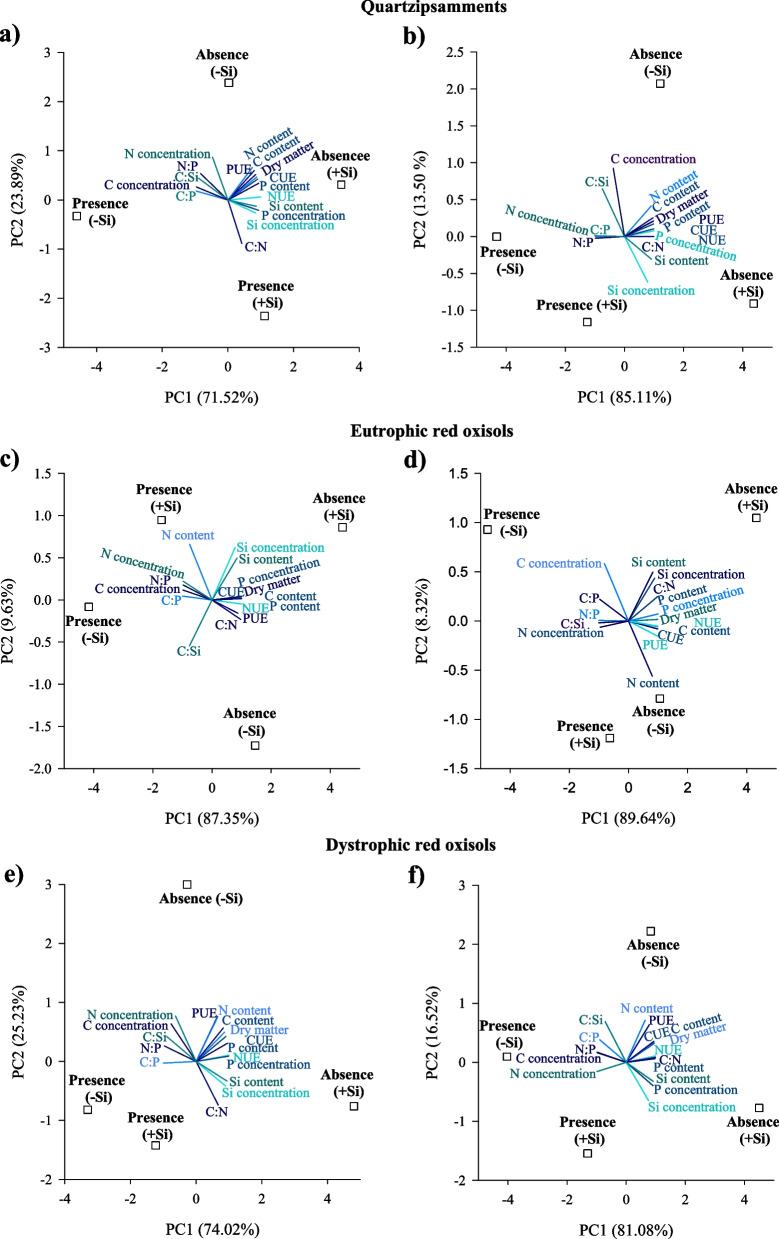
Water deficit caused biological losses in concentrations and accumulation of C, N, and P, and reduced the nutrient use efficiency and biomass production of sugarcane plants cultivated in three tropical soils due to disturbances in the stoichiometric homeostasis of C:N:P. The application of Si increased the concentration and accumulation of Si, C, N, and P and their use efficiency and reduced the biological damage caused by water deficit due to the modification of homeostatic balance of C:N:P by ensuring sustainability of the production of sugarcane biomass in tropical soils. However, the intensity of attenuation of such deleterious effects stood out in plants cultivated in Eutrophic Red Oxisols. Si contributed biologically by improving the performance of sugarcane ratoon with an adequate irrigation due to the optimization of stoichiometric ratios of C:N:P; increased the accumulation and the use efficiency of C, N, and P, and promoted production gains in biomass of sugarcane in three tropical soils.
Our study shows that fertigation with Si can mitigate the deleterious effects of deficient irrigation or potentiate the beneficial effects using an adequate irrigation system due to the induction of a new stoichiometric homeostasis of C:N:P, which in turn improves the nutritional efficiency of sugarcane cultivated in tropical soils.
植物的 C:N:P 内稳性保证了这些养分在植物代谢中的最佳水平。然而,亏缺灌溉效应的一个原因是叶片和茎中 C:N:P 内稳性的丧失,导致甘蔗生长减少。能够从叶片和茎中这些养分的浓度化学计量比来衡量水分亏缺对植物 C:N:P 内稳性的影响。这种损失导致养分效率降低,但可以通过使用硅来缓解。硅有利于这些养分和作物生产力的内稳性。这种益处的大小取决于植物对硅的吸收和土壤中硅的可用性,而这又取决于所用土壤的类型。因此,本研究旨在评估通过灌溉施肥施用硅是否能有效地增加硅的吸收,以及它是否能改变植物 C:N:P 的内稳平衡,提高养分效率,从而增加甘蔗再植叶片和茎生物量的生产,同时对不同热带土壤进行亏缺和充足灌溉。
水分亏缺导致 C、N 和 P 的浓度和积累生物损失,并降低了在三种热带土壤中种植的甘蔗植物的养分利用效率和生物量生产,这是由于 C:N:P 化学计量内稳性的紊乱造成的。硅的应用增加了 Si、C、N 和 P 的浓度和积累及其利用效率,并减少了水分亏缺造成的生物损伤,这是由于 C:N:P 内稳平衡的改变,确保了热带土壤中甘蔗生物量生产的可持续性。然而,在富营养性红壤中,这种有害影响的衰减强度更为显著。硅通过改善充足灌溉下甘蔗再生的表现而在生物学上做出贡献,这是由于 C:N:P 化学计量比的优化;增加了 C、N 和 P 的积累和利用效率,并促进了三种热带土壤中甘蔗生物量的增产。
我们的研究表明,硅的灌溉施肥可以减轻亏缺灌溉的有害影响,或者通过诱导新的 C:N:P 化学计量内稳性来增强充足灌溉系统的有益影响,从而提高在热带土壤中种植的甘蔗的养分效率。