Appiahene Peter, Asare Justice Williams, Donkoh Emmanuel Timmy, Dimauro Giovanni, Maglietta Rosalia
Department of Computer Science and Informatics, University of Energy and Natural Resources, Sunyani, Ghana.
Department of Basic and Applied Biology, University of Energy and Natural Resources, Sunyani, Ghana.
BioData Min. 2023 Jan 24;16(1):2. doi: 10.1186/s13040-023-00319-z.
Anemia is one of the global public health problems that affect children and pregnant women. Anemia occurs when the level of red blood cells within the body decreases or when the structure of the red blood cells is destroyed or when the Hb level in the red blood cell is below the normal threshold, which results from one or more increased red cell destructions, blood loss, defective cell production or a depleted sum of Red Blood Cells.
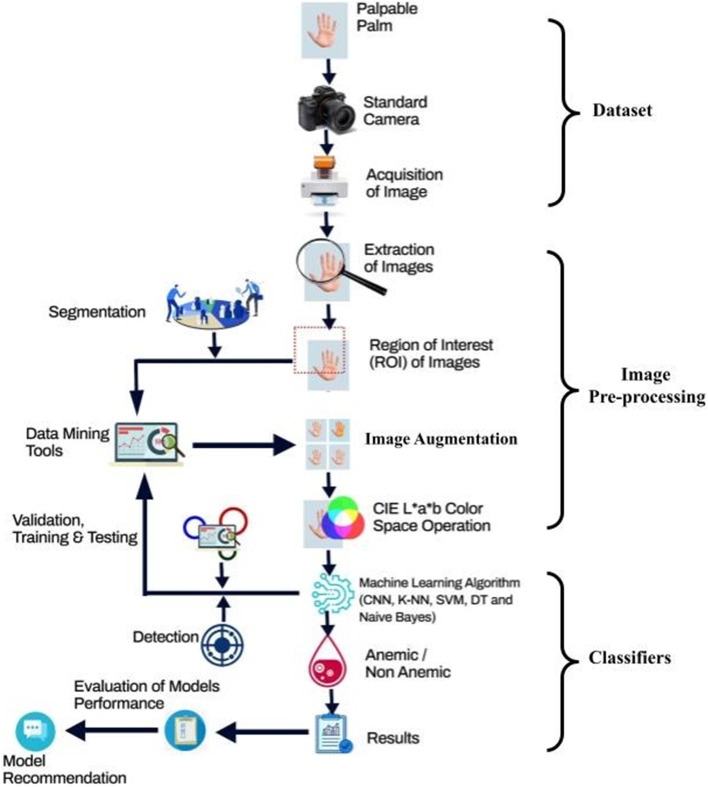
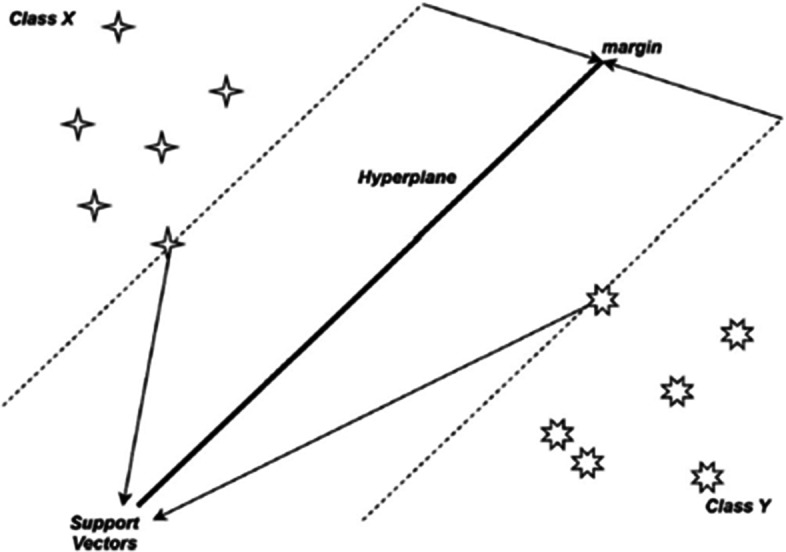
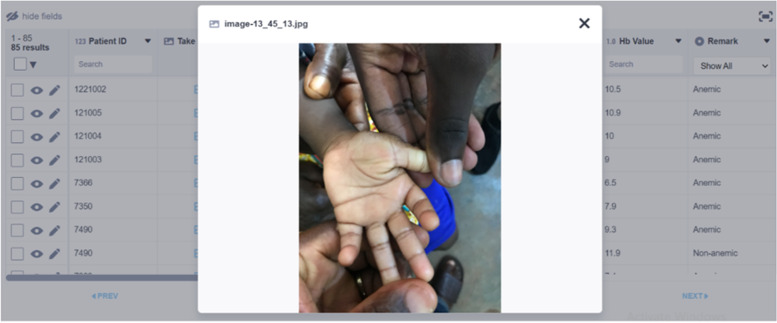
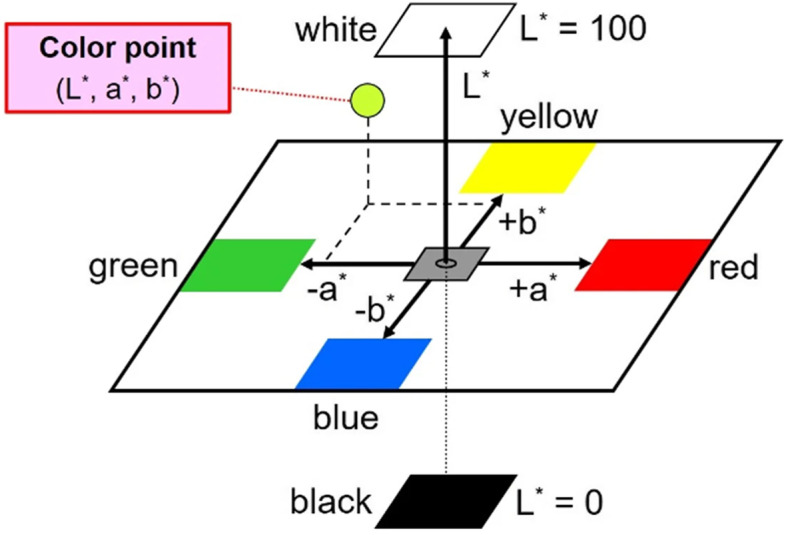
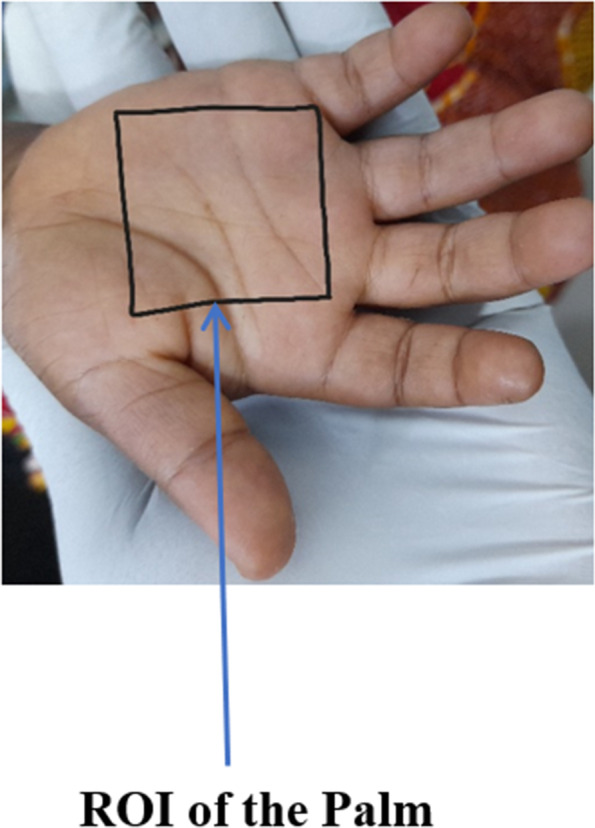
The method used in this study is divided into three phases: the datasets were gathered, which is the palm, pre-processed the image, which comprised; Extracted images, and augmented images, segmented the Region of Interest of the images and acquired their various components of the CIE Lab* colour space (also referred to as the CIELAB), and finally developed the proposed models for the detection of anemia using the various algorithms, which include CNN, k-NN, Nave Bayes, SVM, and Decision Tree. The experiment utilized 527 initial datasets, rotation, flipping and translation were utilized and augmented the dataset to 2635. We randomly divided the augmented dataset into 70%, 10%, and 20% and trained, validated and tested the models respectively.
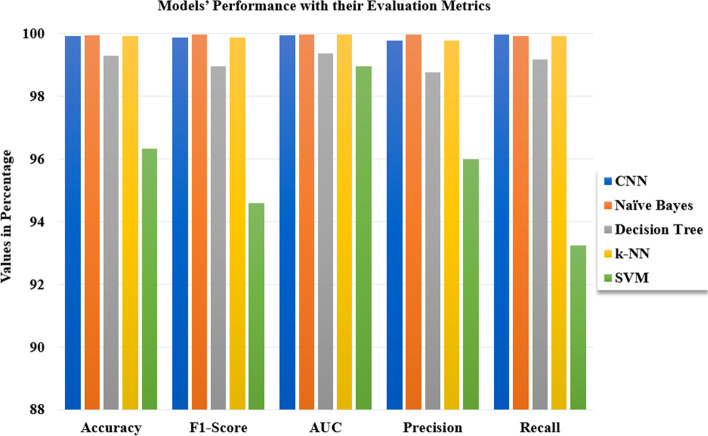
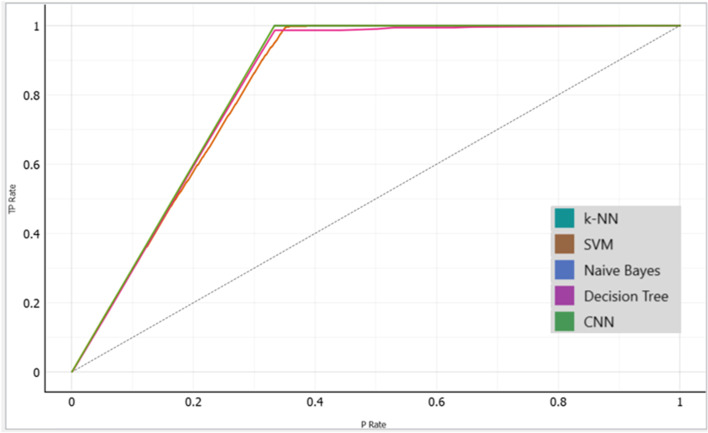
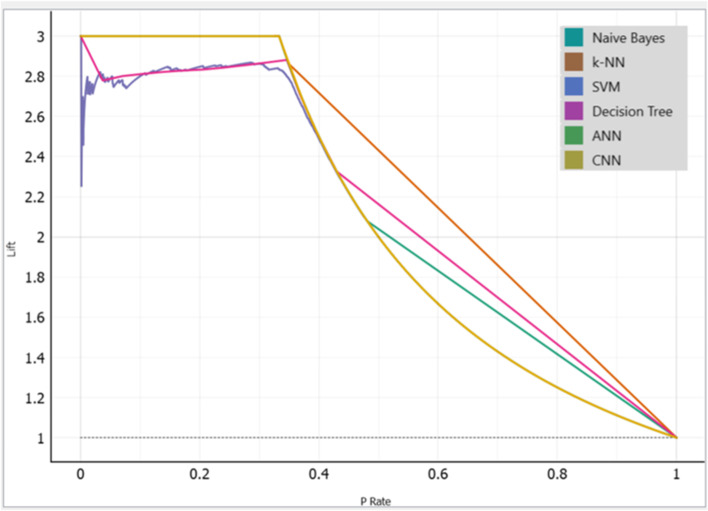
The results of the study justify that the models performed appropriately when the palm is used to detect anemia, with the Naïve Bayes achieving a 99.96% accuracy while the SVM achieved the lowest accuracy of 96.34%, as the CNN also performed better with an accuracy of 99.92% in detecting anemia.
The invasive method of detecting anemia is expensive and time-consuming; however, anemia can be detected through the use of non-invasive methods such as machine learning algorithms which is efficient, cost-effective and takes less time. In this work, we compared machine learning models such as CNN, k-NN, Decision Tree, Naïve Bayes, and SVM to detect anemia using images of the palm. Finally, the study supports other similar studies on the potency of the Machine Learning Algorithm as a non-invasive method in detecting iron deficiency anemia.
贫血是影响儿童和孕妇的全球公共卫生问题之一。当体内红细胞水平降低、红细胞结构被破坏或红细胞中的血红蛋白水平低于正常阈值时,就会发生贫血,这是由一种或多种红细胞破坏增加、失血、细胞生成缺陷或红细胞总数减少导致的。
本研究采用的方法分为三个阶段:收集数据集,即手掌图像;对图像进行预处理,包括提取图像和增强图像;分割图像的感兴趣区域并获取其在CIE Lab*颜色空间(也称为CIELAB)中的各种分量;最后使用包括卷积神经网络(CNN)、k近邻算法(k-NN)、朴素贝叶斯算法、支持向量机(SVM)和决策树在内的各种算法开发用于检测贫血的模型。实验使用了527个初始数据集,通过旋转、翻转和平移对数据集进行增强,使其增加到2635个。我们将增强后的数据集随机分为70%、10%和20%,分别对模型进行训练、验证和测试。
研究结果表明,当使用手掌检测贫血时,模型表现良好,朴素贝叶斯算法的准确率达到99.96%,而支持向量机的准确率最低,为96.34%,卷积神经网络在检测贫血方面的准确率也较高,为99.92%。
检测贫血的侵入性方法昂贵且耗时;然而,贫血可以通过使用机器学习算法等非侵入性方法进行检测,这种方法高效、经济且耗时较少。在这项工作中,我们比较了卷积神经网络、k近邻算法、决策树、朴素贝叶斯算法和支持向量机等机器学习模型,以利用手掌图像检测贫血。最后,该研究支持了其他关于机器学习算法作为检测缺铁性贫血的非侵入性方法的潜力的类似研究。