Department of Sciences, Amrita School of Engineering, Amrita Vishwa Vidyapeetham, Chennai, Tamil Nadu 601103, India.
Department of Computer Science and Engineering, Amrita School of Computing, Amrita Vishwa Vidyapeetham, Chennai, Tamil Nadu 601103, India.
Int J Mol Med. 2024 Nov;54(5). doi: 10.3892/ijmm.2024.5419. Epub 2024 Sep 2.
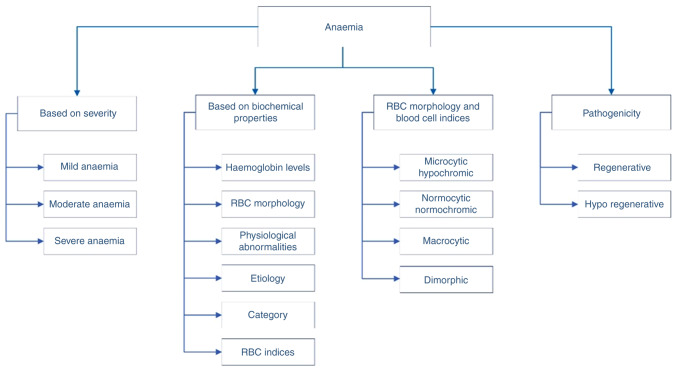
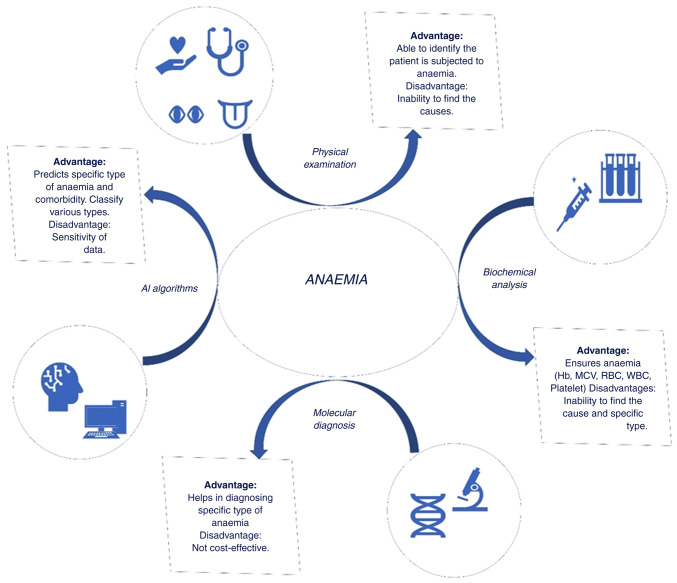
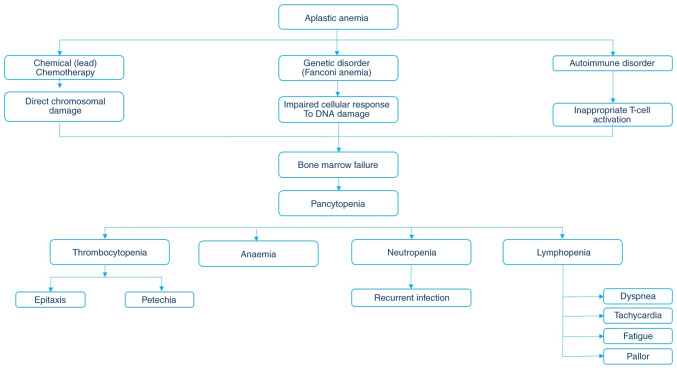
Anaemia is a common health problem worldwide that disproportionately affects vulnerable groups, such as children and expectant mothers. It has a variety of underlying causes, some of which are genetic. A comprehensive strategy combining physical examination, laboratory testing (for example, a complete blood count), and molecular tools for accurate identification is required for diagnosis. With nearly 400 varieties of anaemia, accurate diagnosis remains a challenging task. Red blood cell abnormalities are largely caused by genetic factors, which means that a thorough understanding requires interpretation at the molecular level. As a result, precision medicine has become a key paradigm, utilising artificial intelligence (AI) techniques, such as deep learning and machine learning, to improve prognostic evaluation, treatment prediction, and diagnostic accuracy. Furthermore, exploring the immunomodulatory role of vitamin D along with biomarker‑based molecular techniques offers promising avenues for insight into anaemia's pathophysiology. The intricacy of aplastic anaemia makes it particularly noteworthy as a topic deserving of concentrated molecular research. Given the complexity of anaemia, an integrated strategy integrating clinical, laboratory, molecular, and AI techniques shows a great deal of promise. Such an approach holds promise for enhancing global anaemia management options in addition to advancing our understanding of the illness.
贫血是一种全球范围内常见的健康问题,尤其影响到儿童和孕妇等弱势群体。贫血有多种潜在病因,其中一些是遗传性的。诊断需要结合体格检查、实验室检测(例如全血细胞计数)和分子工具进行准确识别的综合策略。由于贫血有近 400 种不同的类型,因此准确诊断仍然是一项具有挑战性的任务。红细胞异常主要由遗传因素引起,这意味着需要在分子水平上进行深入理解。因此,精准医学已成为一个关键范例,利用人工智能(AI)技术,如深度学习和机器学习,来改善预后评估、治疗预测和诊断准确性。此外,探索维生素 D 的免疫调节作用以及基于生物标志物的分子技术为深入了解贫血的病理生理学提供了有希望的途径。再生障碍性贫血的复杂性使其成为值得集中进行分子研究的一个特别重要的话题。鉴于贫血的复杂性,整合临床、实验室、分子和 AI 技术的综合策略显示出很大的潜力。这种方法除了增进我们对该疾病的理解之外,还有望改善全球贫血管理的选择。