Department of Pharmaceutical Sciences, University of Piemonte Orientale, Novara, Piemonte, Italy.
Department of Internal Medicine and Centre of Excellence for Biomedical Research, University of Genoa, Genova, Liguria, Italy.
J Immunother Cancer. 2023 Jan;11(1). doi: 10.1136/jitc-2022-005916.
The current challenge for immunotherapies is to generate effective antitumor immunity. Since tumor immune escape mechanisms do not impact pre-existing and consolidated immune responses, we tested the hypothesis of redirecting a pregenerated immunity to cancer: to recall a non-tumor antigen response against the tumor, silk fibroin nanoparticles (SFNs) have been selected as 'Trojan-horse' carriers, promoting the antigen uptake by the tumor cells.
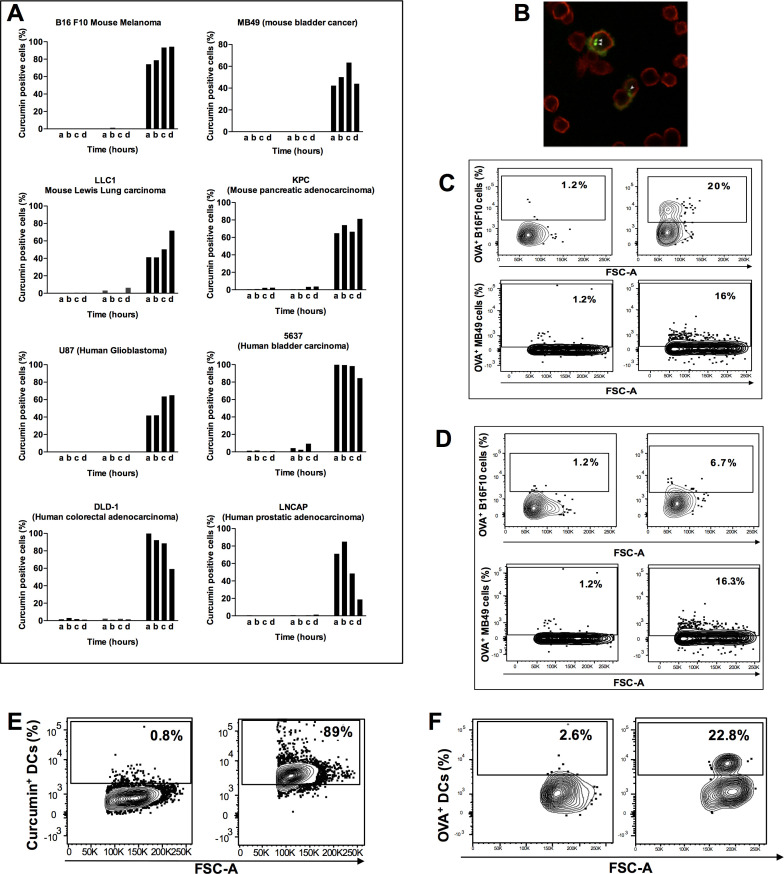
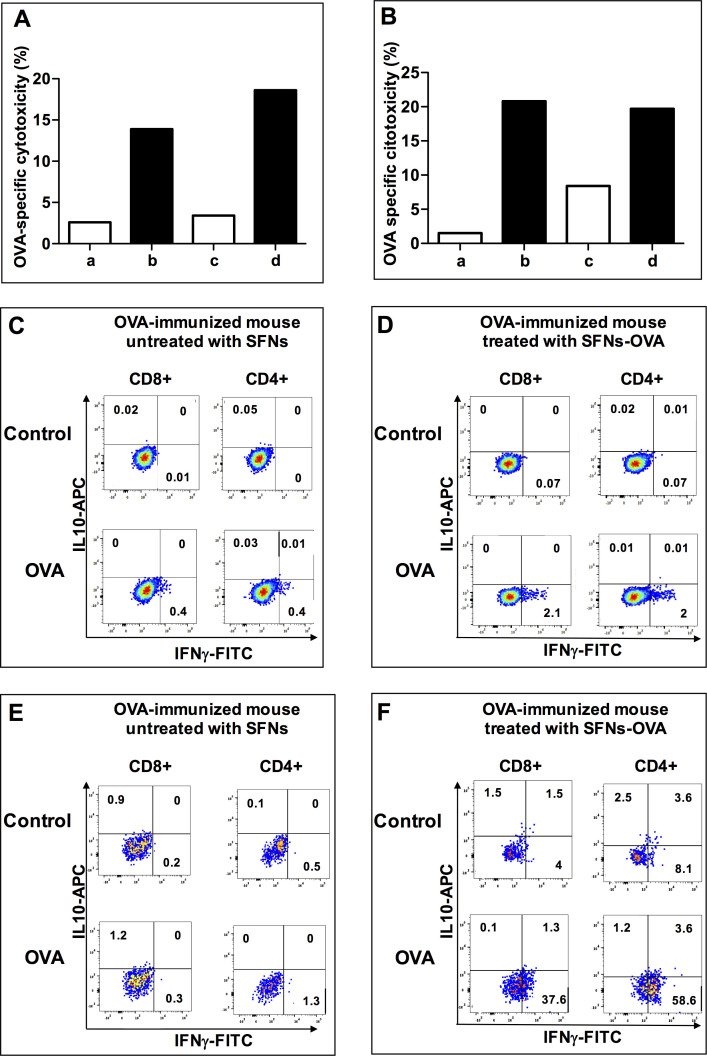
SFNs have been loaded with either ovalbumin (OVA) or CpG oligonucleotide (CpG) as antigen or adjuvant, respectively. In vitro uptake of SFNs by tumor (B16/F10 melanoma and MB49 bladder cancer) or dendritic cells, as well as the presence of OVA-specific T cells in splenic and tumor-infiltrating lymphocytes, were assessed by cytometric analyses. Proof-of-concept of in vivo efficacy was achieved in an OVA-hyperimmune B16/F10 murine melanoma model: SFNs-OVA or SFNs-CpG were injected, separately or in association, into the subcutaneous peritumoral area. Cancer dimensions/survival time were monitored, while, at the molecular level, system biology approaches based on graph theory and experimental proteomic data were performed.
SFNs were efficiently in vitro uptaken by cancer and dendritic cells. In vivo peritumor administration of SFNs-OVA redirected OVA-specific cytotoxic T cells intratumorally. Proteomics and systems biology showed that peritumoral treatment with either SFNs-OVA or SFNs-CpG dramatically modified tumor microenvironment with respect to the control (CTR), mainly involving functional modules and hubs related to angiogenesis, inflammatory mediators, immune function, T complex and serpins expression, redox homeostasis, and energetic metabolism. Both SFNs-OVA and SFNs-CpG significantly delayed melanoma growth/survival time, and their effect was additive.
Both SFNs-OVA and SFNs-CpG induce effective anticancer response through complementary mechanisms and show the efficacy of an innovative active immunotherapy approach based on the redirection of pre-existing immunity against cancer cells. This approach could be universally applied for solid cancer treatments if translated into the clinic using re-call antigens of childhood vaccination.
免疫疗法目前面临的挑战是产生有效的抗肿瘤免疫。由于肿瘤免疫逃逸机制不会影响预先存在和巩固的免疫反应,我们测试了重新定向预先存在的免疫以对抗癌症的假设:召回针对肿瘤的非肿瘤抗原反应,丝素纳米颗粒 (SFN) 已被选为“特洛伊木马”载体,促进肿瘤细胞摄取抗原。
SFN 分别负载卵清蛋白 (OVA) 或 CpG 寡核苷酸 (CpG) 作为抗原或佐剂。通过细胞术分析评估 SFN 在肿瘤(B16/F10 黑色素瘤和 MB49 膀胱癌)或树突状细胞中的摄取,以及在脾和肿瘤浸润淋巴细胞中 OVA 特异性 T 细胞的存在。在 OVA 超免疫 B16/F10 鼠黑色素瘤模型中实现了体内疗效的概念验证:SFN-OVA 或 SFN-CpG 分别或联合注入皮下肿瘤周围区域。监测癌症尺寸/生存时间,同时,在分子水平上,基于图论和实验蛋白质组学数据的系统生物学方法进行。
SFN 在体外被癌症和树突状细胞有效摄取。SFN-OVA 体内肿瘤周围给药将 OVA 特异性细胞毒性 T 细胞重新定向至肿瘤内。蛋白质组学和系统生物学表明,与对照(CTR)相比,SFN-OVA 或 SFN-CpG 的肿瘤周围治疗主要涉及与血管生成、炎症介质、免疫功能、T 复合物和丝氨酸蛋白酶表达、氧化还原平衡和能量代谢相关的功能模块和枢纽,显著改变了肿瘤微环境。SFN-OVA 和 SFN-CpG 均显著延迟黑色素瘤生长/生存时间,且效果具有加性。
SFN-OVA 和 SFN-CpG 通过互补机制诱导有效的抗癌反应,并展示了基于重新定向针对癌细胞的预先存在免疫的创新主动免疫治疗方法的疗效。如果将其转化为使用儿童疫苗召回抗原的临床应用,该方法可普遍用于实体癌治疗。