PEGASE, INRAE, Institut Agro, 35590, Saint Gilles, France.
NOVOGEN, 22960, Plédran, France.
Genet Sel Evol. 2023 Jan 25;55(1):8. doi: 10.1186/s12711-023-00780-8.
Floor eggs, which are defined as eggs that hens lay off-nest, are a major issue in cage-free layer poultry systems. They create additional work for farmers because they must be collected by hand. They are also usually soiled or broken, which results in economic losses. Nonetheless, knowledge about the genetics of nesting behavior is limited. The aim of this study was to estimate genetic parameters for traits related to nest preference for laying and to time spent in the nests used for laying (laying duration).
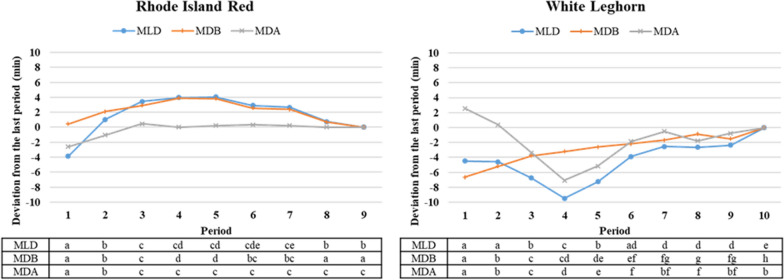
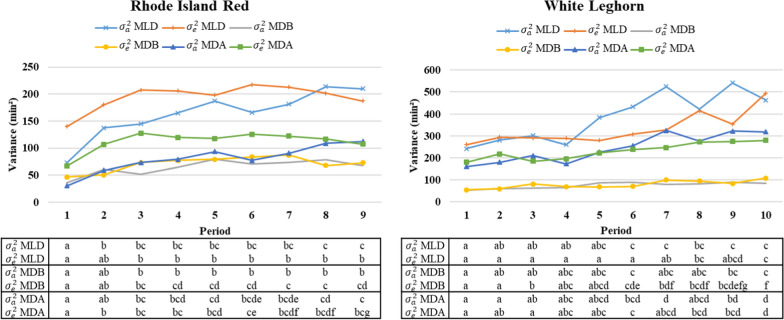
Two pure lines of laying hens were studied: 927 Rhode Island Red and 980 White Leghorn. Electronic nests were used to record the nesting behavior of these hens in floor pens from 24 to 64 weeks of age. Nest preference was studied based on the mean distance between nests used for laying and the percentage of nests used for laying. Laying duration was studied based on mean laying duration, mean duration in the nest before laying, and mean duration in the nest after laying. Genetic parameters were estimated for each line using a restricted maximum-likelihood method applied to a pedigree-based multi-trait animal model.
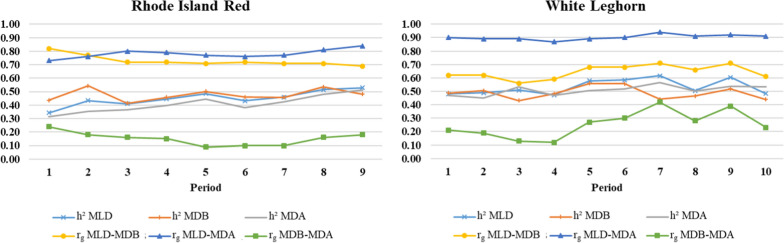
Estimates of genetic parameters were similar for the two lines. Estimates of heritability ranged from 0.18 to 0.37 for nest preference traits and from 0.54 to 0.70 for laying duration traits. Estimates of genetic correlations of these traits with clutch number or mean oviposition time were favorable. Positive genetic correlations were estimated between nest preference and laying rate in the nests or nest acceptance for laying (+ 0.06 to + 0.37).
These results show that genetics influences traits related to nest preference and laying duration. Selecting hens that have no preference for particular nests and spend little time laying in the nests could help optimize nest use, reduce their occupation rate, and thus decrease the incidence of floor eggs in cage-free systems. Genetic correlations of these traits with other traits of interest related to hen welfare and egg quality have yet to be estimated.
散养蛋鸡系统中,窝外蛋(定义为母鸡下的离巢蛋)是一个主要问题。这些蛋需要农户手工收集,增加了额外的工作量。此外,这些蛋通常会受到污染或破损,导致经济损失。尽管如此,关于筑巢行为的遗传知识仍然有限。本研究旨在估计与产蛋窝选择和用于产蛋的窝停留时间(产蛋持续时间)相关性状的遗传参数。
本研究使用 927 只罗得岛红和 980 只白来航母鸡两个纯系进行研究。从 24 至 64 周龄,使用电子窝来记录这些母鸡在地面围栏中的筑巢行为。根据用于产蛋的窝与使用窝的百分比之间的平均距离来研究产蛋窝选择,根据平均产蛋持续时间、产蛋前在窝中的平均持续时间和产蛋后在窝中的平均持续时间来研究产蛋持续时间。使用基于系谱的多性状动物模型的约束最大似然法,为每个系估计遗传参数。
两个系的遗传参数估计值相似。产蛋窝选择性状的遗传力估计值范围为 0.18 至 0.37,产蛋持续时间性状的遗传力估计值范围为 0.54 至 0.70。这些性状与产蛋数或平均产卵时间的遗传相关性有利。产蛋窝选择与窝内产蛋率或产蛋接受度(+0.06 至+0.37)之间估计存在正遗传相关性。
这些结果表明,遗传因素影响产蛋窝选择和产蛋持续时间相关性状。选择对特定窝没有偏好且在窝中产卵时间较短的母鸡可能有助于优化窝的使用,降低其占用率,从而减少无笼系统中窝外蛋的发生率。这些性状与与母鸡福利和鸡蛋质量相关的其他感兴趣性状的遗传相关性尚未得到估计。