Parkinson's Disease and Movement Disorders Unit, Department of Neuroscience, Centre for Rare Neurological Diseases (ERN-RND), University of Padova, Padova, Italy.
Study Center for Neurodegeneration (CESNE), University of Padova, Padova, Italy.
J Neural Transm (Vienna). 2023 Feb;130(2):97-109. doi: 10.1007/s00702-023-02591-z. Epub 2023 Jan 26.
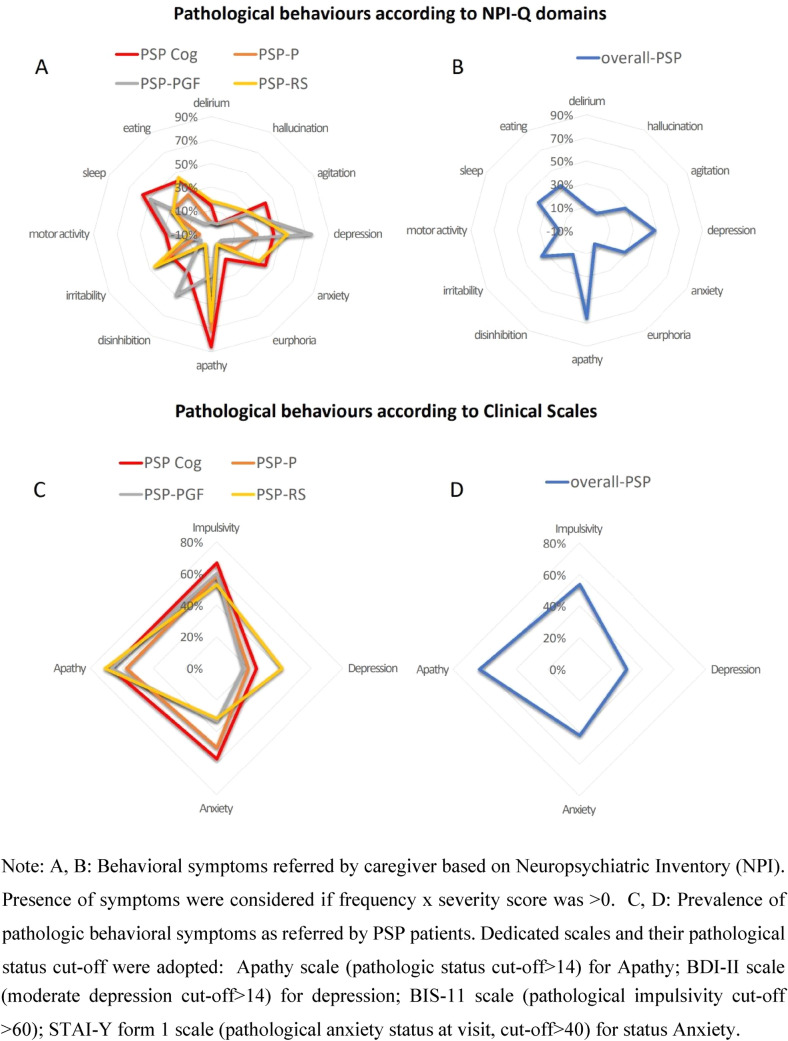
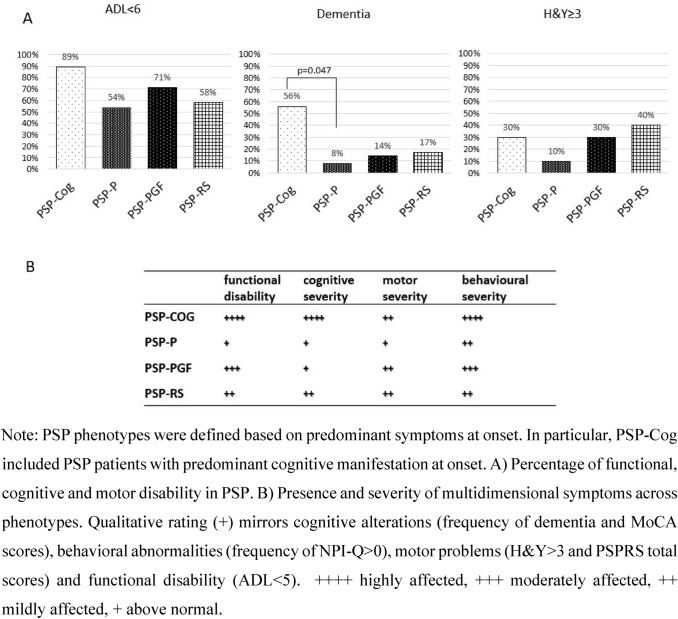
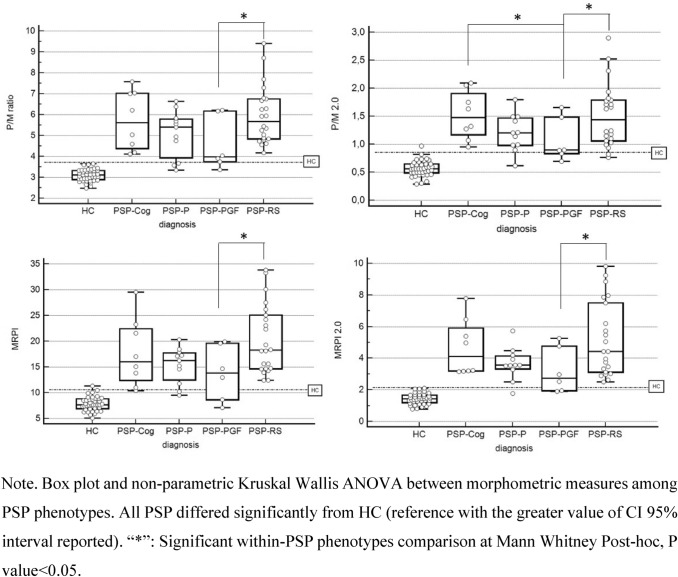
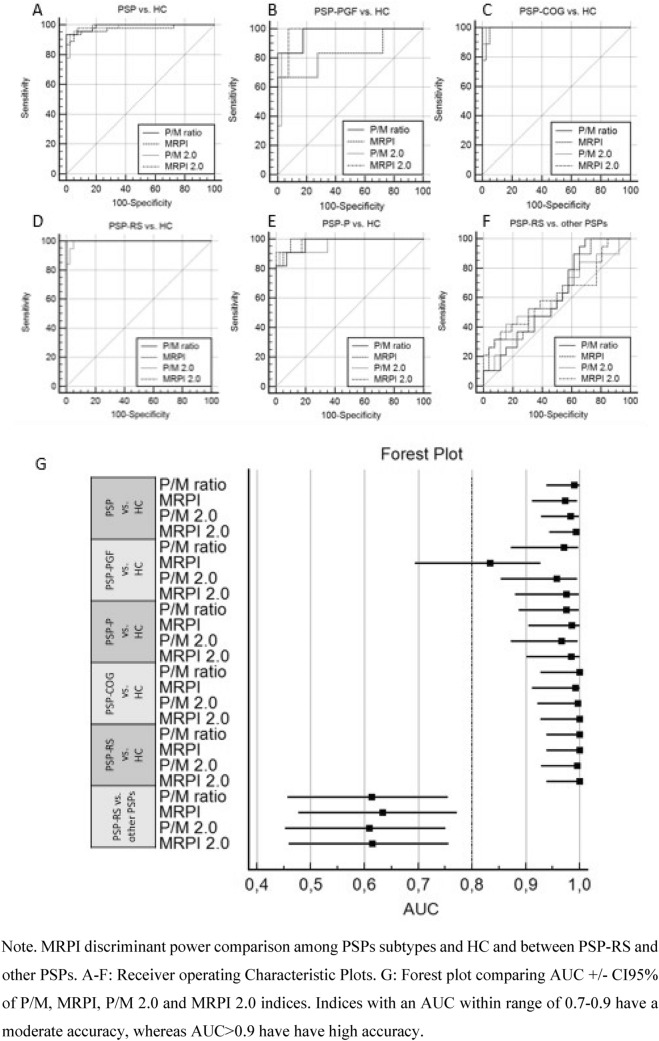
The International Parkinson's and Movement Disorder Society (MDS) criteria for progressive supranuclear palsy (PSP) have broadened the clinical spectrum of the disease and established phenotypic characterization according to the predominant manifestation at onset. The objective of this study is to describe clinical/cognitive and imaging features of a monocentric cohort of PSP patients, highlighting different patterns of functional disability according to the assigned phenotype. We retrospectively reviewed clinical/imaging data of 53 PSP patients diagnosed with probable PSP according to the MDS criteria and 40 age/sex-matched healthy controls (HCs). Neurological/neuropsychological assessments were performed using standardized scales, as well as comprehensive magnetic resonance imaging (MRI) morphometric measurements. In our cohort, there were 24/53 PSP-RS (Richardson's syndrome), 13/53 PSP-P (Parkinsonism), 7/53 PSP-PGF (Progressive gait freezing), and 9/53 PSP-Cog (Cognitive impairment). PSP-Cog presented the worst motor profiles, the highest percentages of dementia and impaired functional autonomy; 4/9 PSP-Cog and 2/7 PSP-PGF died. PSP-P had the lowest motor/cognitive burden. All MRI parameters had good discriminative efficacy vs. HCs, with P/M 2.0 discriminating PSP-PGF from PSP-RS and PSP-Cog. We highlighted discrete clinical and imaging patterns that best characterize different PSP phenotypes. PSP-Cog and PSP-PGF/RS manifest greater incidence of dementia and motor disability, respectively, while PSP-P has a more benign course. The identification of different phenotypes may be the expression of different progression patterns requiring tailored approaches in terms of follow-up and treatment. These findings support the concept of discrete patterns of Tau pathology within the PSP spectrum and encourage research for phenotype-specific outcome measures.
国际帕金森病和运动障碍学会 (MDS) 制定的进行性核上性麻痹 (PSP) 诊断标准拓宽了该疾病的临床谱,并根据发病时的主要表现建立了表型特征。本研究的目的是描述单中心 PSP 患者的临床/认知和影像学特征,根据分配的表型突出不同的功能障碍模式。我们回顾性分析了根据 MDS 标准诊断为可能 PSP 的 53 例 PSP 患者和 40 例年龄/性别匹配的健康对照者 (HCs) 的临床/影像学数据。使用标准化量表对神经/神经心理学评估进行了评估,以及全面的磁共振成像 (MRI) 形态测量。在我们的队列中,有 24/53 例 PSP-RS(Richardson 综合征)、13/53 例 PSP-P(帕金森病)、7/53 例 PSP-PGF(进行性步态冻结)和 9/53 例 PSP-Cog(认知障碍)。PSP-Cog 表现出最差的运动表现,痴呆和功能自主受损的比例最高;4/9 例 PSP-Cog 和 2/7 例 PSP-PGF 死亡。PSP-P 的运动/认知负担最低。所有 MRI 参数与 HCs 相比均具有良好的鉴别效能,P/M 2.0 可区分 PSP-PGF 和 PSP-RS 与 PSP-Cog。我们突出了不同 PSP 表型的离散临床和影像学特征。PSP-Cog 和 PSP-PGF/RS 分别表现出更高的痴呆和运动残疾发生率,而 PSP-P 具有更良性的病程。不同表型的识别可能是不同进展模式的表现,需要在随访和治疗方面采取针对性的方法。这些发现支持 PSP 谱内 Tau 病理学存在不同模式的概念,并鼓励进行针对表型的预后指标研究。