Occupational Health Department, Shenzhen Prevention and Treatment Center for Occupational Diseases, 2019 Buxin Rd., Luohu District, Shenzhen, 518020, China.
Medical Laboratory, Shenzhen Prevention and Treatment Center for Occupational Diseases, Shenzhen, 518020, China.
BMC Med Genomics. 2023 Jan 26;16(1):13. doi: 10.1186/s12920-023-01442-w.
Genome-wide sequencing may extensively identify potential pathogenic variants, which helps to understand mechanisms of tumorigenesis, but such study has not been reported in benzene-induced leukemia (BIL).
We recruited 10 BIL patients and conducted the whole-exome sequencing on their peripheral blood samples. The obtained sequencing data were screened for potential pathogenic and novel variants, then the variants-located genes were clustered to identify cancer-related pathways. Shared or recurrent variants among the BIL cases were also identified and evaluated for their potential functional impact.
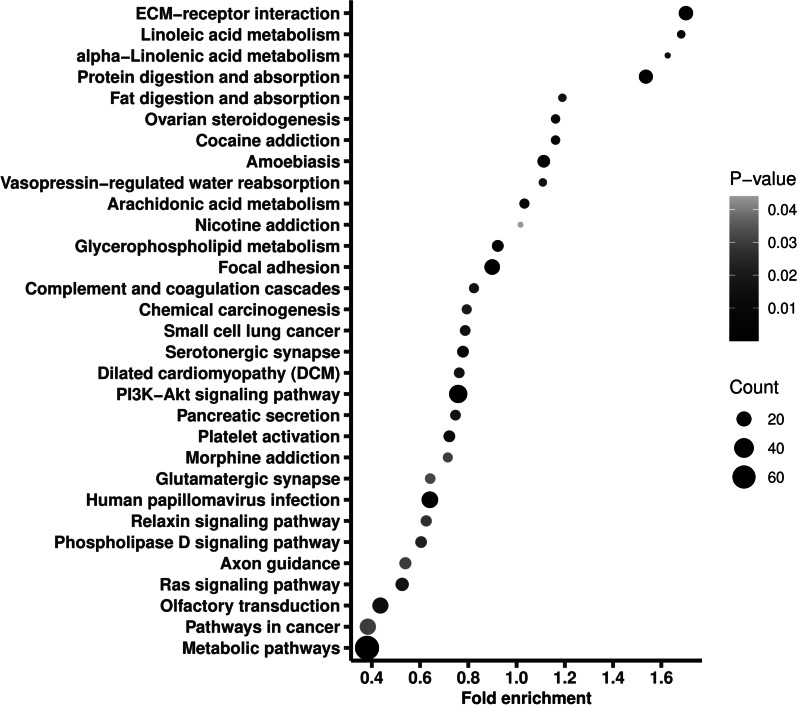
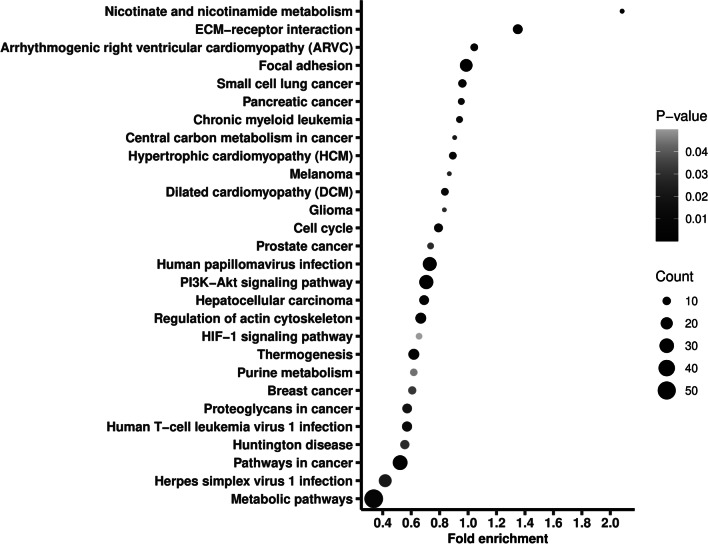
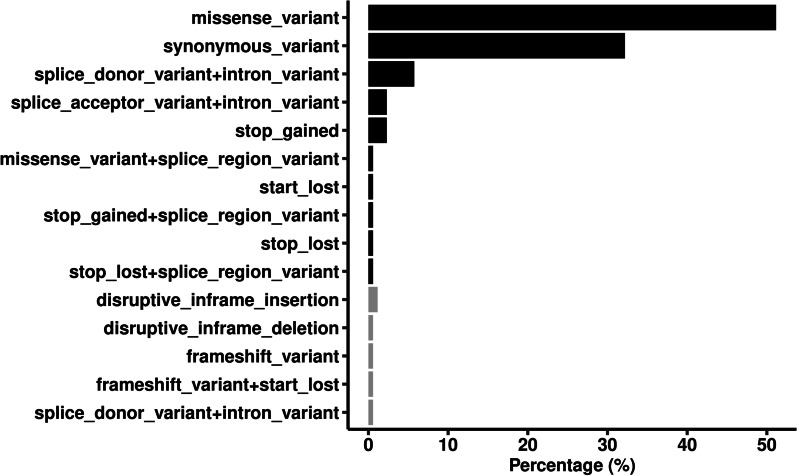
We identified 48,802 variants in exons in total, 97.3% of which were single nucleotide variants. After filtering out variants with minor allele frequency ≥ 1%, we obtained 8667 potentially pathogenic variants, of which 174 were shared by all the BIL cases. The identified variants located in genes that could be significantly enriched into certain cancer-related pathways such as PI3K-AKT signaling pathway and Ras signaling pathway. We also identified 1010 novel variants with no record in the Genome Aggregation Database and in dbSNP, and one of them was shared by 90% cases. The recurrent and novel variant caused a missense mutation in SESN3.
We examined variations of the whole exome in BIL patients for the first time. The commonly shared variants implied a relation with BIL, and the recurrent and novel variant might be specifically related to BIL. The related variants may help unravel the carcinogenic mechanisms of BIL.
全基因组测序可以广泛识别潜在的致病变异,有助于了解肿瘤发生的机制,但苯诱导白血病(BIL)中尚未有此类研究报道。
我们招募了 10 名 BIL 患者,对其外周血样本进行了全外显子组测序。对获得的测序数据进行了潜在致病和新型变异的筛选,然后对变异所在的基因进行聚类,以确定与癌症相关的途径。还鉴定了 BIL 病例之间共享或反复出现的变异,并评估了其潜在的功能影响。
我们总共鉴定出了 48802 个外显子中的变异,其中 97.3%为单核苷酸变异。在过滤掉等位基因频率≥1%的变异后,我们获得了 8667 个潜在的致病变异,其中 174 个变异在所有 BIL 病例中共享。鉴定出的变异位于基因中,这些基因可以显著富集到某些与癌症相关的途径,如 PI3K-AKT 信号通路和 Ras 信号通路。我们还鉴定出了 1010 个在基因组聚集数据库和 dbSNP 中没有记录的新型变异,其中一个变异在 90%的病例中共享。反复出现的新型变异导致 SESN3 发生错义突变。
我们首次检测了 BIL 患者全外显子的变异情况。常见的共享变异暗示了与 BIL 的关系,而反复出现的新型变异可能与 BIL 特异性相关。相关变异可能有助于揭示 BIL 的致癌机制。