Giovarruscio Massimo, Argueta-Alvarado Manuel Humberto, Torres-Méndez Fernando, Dávila-Pérez Claudia Edith, Cerda-Cristerna Bernardino Isaac, Sauro Salvatore, Foschi Federico
Institute of Dentistry, I. M. Sechenov First Moscow State Medical University, 119146 Moscow, Russia.
Department of Restorative Dentistry, Faculty of Dentistry, Oral & Craniofacial Sciences at King's College London, Tower Wing, Guy's Hospital, Great Maze Pond, London, UK.
Iran Endod J. 2020 Fall;15(4):246-252. doi: 10.22037/iej.v15i4.24328.
This study compared bacterial percolation and sealer penetration of a novel obturation technique with the ones of warm vertical condensation technique.
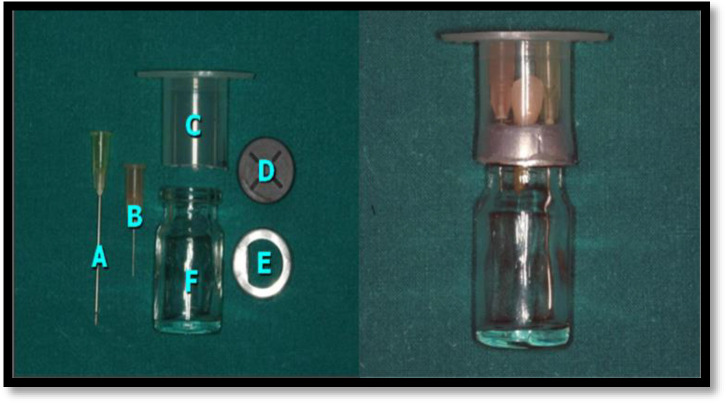
A bacterial percolation test was carried out with 80 single rooted human teeth divided into 5 groups; A (=20): warm vertical condensation and AH-Plus, B (=20): CPoint with AH-Plus, C (= 20): CPoint with EndoSequence BC, +ve Control (=10): teeth with no canal obturation, -ve Control (=10): teeth with no access cavity. The samples were inoculated with a multispecies bacterial incoulum. Bacterial percolation was evaluated by turbidity. Confocal laser scanning microscopy (CLSM) was used to observe the presence of gaps and voids. Further 48 extracted human mandibular single-canal premolars were used to determine the sealer penetration. Slices of the samples were observed by CLSM to evaluate tubules penetration of the sealer. Kaplan Meyer survival, ANOVA one way and Tuckey HSD test and a Wilcoxon signed-rank test were utilised.
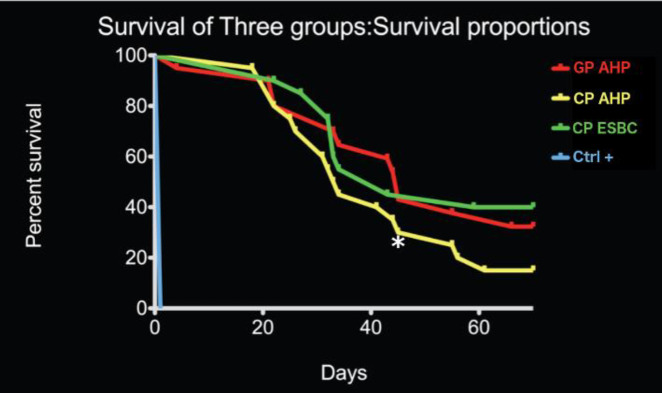
A Kaplan-Meier test showed no significant difference overall (>0.05 between groups A, B and C. At 43 days, the group B showed a significantly inferior ability to prevent bacterial passage (<0.05). The group C showed a deeper sealer penetration than group A and B with statistically significant differences (<0.05) for the total penetration (ANOVA one way and Tukey HSD). A Wilcoxon signed-rank test showed statistically significant differences for the penetration in the middle-and apical third of the 3 groups.
Based on this study, the single polymer-cone obturation technique with a resin based- and bioceramic based-sealer behaved similarly to the warm vertical obturation technique in preventing bacterial passage. The bioceramic sealer showed the deepest penetration but did not fully prevent bacterial leakage.
本研究将一种新型根管充填技术的细菌渗漏和封闭剂渗透情况与热垂直加压充填技术进行了比较。
对80颗单根人牙进行细菌渗漏试验,将其分为5组;A组(=20颗):热垂直加压充填并使用AH-Plus封闭剂,B组(=20颗):使用CPoint和AH-Plus封闭剂,C组(=20颗):使用CPoint和EndoSequence BC封闭剂,阳性对照组(=10颗):未进行根管充填的牙齿,阴性对照组(=10颗):未开髓的牙齿。样本接种多菌种细菌悬液。通过浊度评估细菌渗漏情况。使用共聚焦激光扫描显微镜(CLSM)观察缝隙和空隙的存在情况。另外选取48颗拔除的人下颌单根管前磨牙来测定封闭剂的渗透情况。通过CLSM观察样本切片以评估封闭剂对牙本质小管的渗透情况。采用Kaplan-Meier生存分析、单因素方差分析、Tuckey HSD检验和Wilcoxon符号秩检验。
Kaplan-Meier检验显示总体无显著差异(A、B和C组之间>0.05)。在43天时,B组防止细菌通过的能力显著较差(<0.05)。C组封闭剂的渗透深度大于A组和B组,总渗透情况有统计学显著差异(单因素方差分析和Tukey HSD检验,<0.05)。Wilcoxon符号秩检验显示3组在根管中1/3和根尖1/3的渗透情况有统计学显著差异。
基于本研究,采用树脂基和生物陶瓷基封闭剂的单聚合物锥充填技术在防止细菌通过方面的表现与热垂直加压充填技术相似。生物陶瓷封闭剂显示出最深的渗透,但并未完全防止细菌渗漏。