Lenza Maria Pia, Atxabal Unai, Nycholat Corwin, Oyenarte Iker, Franconetti Antonio, Quintana Jon Imanol, Delgado Sandra, Núñez-Franco Reyes, Garnica Marroquín Carmen Teresa, Coelho Helena, Unione Luca, Jiménez-Oses Gonzalo, Marcelo Filipa, Schubert Mario, Paulson James C, Jiménez-Barbero Jesús, Ereño-Orbea June
CIC bioGUNE, Bizkaia Technology Park, Building 800, Derio-Bizkaia48160, Spain.
Department of Molecular Medicine and Department of Immunology and Microbiology, The Scripps Research Institute, La Jolla, California92037, United States.
JACS Au. 2022 Dec 23;3(1):204-215. doi: 10.1021/jacsau.2c00592. eCollection 2023 Jan 23.
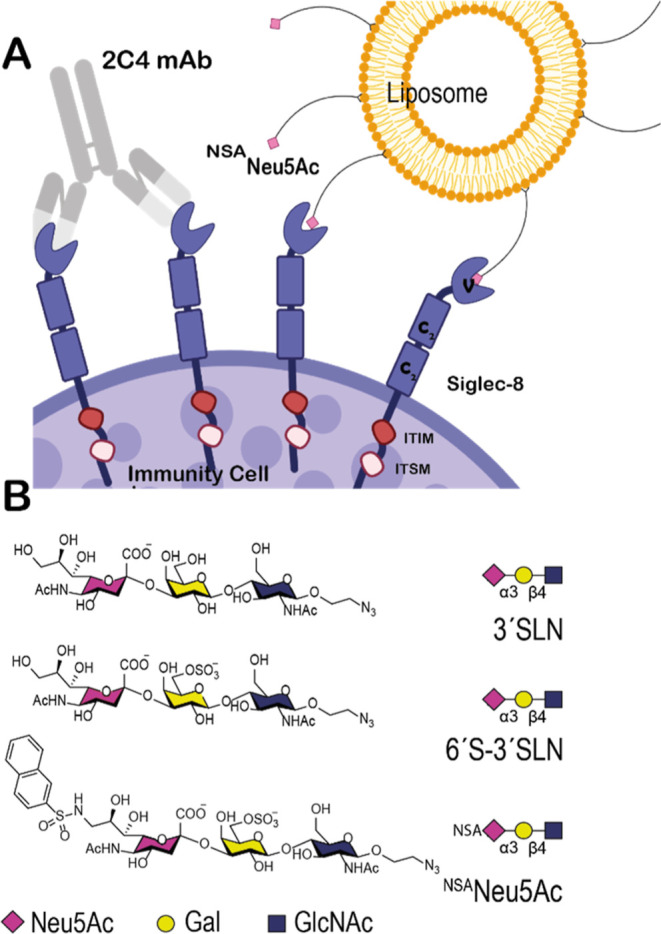
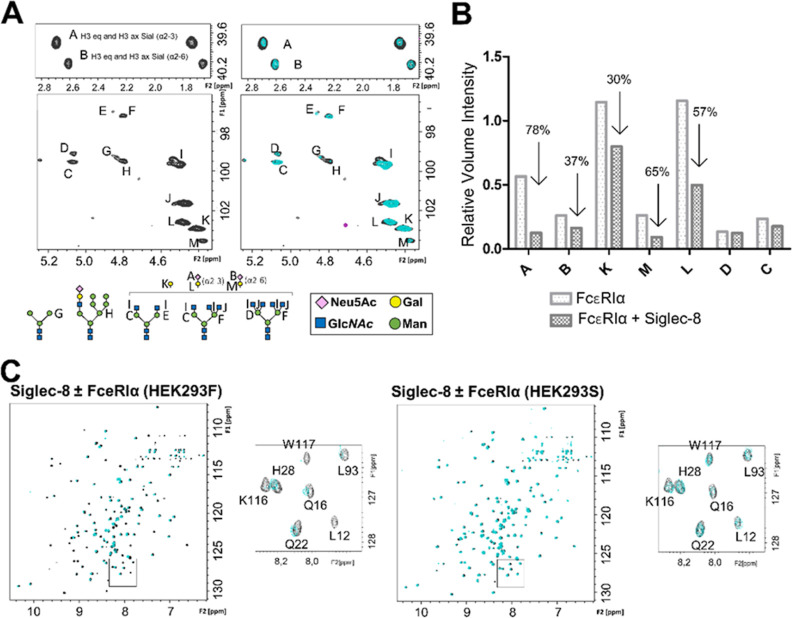
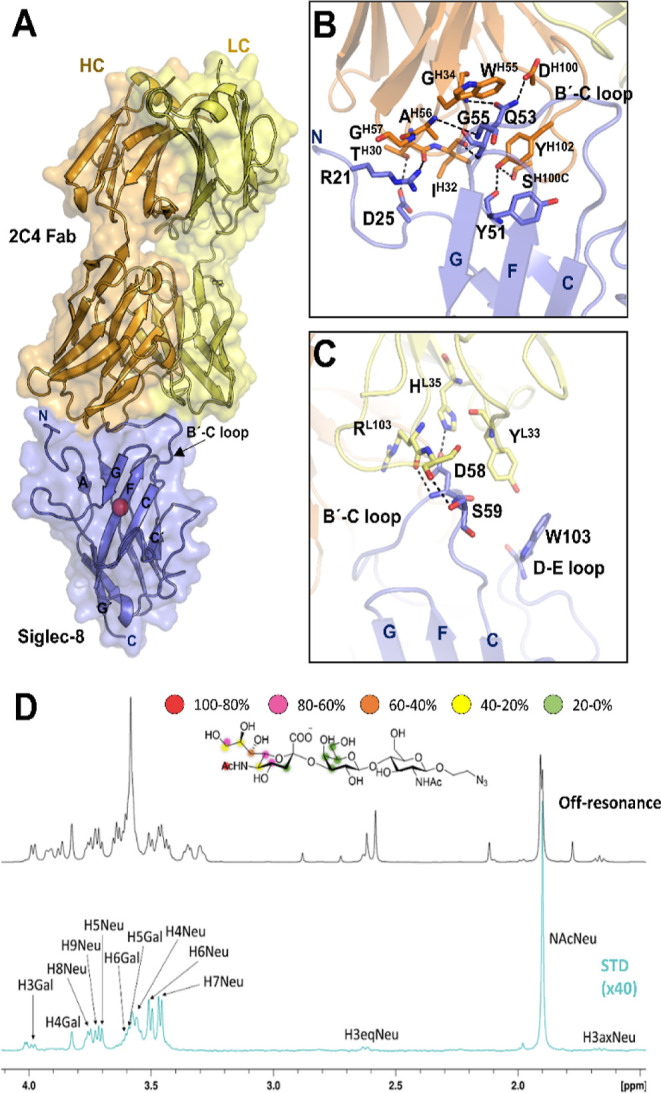
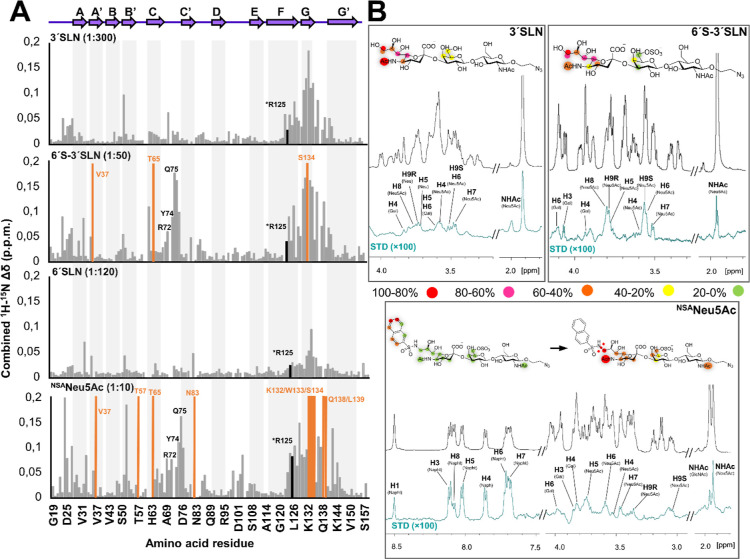
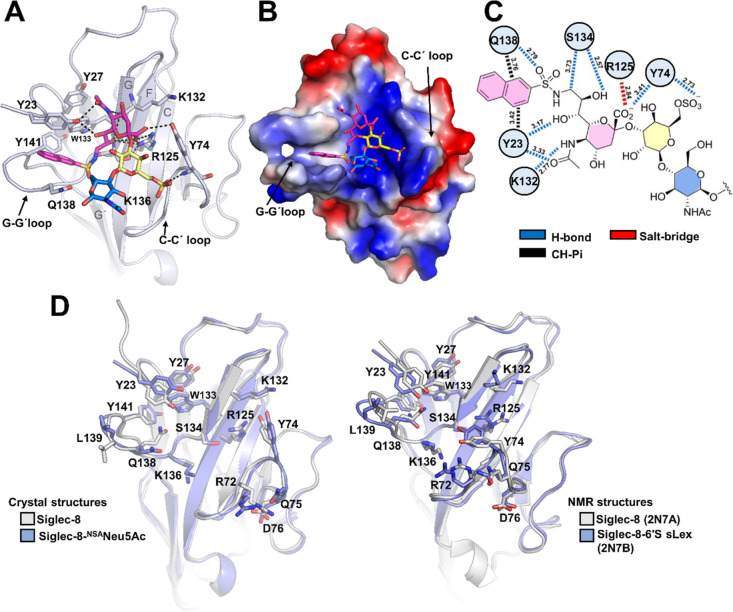
Human sialic acid binding immunoglobulin-like lectin-8 (Siglec-8) is an inhibitory receptor that triggers eosinophil apoptosis and can inhibit mast cell degranulation when engaged by specific monoclonal antibodies (mAbs) or sialylated ligands. Thus, Siglec-8 has emerged as a critical negative regulator of inflammatory responses in diverse diseases, such as allergic airway inflammation. Herein, we have deciphered the molecular recognition features of the interaction of Siglec-8 with the mAb lirentelimab (2C4, under clinical development) and with a sialoside mimetic with the potential to suppress mast cell degranulation. The three-dimensional structure of Siglec-8 and the fragment antigen binding (Fab) portion of the anti-Siglec-8 mAb 2C4, solved by X-ray crystallography, reveal that 2C4 binds close to the carbohydrate recognition domain (V-type Ig domain) on Siglec-8. We have also deduced the binding mode of a high-affinity analogue of its sialic acid ligand (9--napthylsufonimide-Neu5Ac, NSANeuAc) using a combination of NMR spectroscopy and X-ray crystallography. Our results show that the sialoside ring of NSANeuAc binds to the canonical sialyl binding pocket of the Siglec receptor family and that the high affinity arises from the accommodation of the NSA aromatic group in a nearby hydrophobic patch formed by the N-terminal tail and the unique -' loop. The results reveal the basis for the observed high affinity of this ligand and provide clues for the rational design of the next generation of Siglec-8 inhibitors. Additionally, the specific interactions between Siglec-8 and the N-linked glycans present on the high-affinity receptor FcεRIα have also been explored by NMR.
人唾液酸结合免疫球蛋白样凝集素8(Siglec-8)是一种抑制性受体,可触发嗜酸性粒细胞凋亡,当与特异性单克隆抗体(mAb)或唾液酸化配体结合时,可抑制肥大细胞脱颗粒。因此,Siglec-8已成为多种疾病(如过敏性气道炎症)中炎症反应的关键负调节因子。在此,我们已经解析了Siglec-8与mAb lirentelimab(2C4,正在临床开发中)以及与具有抑制肥大细胞脱颗粒潜力的唾液酸苷模拟物相互作用的分子识别特征。通过X射线晶体学解析的Siglec-8和抗Siglec-8 mAb 2C4的片段抗原结合(Fab)部分的三维结构表明,2C4在Siglec-8上靠近碳水化合物识别结构域(V型免疫球蛋白结构域)处结合。我们还结合核磁共振光谱和X射线晶体学推断了其唾液酸配体的高亲和力类似物(9-萘磺酰亚胺-Neu5Ac,NSANeuAc)的结合模式。我们的结果表明,NSANeuAc的唾液酸苷环与Siglec受体家族的典型唾液酸结合口袋结合,高亲和力源于NSA芳香基团在由N末端尾巴和独特的β-环形成的附近疏水区域中的容纳。这些结果揭示了该配体观察到的高亲和力的基础,并为下一代Siglec-8抑制剂的合理设计提供了线索。此外,还通过核磁共振探索了Siglec-8与高亲和力受体FcεRIα上存在的N-连接聚糖之间的特异性相互作用。