Short Annabel K, Thai Christina W, Chen Yuncai, Kamei Noriko, Pham Aidan L, Birnie Matthew T, Bolton Jessica L, Mortazavi Ali, Baram Tallie Z
Department of Anatomy and Neurobiology, University of California Irvine, Irvine, California.
Department of Pediatrics, University of California Irvine, Irvine, California.
Biol Psychiatry Glob Open Sci. 2021 Dec 23;3(1):99-109. doi: 10.1016/j.bpsgos.2021.12.006. eCollection 2023 Jan.
Mental health and vulnerabilities to neuropsychiatric disorders involve the interplay of genes and environment, particularly during sensitive developmental periods. Early-life adversity (ELA) and stress promote vulnerabilities to stress-related affective disorders, yet it is unknown how transient ELA dictates lifelong neuroendocrine and behavioral reactions to stress. The population of hypothalamic corticotropin-releasing factor (CRF)-expressing neurons that regulate stress responses is a promising candidate to mediate the long-lasting influences of ELA on stress-related behavioral and hormonal responses via enduring transcriptional and epigenetic mechanisms.
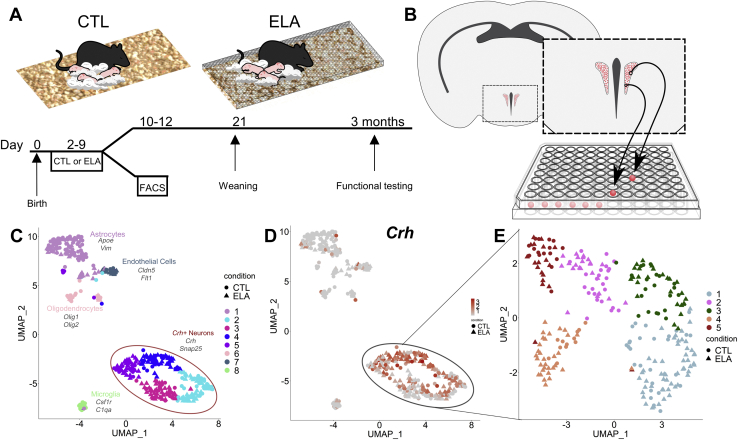
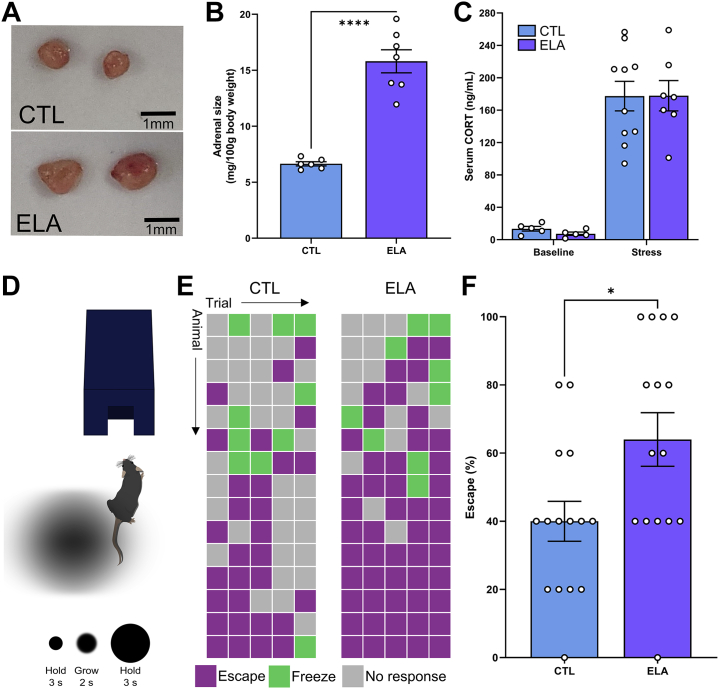
Capitalizing on a well-characterized model of ELA, we examined ELA-induced changes in gene expression profiles of CRF-expressing neurons in the hypothalamic paraventricular nucleus of developing male mice. We used single-cell RNA sequencing on isolated CRF-expressing neurons. We determined the enduring functional consequences of transcriptional changes on stress reactivity in adult ELA mice, including hormonal responses to acute stress, adrenal weights as a measure of chronic stress, and behaviors in the looming shadow threat task.
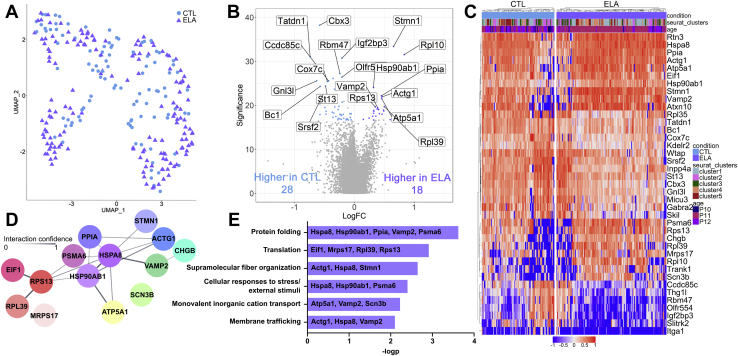
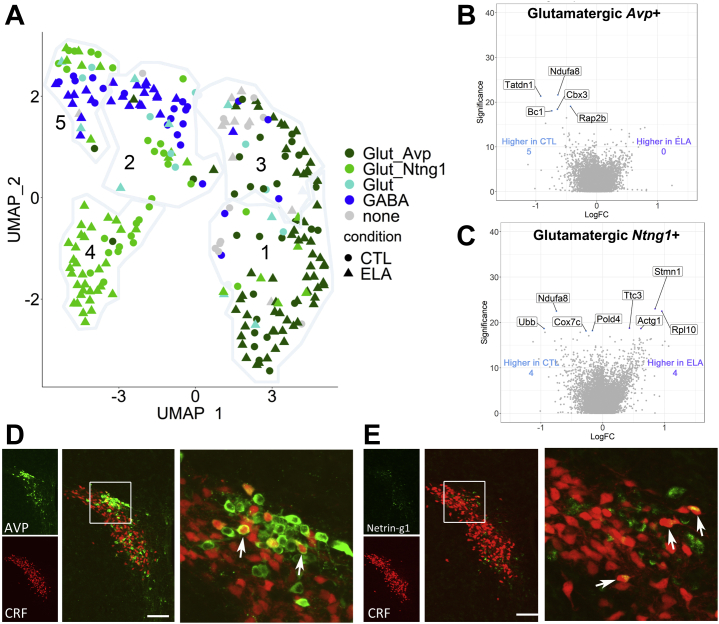
Single-cell transcriptomics identified distinct and novel CRF-expressing neuronal populations, characterized by both their gene expression repertoire and their neurotransmitter profiles. ELA-provoked expression changes were selective to specific subpopulations and affected genes involved in neuronal differentiation, synapse formation, energy metabolism, and cellular responses to stress and injury. Importantly, these expression changes were impactful, apparent from adrenal hypertrophy and augmented behavioral responses to stress in adulthood.
We uncover a novel repertoire of stress-regulating CRF cell types differentially affected by ELA and resulting in augmented stress vulnerability, with relevance to the origins of stress-related affective disorders.
心理健康以及对神经精神疾病的易感性涉及基因与环境的相互作用,尤其是在敏感的发育阶段。早年逆境(ELA)和压力会增加对与压力相关的情感障碍的易感性,但尚不清楚短暂的早年逆境如何决定对压力的终身神经内分泌和行为反应。下丘脑促肾上腺皮质激素释放因子(CRF)表达神经元群体调节应激反应,是一个很有前景的候选者,可通过持久的转录和表观遗传机制介导早年逆境对与压力相关的行为和激素反应的长期影响。
利用一个特征明确的早年逆境模型,我们研究了早年逆境诱导的发育中雄性小鼠下丘脑室旁核中表达CRF的神经元基因表达谱的变化。我们对分离出的表达CRF的神经元进行了单细胞RNA测序。我们确定了成年早年逆境小鼠转录变化对应激反应性的持久功能影响,包括对急性应激的激素反应、作为慢性应激指标的肾上腺重量,以及在逼近阴影威胁任务中的行为表现。
单细胞转录组学鉴定出了不同的、新的表达CRF的神经元群体,其特征在于它们的基因表达库和神经递质谱。早年逆境引发的表达变化对特定亚群具有选择性,并影响参与神经元分化、突触形成、能量代谢以及细胞对应激和损伤反应的基因。重要的是,这些表达变化具有显著影响,在成年期表现为肾上腺肥大和对压力的行为反应增强。
我们发现了一个新的应激调节CRF细胞类型库,它们受到早年逆境的不同影响,并导致应激易感性增加,这与与压力相关的情感障碍的起源有关。