Adult Congenital Heart Centre and Centre for Pulmonary Hypertension, Royal Brompton Hospital, Royal Brompton and Harefield Hospitals, Guy's and St Thomas' NHS Foundation Trust, London, United Kingdom (K.D., A.C.).
National Heart and Lung Institute, Imperial College London, United Kingdom (K.D., A.C.).
Circulation. 2023 Jan 31;147(5):425-441. doi: 10.1161/CIRCULATIONAHA.122.059706. Epub 2023 Jan 30.
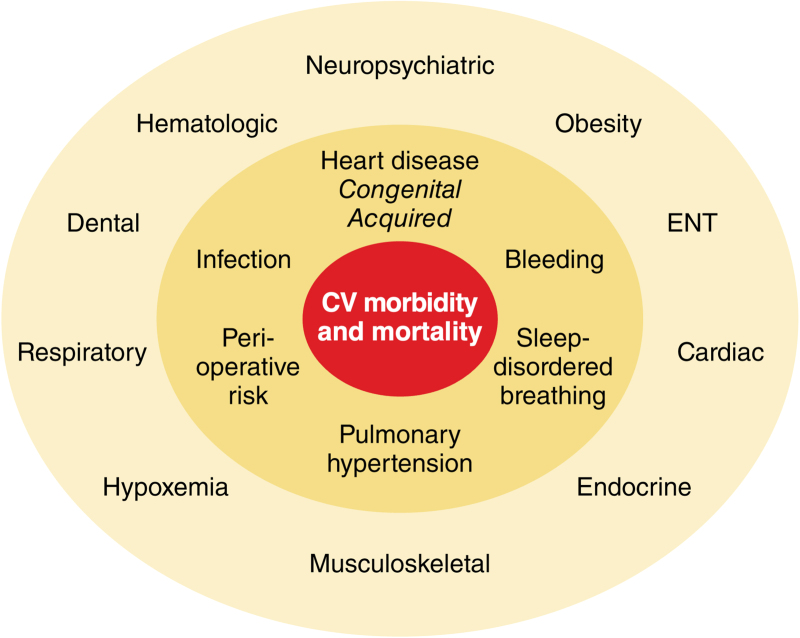
Cardiovascular disease is a leading cause of morbidity and mortality in individuals with Down syndrome. Congenital heart disease is the most common cardiovascular condition in this group, present in up to 50% of people with Down syndrome and contributing to poor outcomes. Additional factors contributing to cardiovascular outcomes include pulmonary hypertension; coexistent pulmonary, endocrine, and metabolic diseases; and risk factors for atherosclerotic disease. Moreover, disparities in the cardiovascular care of people with Down syndrome compared with the general population, which vary across different geographies and health care systems, further contribute to cardiovascular mortality; this issue is often overlooked by the wider medical community. This review focuses on the diagnosis, prevalence, and management of cardiovascular disease encountered in people with Down syndrome and summarizes available evidence in 10 key areas relating to Down syndrome and cardiac disease, from prenatal diagnosis to disparities in care in areas of differing resource availability. All specialists and nonspecialist clinicians providing care for people with Down syndrome should be aware of best clinical practice in all aspects of care of this distinct population.
心血管疾病是唐氏综合征患者发病率和死亡率的主要原因。先天性心脏病是该群体中最常见的心血管疾病,在多达 50%的唐氏综合征患者中存在,并导致不良后果。导致心血管结果的其他因素包括肺动脉高压;并存的肺部、内分泌和代谢疾病;以及动脉粥样硬化疾病的危险因素。此外,与一般人群相比,唐氏综合征患者的心血管保健存在差异,这种差异因地理位置和医疗保健系统而异,进一步导致心血管死亡率;这个问题经常被更广泛的医学界所忽视。本综述重点介绍了唐氏综合征患者心血管疾病的诊断、患病率和管理,并总结了 10 个关键领域与唐氏综合征和心脏病相关的现有证据,从产前诊断到不同资源可用性地区的护理差异。所有为唐氏综合征患者提供护理的专家和非专家临床医生都应该了解这一独特人群护理的各个方面的最佳临床实践。