School of Physiology, Pharmacology and Neuroscience, Biomedical Sciences Building, University Walk, Bristol, BS8 1TD, UK; Population Health Sciences, Oakfield House, Oakfield Grove, Bristol, BS8 2BN, UK. Electronic address: https://twitter.com/lucygoudswaard.
School of Physiology, Pharmacology and Neuroscience, Biomedical Sciences Building, University Walk, Bristol, BS8 1TD, UK.
J Thromb Haemost. 2023 May;21(5):1307-1321. doi: 10.1016/j.jtha.2023.01.018. Epub 2023 Jan 28.
Patients with COVID-19 are at increased risk of thrombosis, which is associated with altered platelet function and coagulopathy, contributing to excess mortality.
To characterize the mechanism of altered platelet function in COVID-19 patients.
The platelet proteome, platelet functional responses, and platelet-neutrophil aggregates were compared between patients hospitalized with COVID-19 and healthy control subjects using tandem mass tag proteomic analysis, Western blotting, and flow cytometry.
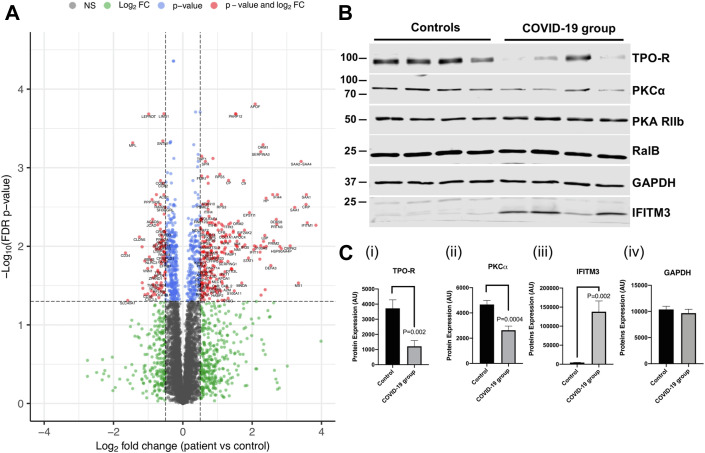
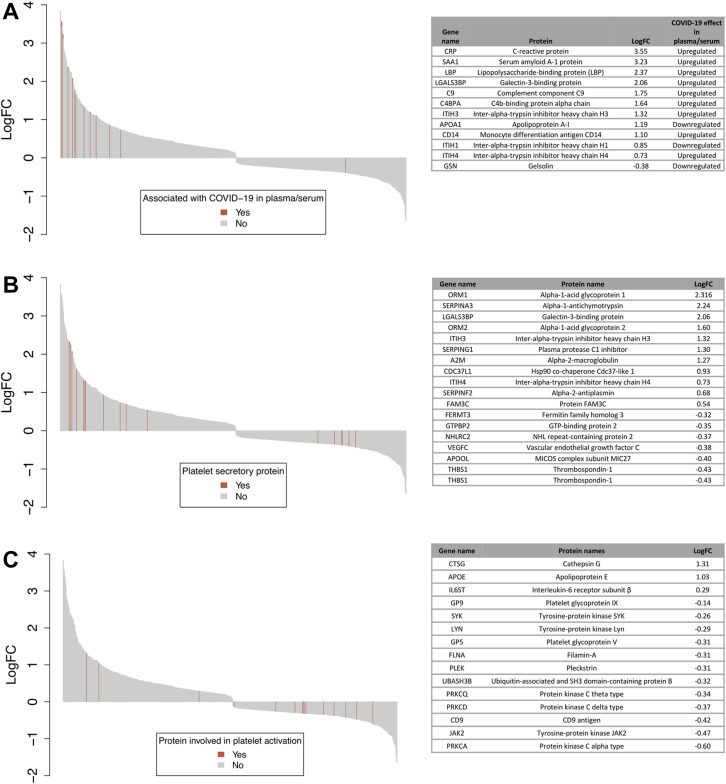
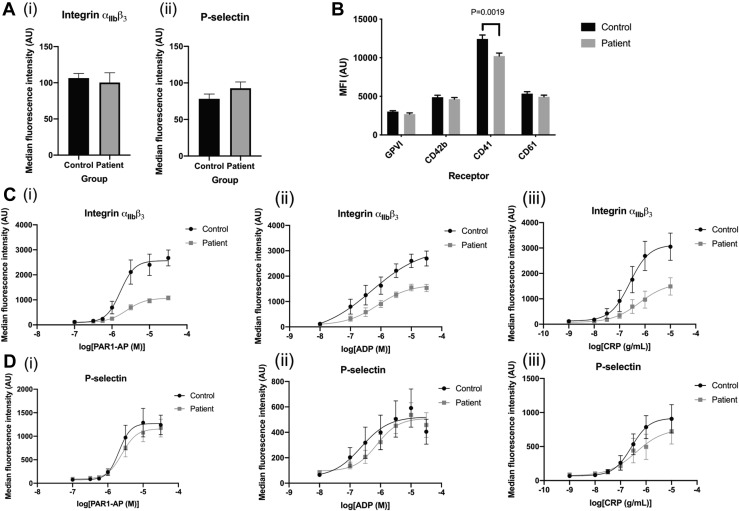
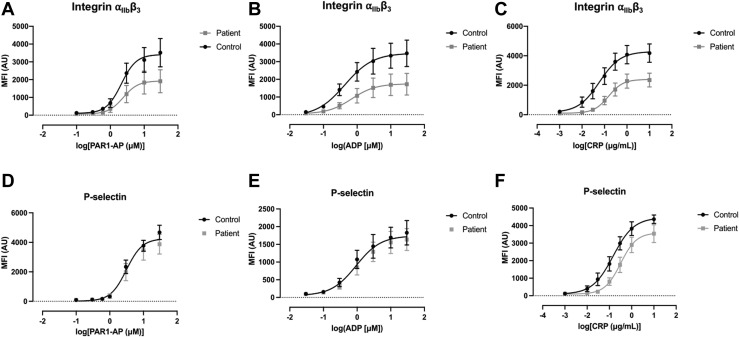
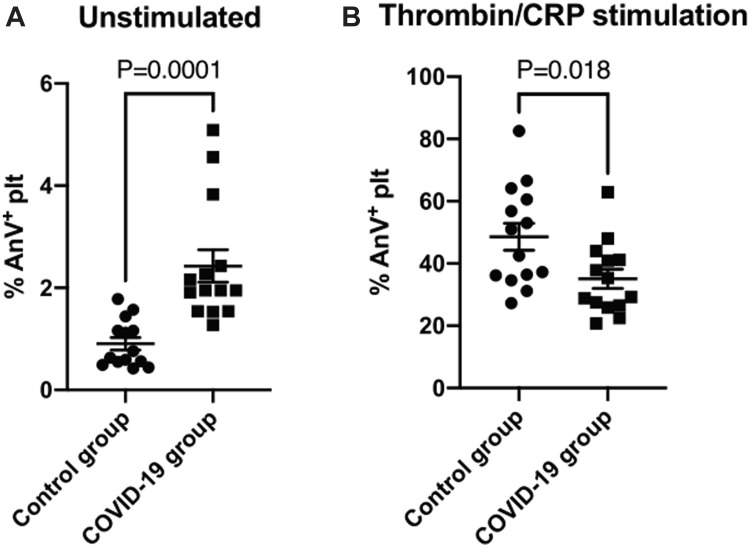
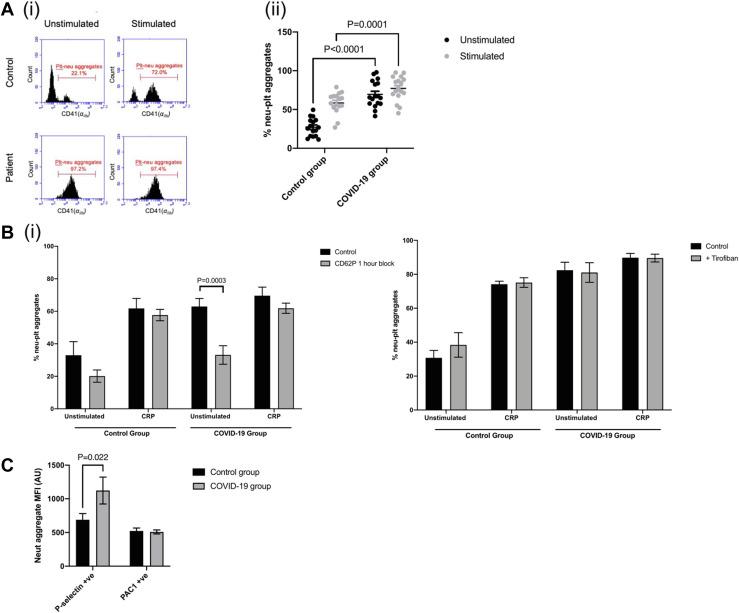
COVID-19 patients showed a different profile of platelet protein expression (858 altered of the 5773 quantified). Levels of COVID-19 plasma markers were enhanced in the platelets of COVID-19 patients. Gene ontology pathway analysis demonstrated that the levels of granule secretory proteins were raised, whereas those of platelet activation proteins, such as the thrombopoietin receptor and protein kinase Cα, were lowered. Basally, platelets of COVID-19 patients showed enhanced phosphatidylserine exposure, with unaltered integrin αβ activation and P-selectin expression. Agonist-stimulated integrin αβ activation and phosphatidylserine exposure, but not P-selectin expression, were decreased in COVID-19 patients. COVID-19 patients had high levels of platelet-neutrophil aggregates, even under basal conditions, compared to controls. This association was disrupted by blocking P-selectin, demonstrating that platelet P-selectin is critical for the interaction.
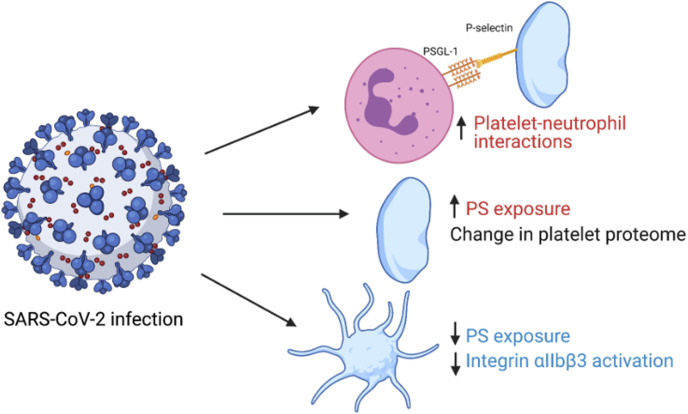
Overall, our data suggest the presence of 2 platelet populations in patients with COVID-19: one of circulating platelets with an altered proteome and reduced functional responses and another of P-selectin-expressing neutrophil-associated platelets. Platelet-driven thromboinflammation may therefore be one of the key factors enhancing the risk of thrombosis in COVID-19 patients.
COVID-19 患者发生血栓的风险增加,这与血小板功能改变和凝血异常有关,并导致死亡率升高。
描述 COVID-19 患者血小板功能改变的机制。
采用串联质量标签蛋白组学分析、Western blot 和流式细胞术比较 COVID-19 住院患者和健康对照者的血小板蛋白质组、血小板功能反应和血小板-中性粒细胞聚集体。
COVID-19 患者血小板蛋白表达谱存在差异(5773 个定量蛋白中有 858 个发生改变)。COVID-19 患者血小板中 COVID-19 血浆标志物水平升高。基因本体论途径分析显示,颗粒分泌蛋白水平升高,而血小板活化蛋白(如血小板生成素受体和蛋白激酶 Cα)水平降低。基础状态下,COVID-19 患者的血小板表现出增强的磷脂酰丝氨酸暴露,而整合素αβ激活和 P-选择素表达不变。在 COVID-19 患者中,激动剂刺激的整合素αβ激活和磷脂酰丝氨酸暴露减少,但 P-选择素表达不变。与对照组相比,COVID-19 患者即使在基础状态下,也存在高水平的血小板-中性粒细胞聚集体。通过阻断 P-选择素,这种关联被破坏,表明血小板 P-选择素对于相互作用至关重要。
总的来说,我们的数据表明 COVID-19 患者存在两种血小板群体:一种是循环血小板,其蛋白质组发生改变且功能反应降低,另一种是表达 P-选择素的中性粒细胞相关血小板。血小板驱动的血栓炎症可能是增加 COVID-19 患者血栓形成风险的关键因素之一。