Department of Medical Biochemistry and Biophysics, Karolinska Institutet, Stockholm, Sweden.
Department of Neurosurgery, University of Pittsburgh Medical Center, Pittsburgh, PA, USA.
Sci Rep. 2022 Apr 27;12(1):6851. doi: 10.1038/s41598-022-10516-1.
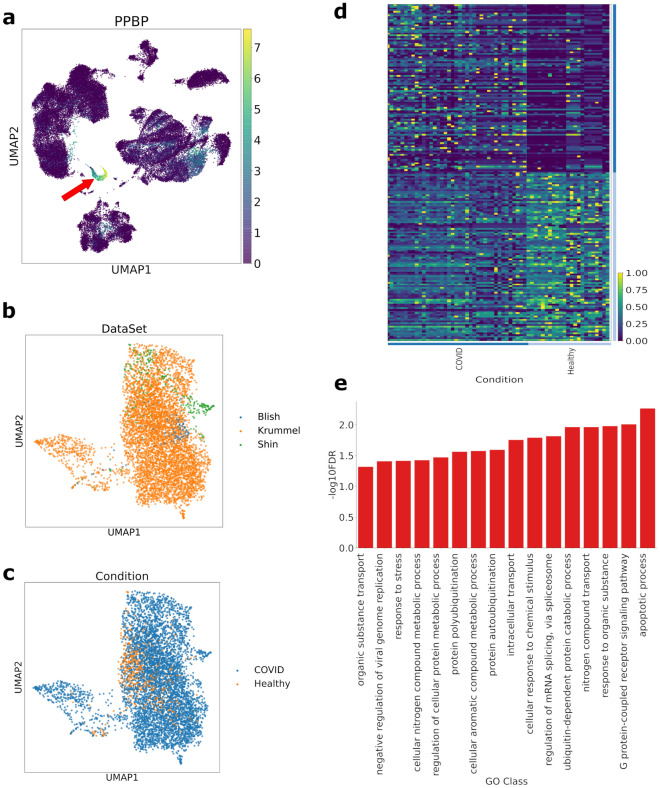
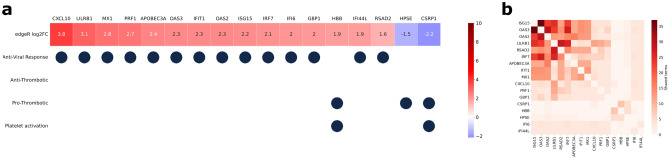
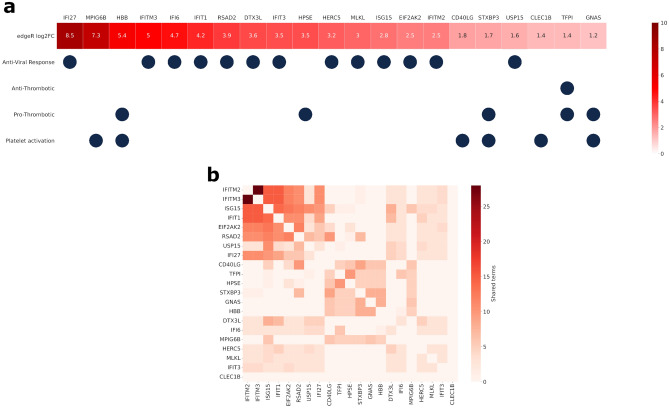
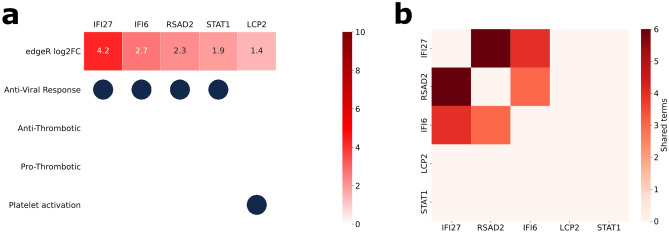
COVID-19 is associated with an increased risk of thrombotic events. However, the pathogenesis of these complications is unclear and reports on platelet infection and activation by the virus are conflicting. Here, we integrated single-cell transcriptomic data to elucidate whether platelet activation is a specific response to SARS-CoV-2 infection or a consequence of a generalized inflammatory state. Although platelets from patients infected with SARS-CoV-2 over expressed genes involved in activation and aggregation when compared to healthy controls; those differences disappeared when the comparison was made with patients with generalized inflammatory conditions of other etiology than COVID-19. The membrane receptor for the virus, ACE-2, was not expressed by infected or control platelets. Our results suggest that platelet activation in patients with severe COVID-19 is mainly a consequence of a systemic inflammatory state than direct invasion and activation.
COVID-19 与血栓事件的风险增加有关。然而,这些并发症的发病机制尚不清楚,且关于病毒感染血小板和激活血小板的报告存在矛盾。在这里,我们整合了单细胞转录组数据,以阐明血小板激活是 SARS-CoV-2 感染的特异性反应,还是全身性炎症状态的结果。尽管与健康对照组相比,感染 SARS-CoV-2 的患者的血小板中表达参与激活和聚集的基因的水平升高;但当与由 COVID-19 以外的其他病因引起的全身性炎症性疾病患者相比时,这些差异就消失了。病毒的膜受体 ACE-2 并未在感染或对照血小板中表达。我们的研究结果表明,重症 COVID-19 患者的血小板激活主要是全身性炎症状态的结果,而非直接入侵和激活的结果。