Davis Christina L, Venturelli Ryan A, Michaud Alexander B, Hawkings Jon R, Achberger Amanda M, Vick-Majors Trista J, Rosenheim Brad E, Dore John E, Steigmeyer August, Skidmore Mark L, Barker Joel D, Benning Liane G, Siegfried Matthew R, Priscu John C, Christner Brent C
Department of Microbiology and Cell Science, University of Florida, Gainesville, FL, USA.
Department of Geology and Geological Engineering, Colorado School of Mines, Golden, CO, USA.
ISME Commun. 2023 Jan 30;3(1):8. doi: 10.1038/s43705-023-00216-w.
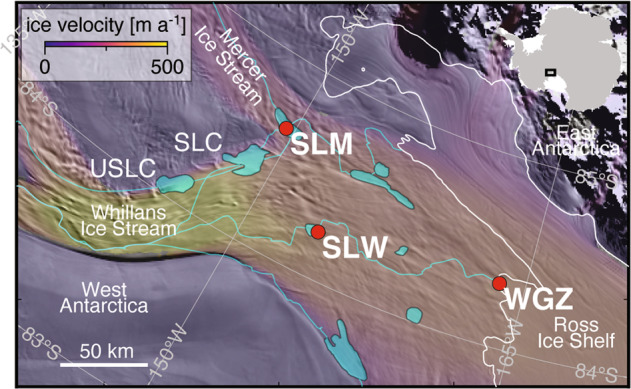
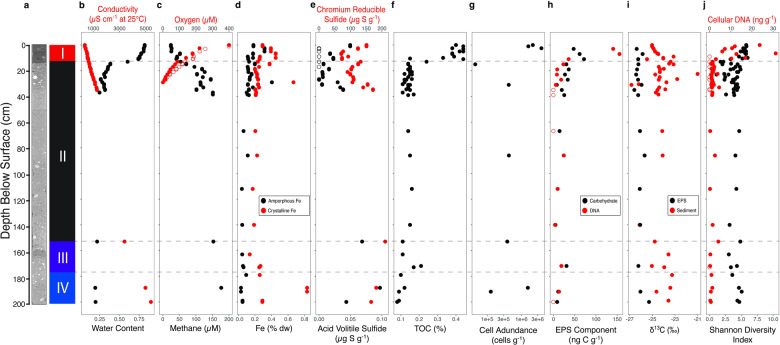
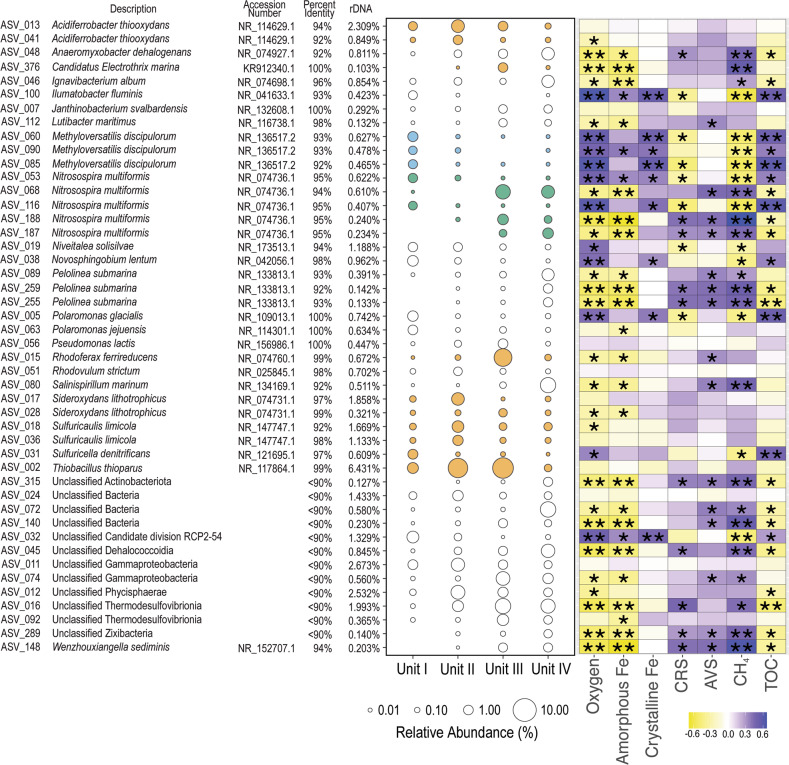
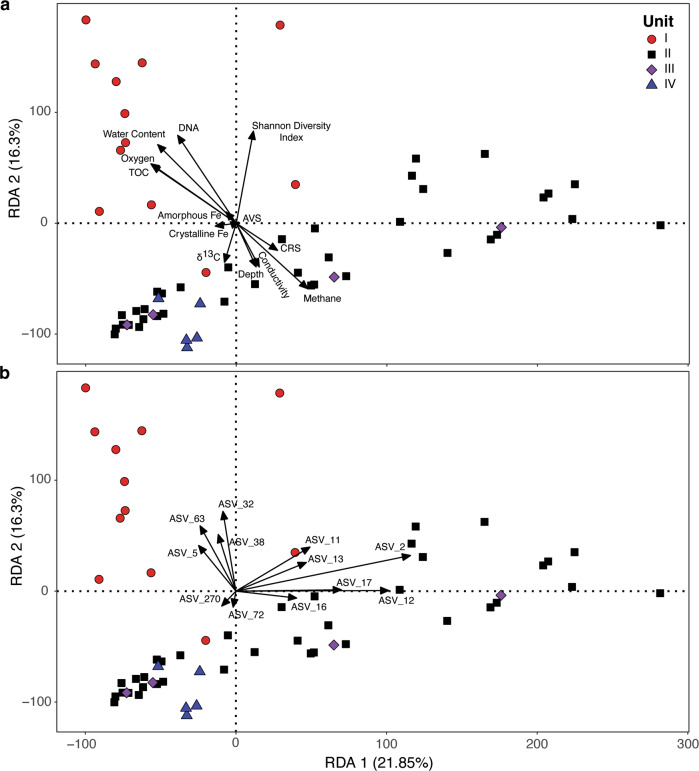
Ice streams that flow into Ross Ice Shelf are underlain by water-saturated sediments, a dynamic hydrological system, and subglacial lakes that intermittently discharge water downstream across grounding zones of West Antarctic Ice Sheet (WAIS). A 2.06 m composite sediment profile was recently recovered from Mercer Subglacial Lake, a 15 m deep water cavity beneath a 1087 m thick portion of the Mercer Ice Stream. We examined microbial abundances, used 16S rRNA gene amplicon sequencing to assess community structures, and characterized extracellular polymeric substances (EPS) associated with distinct lithologic units in the sediments. Bacterial and archaeal communities in the surficial sediments are more abundant and diverse, with significantly different compositions from those found deeper in the sediment column. The most abundant taxa are related to chemolithoautotrophs capable of oxidizing reduced nitrogen, sulfur, and iron compounds with oxygen, nitrate, or iron. Concentrations of dissolved methane and total organic carbon together with water content in the sediments are the strongest predictors of taxon and community composition. δ¹³C values for EPS (-25 to -30‰) are consistent with the primary source of carbon for biosynthesis originating from legacy marine organic matter. Comparison of communities to those in lake sediments under an adjacent ice stream (Whillans Subglacial Lake) and near its grounding zone provide seminal evidence for a subglacial metacommunity that is biogeochemically and evolutionarily linked through ice sheet dynamics and the transport of microbes, water, and sediments beneath WAIS.
流入罗斯冰架的冰流之下是饱含水分的沉积物、一个动态水文系统以及一些冰下湖泊,这些湖泊会间歇性地向下游排放水流,穿过西南极冰盖(WAIS)的着陆区。最近,在默瑟冰下湖采集到了一段2.06米长的复合沉积物剖面,默瑟冰下湖是默瑟冰流下方一个15米深的水腔,其上方是1087米厚的冰体。我们检测了微生物丰度,利用16S rRNA基因扩增子测序评估群落结构,并对沉积物中不同岩性单元相关的胞外聚合物(EPS)进行了表征。表层沉积物中的细菌和古菌群落更为丰富多样,其组成与沉积物柱中较深处的群落显著不同。最丰富的分类群与能够利用氧气、硝酸盐或铁氧化还原态氮、硫和铁化合物的化能自养菌有关。沉积物中溶解甲烷和总有机碳的浓度以及含水量是分类群和群落组成的最强预测指标。EPS的δ¹³C值(-25至-30‰)与生物合成的主要碳源源自遗留海洋有机物这一情况相符。将这些群落与相邻冰流(惠兰斯冰下湖)下方及其着陆区附近的湖泊沉积物中的群落进行比较,为一个通过冰盖动力学以及WAIS下方微生物、水和沉积物的传输而在生物地球化学和进化上相联系的冰下元群落提供了重要证据。