Department of Epidemiology, Center for Global Health, School of Public Health, Nanjing Medical University, Nanjing, China.
Institute of Global Health and Infectious Diseases, University of North Carolina, Chapel Hill, CA, USA.
Infect Dis Poverty. 2023 Jan 30;12(1):5. doi: 10.1186/s40249-023-01056-5.
Socioeconomic status (SES) inequity was recognized as a driver of some certain infectious diseases. However, few studies evaluated the association between SES and the burden of overall infections, and even fewer identified preventable mediators. This study aimed to assess the association between SES and overall infectious diseases burden, and the potential roles of factors including lifestyle, environmental pollution, chronic disease history.
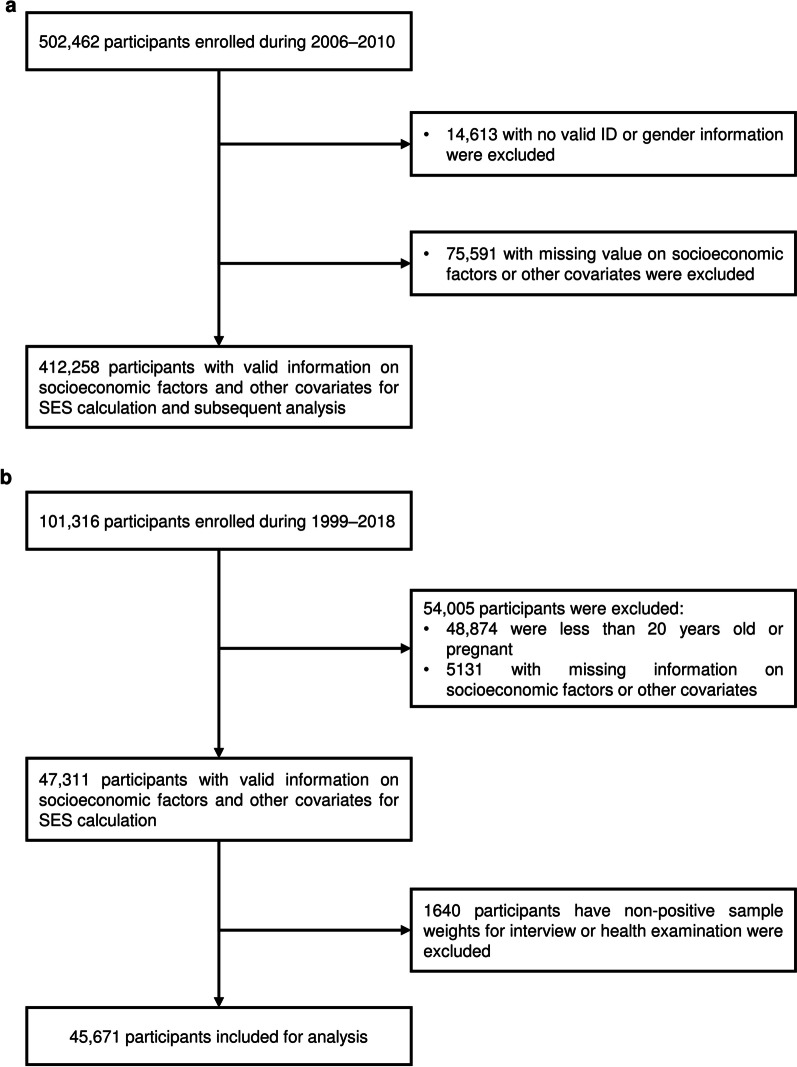
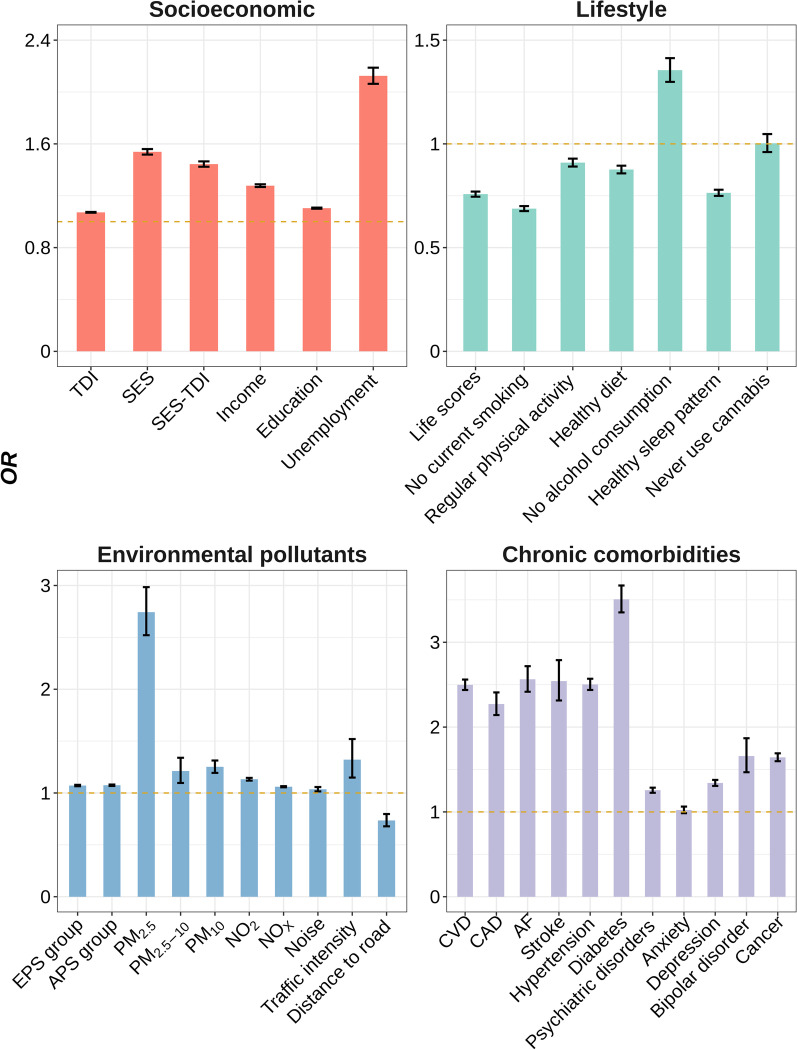
We included 401,009 participants from the UK Biobank (UKB) and defined the infection status for each participant according to their diagnosis records. Latent class analysis (LCA) was used to define SES for each participant. We further defined healthy lifestyle score, environment pollution score (EPS) and four types of chronic comorbidities. We used multivariate logistic regression to test the associations between the four above covariates and infectious diseases. Then, we performed the mediation and interaction analysis to explain the relationships between SES and other variables on infectious diseases. Finally, we employed seven types of sensitivity analyses, including considering the Townsend deprivation index as an area level SES variable, repeating our main analysis for some individual or composite factors and in some subgroups, as well as in an external data from the US National Health and Nutrition Examination Survey, to verify the main results.
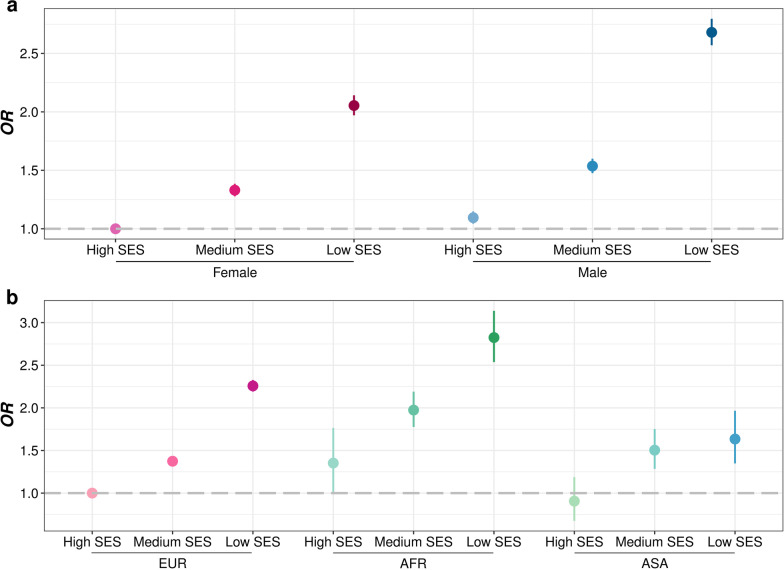
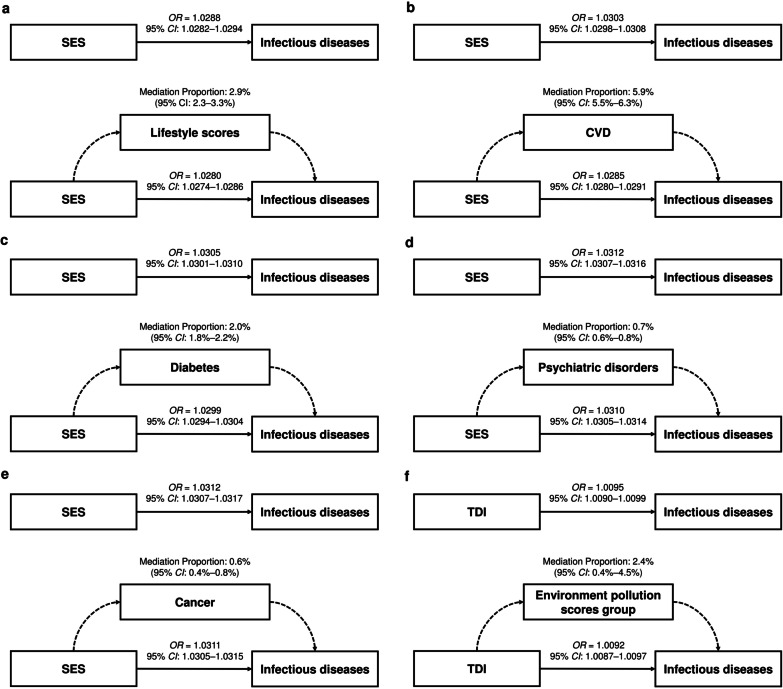
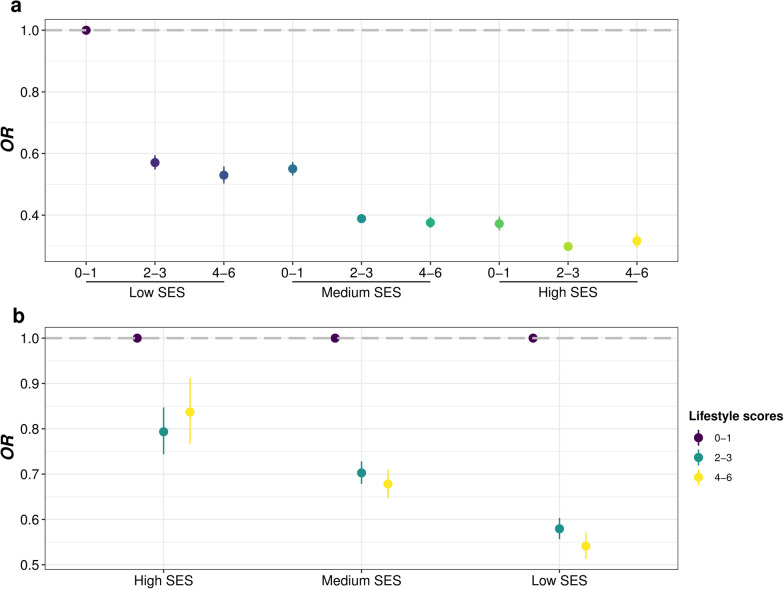
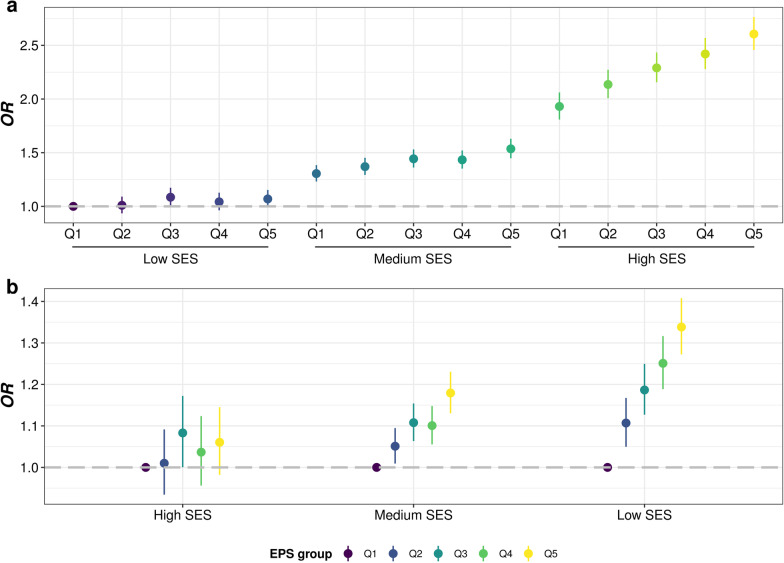
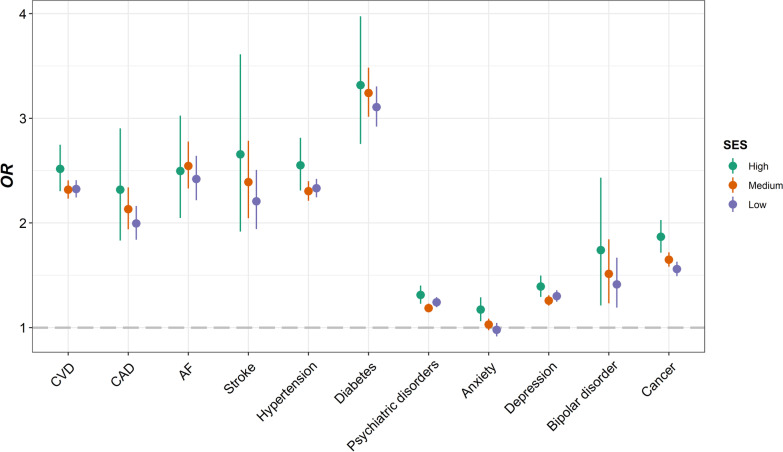
In UKB, 60,771 (15.2%) participants were diagnosed with infectious diseases during follow-up. Lower SES [odds ratio (OR) = 1.5570] were associated with higher risk of overall infections. Lifestyle score mediated 2.9% of effects from SES, which ranged from 2.9 to 4.0% in different infection subtypes, while cardiovascular disease (CVD) mediated a proportion of 6.2% with a range from 2.1 to 6.8%. In addition, SES showed significant negative interaction with lifestyle score (OR = 0.8650) and a history of cancer (OR = 0.9096), while a significant synergy interaction was observed between SES and EPS (OR = 1.0024). In subgroup analysis, we found that males and African (AFR) with lower SES showed much higher infection risk. Results from sensitivity and validation analyses showed relative consistent with the main analysis.
Low SES is shown to be an important risk factor for infectious disease, part of which may be mediated by poor lifestyle and chronic comorbidities. Efforts to enhance health education and improve the quality of living environment may help reduce burden of infectious disease, especially for people with low SES.
社会经济地位(SES)不平等被认为是某些传染病的驱动因素。然而,很少有研究评估 SES 与整体感染负担之间的关系,更少有研究确定可预防的中介因素。本研究旨在评估 SES 与整体感染负担之间的关系,以及包括生活方式、环境污染、慢性疾病史在内的各种因素的潜在作用。
我们纳入了来自英国生物库(UKB)的 401,009 名参与者,并根据他们的诊断记录为每位参与者定义了感染状况。我们使用潜在类别分析(LCA)为每位参与者定义 SES。我们进一步定义了健康生活方式评分、环境污染评分(EPS)和四种慢性合并症。我们使用多变量逻辑回归检验了上述四个协变量与传染病之间的关联。然后,我们进行了中介和交互分析,以解释 SES 与传染病相关的其他变量之间的关系。最后,我们进行了七种类型的敏感性分析,包括将汤森剥夺指数作为区域水平 SES 变量来考虑、重复我们在某些个体或综合因素以及某些亚组中的主要分析,以及在美国国家健康和营养检查调查的外部数据中进行分析,以验证主要结果。
在 UKB 中,60771 名(15.2%)参与者在随访期间被诊断患有传染病。较低的 SES(比值比[OR] = 1.5570)与整体感染风险增加相关。生活方式评分介导了 SES 影响的 2.9%,在不同的感染亚型中范围为 2.9%至 4.0%,而心血管疾病(CVD)介导了 6.2%的比例,范围为 2.1%至 6.8%。此外,SES 与生活方式评分(OR = 0.8650)和癌症史(OR = 0.9096)之间存在显著的负交互作用,而 SES 与 EPS(OR = 1.0024)之间存在显著的协同交互作用。在亚组分析中,我们发现男性和非洲裔(AFR)较低 SES 的人感染风险更高。敏感性和验证分析的结果与主要分析相对一致。
低 SES 被证明是传染病的一个重要危险因素,其中一部分可能是由不良的生活方式和慢性合并症引起的。加强健康教育和改善生活环境质量的努力可能有助于降低传染病负担,特别是对 SES 较低的人群。