Garai Joydeb, Ku Hok Bun
Department of Sociology, University of Chittagong, Chattogram, Bangladesh.
Department of Applied Social Sciences, The Hong Kong Polytechnic University, Hung Hom, Kowloon, Hong Kong.
Int J Disaster Risk Reduct. 2023 Feb 15;86:103553. doi: 10.1016/j.ijdrr.2023.103553. Epub 2023 Jan 22.
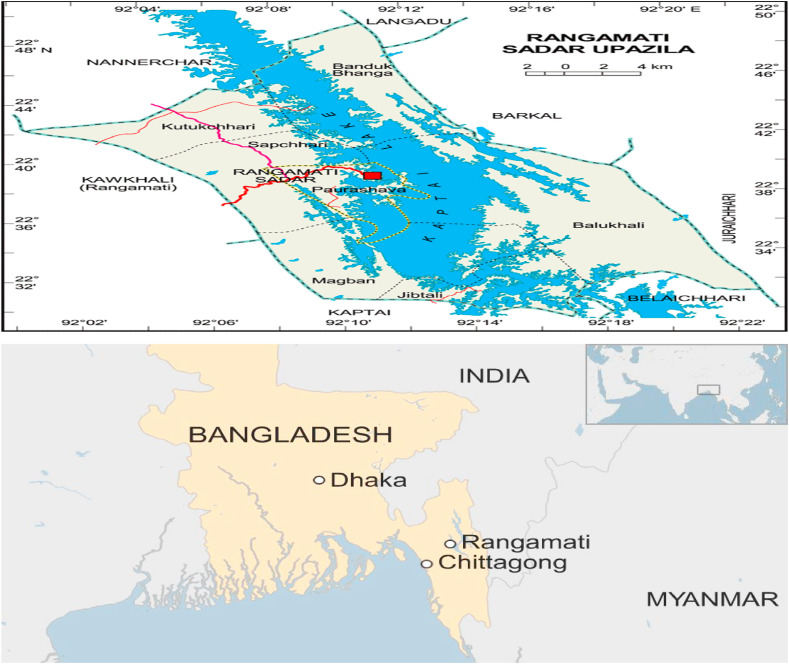
The COVID-19 pandemic has brought unprecedented suffering to the lives and livelihoods of indigenous people across the country, especially in the south-eastern parts of Bangladesh, but the situation has rarely reported by the mass media and academic literature. This study was an attempt to find out the impacts and vulnerabilities of COVID-19 on the indigenous Chakma community at Rangamati sadar (sub-district) of Rangamati (district) in the Chattogram Hill Tracts (CHT) area, Bangladesh. It also aimed to investigate how indigenous people respond to the pandemic and how they can develop resilience to adapt to the adverse situation. For conducting this study, a critical ethnographic approach was adopted, along with participant observation, in-depth interview, and focus group (FGs) for collecting data in the study area. The findings of the study indicate that the COVID-19 pandemic severely affects the traditional way of life, mythology, culture, food security, economic activities, and educational activities, along with increasing health risks for the people of the indigenous community. However, indigenous people respond to this pandemic in their own ways, involving their ancestors' works, avoiding dependence on market systems, keeping faith in traditional medicines, building close relation to nature, along with following some health guidelines announced by government. This work refutes the existing mainstream discourse that indigenous people are unwittingly vulnerable and docile in their waiting for outside assistance.
新冠疫情给该国各地的原住民的生活和生计带来了前所未有的苦难,尤其是在孟加拉国东南部地区,但大众媒体和学术文献很少报道这一情况。本研究旨在了解新冠疫情对孟加拉国吉大港山区朗加马蒂县朗加马蒂萨达尔(分区)的查克马原住民社区的影响和脆弱性。研究还旨在调查原住民如何应对疫情,以及他们如何培养适应逆境的恢复力。为开展本研究,采用了批判性民族志方法,并辅以参与观察、深度访谈和焦点小组,以在研究区域收集数据。研究结果表明,新冠疫情严重影响了传统生活方式、神话、文化、粮食安全、经济活动和教育活动,同时增加了原住民社区民众的健康风险。然而,原住民以自己的方式应对这一疫情,借鉴祖先的做法,避免依赖市场体系,对传统药物保持信心,与自然建立紧密联系,同时遵循政府发布的一些健康指南。这项研究驳斥了现有的主流观点,即认为原住民在等待外部援助时不知不觉地处于脆弱和温顺状态。