Division of Epidemiology, Department of Medicine Vanderbilt University Medical Center Nashville TN USA.
Department of Biostatistics Vanderbilt University Medical Center Nashville TN USA.
J Am Heart Assoc. 2023 Feb 7;12(3):e027993. doi: 10.1161/JAHA.122.027993. Epub 2023 Jan 31.
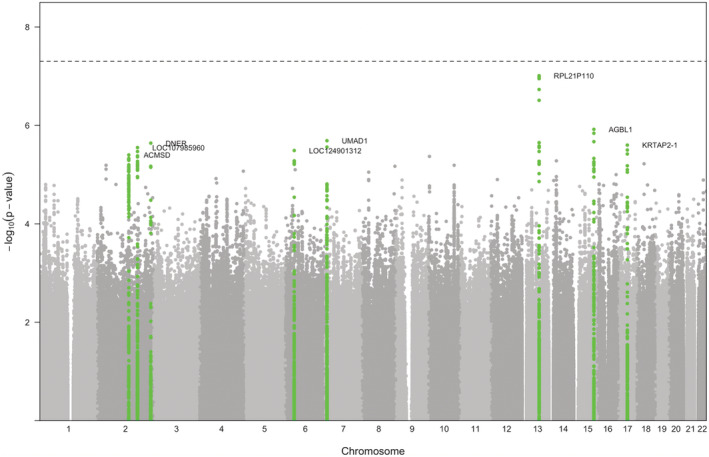
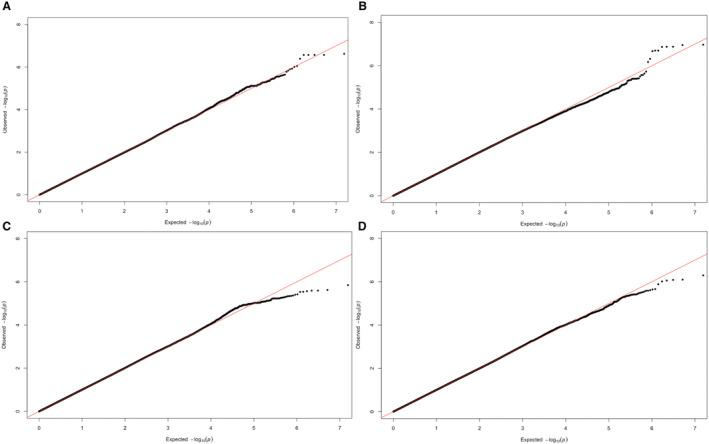
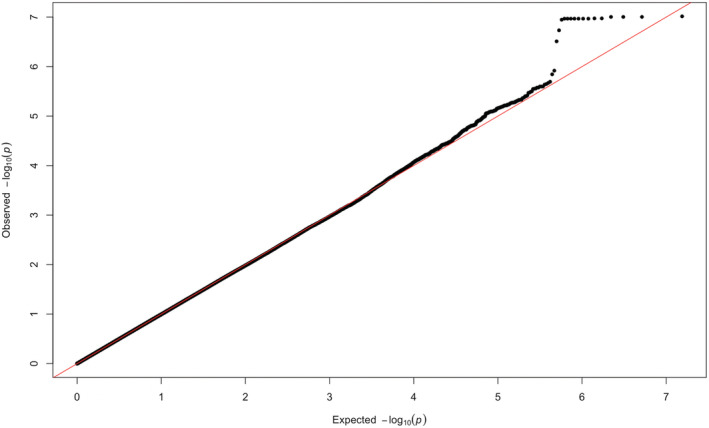
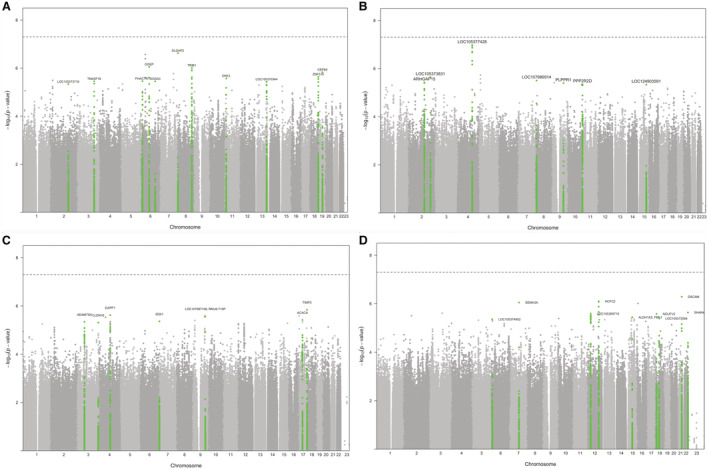
Background Genetics, along with lifestyle and behavioral characteristics, play an important role in hypertension in adults. Our aim was to identify genetic variants associated with blood pressure in childhood and adolescence. Methods and Results We conducted a candidate single-nucleotide polymorphism (SNP) analysis and genome-wide association study among 9778 participants aged <18 years in BioVU, the Vanderbilt University Medical Center biobank. The outcome was childhood blood pressure percentile from age 0 to 18 years. For the candidate SNP analysis, a total of 457 previously identified SNPs were examined. Linear regression was used to test the association between genetic variants and median systolic blood pressure (SBP) percentile. Adjusted models included median age, self-reported sex, race, the first 4 principal components of ancestry, and median body mass index score. Analyses were conducted in the overall cohort and stratified by age group. A polygenic risk score was calculated for each participant, and the association between polygenic risk score and median SBP percentile in childhood was examined using linear regression. In the overall candidate SNP analysis, 2 SNPs reached significance: (; =1.0×10) and (; =1.4×10). In the postpuberty age group, 1 SNP reached significance: (; =2.2×10). In the genome-wide association study of all participants, no SNPs reached genome-wide significance. Higher polygenic risk score was associated with higher SBP percentile (β, 0.35 [95% CI, 0.10-0.60)], and there was a significant interaction with age ( for interaction<0.01). Conclusions These findings suggest that genetic variants play an important role in SBP in childhood and adolescence and provide evidence for age-specific genetic associations with SBP.
遗传学与生活方式和行为特征一起,在成年人高血压中起着重要作用。我们的目的是确定与儿童和青少年时期血压相关的遗传变异。
我们在范德比尔特大学医学中心生物库 BioVU 中对 9778 名年龄<18 岁的参与者进行了候选单核苷酸多态性 (SNP) 分析和全基因组关联研究。结果是 0 至 18 岁儿童的血压百分位数。对于候选 SNP 分析,共检测了 457 个先前确定的 SNP。线性回归用于检验遗传变异与中位收缩压 (SBP) 百分位数之间的关联。调整后的模型包括中位年龄、自我报告的性别、种族、祖先的前 4 个主成分和中位体重指数得分。分析在整个队列中进行,并按年龄组分层。为每个参与者计算了多基因风险评分,并使用线性回归检验多基因风险评分与儿童时期中位 SBP 百分位数之间的关联。在整个候选 SNP 分析中,有 2 个 SNP 达到了显著性:rs10922389 (; =1.0×10)和 rs11510497 (; =1.4×10)。在青春期后年龄组中,有 1 个 SNP 达到了显著性:rs11510497 (; =2.2×10)。在所有参与者的全基因组关联研究中,没有 SNP 达到全基因组显著性。较高的多基因风险评分与较高的 SBP 百分位数相关 (β,0.35 [95% CI,0.10-0.60)],并且与年龄存在显著交互作用 ( for interaction<0.01)。
这些发现表明遗传变异在儿童和青少年时期的 SBP 中起着重要作用,并为 SBP 与年龄特异性遗传关联提供了证据。