Oncology Discovery, AbbVie Inc, North Chicago, IL.
START Madrid-CIOCC, Centro Integral Oncológico Clara Campal, Madrid, Spain.
Blood. 2023 Apr 27;141(17):2114-2126. doi: 10.1182/blood.2022017333.
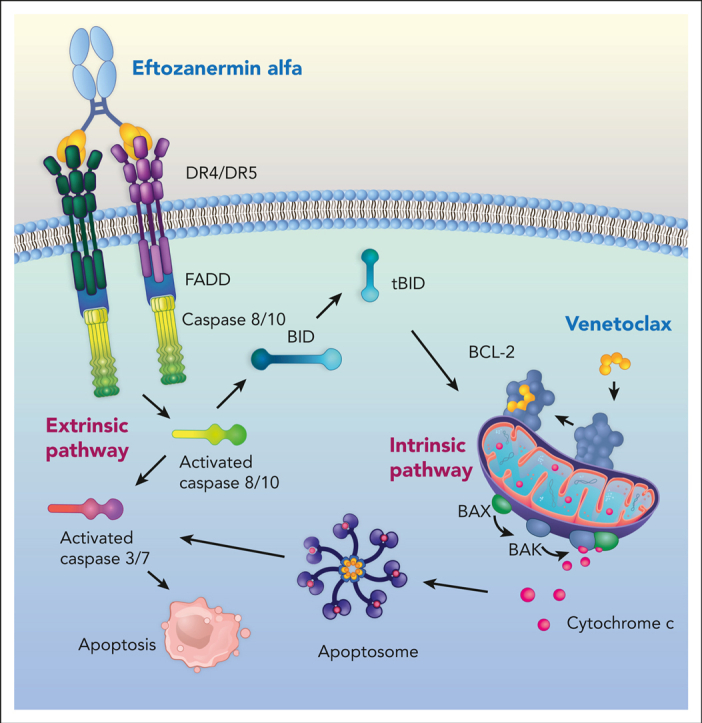
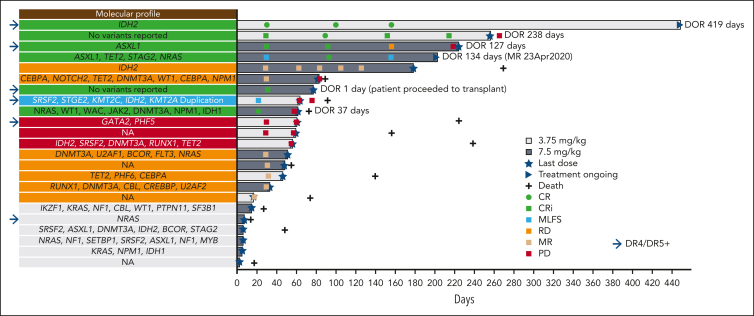
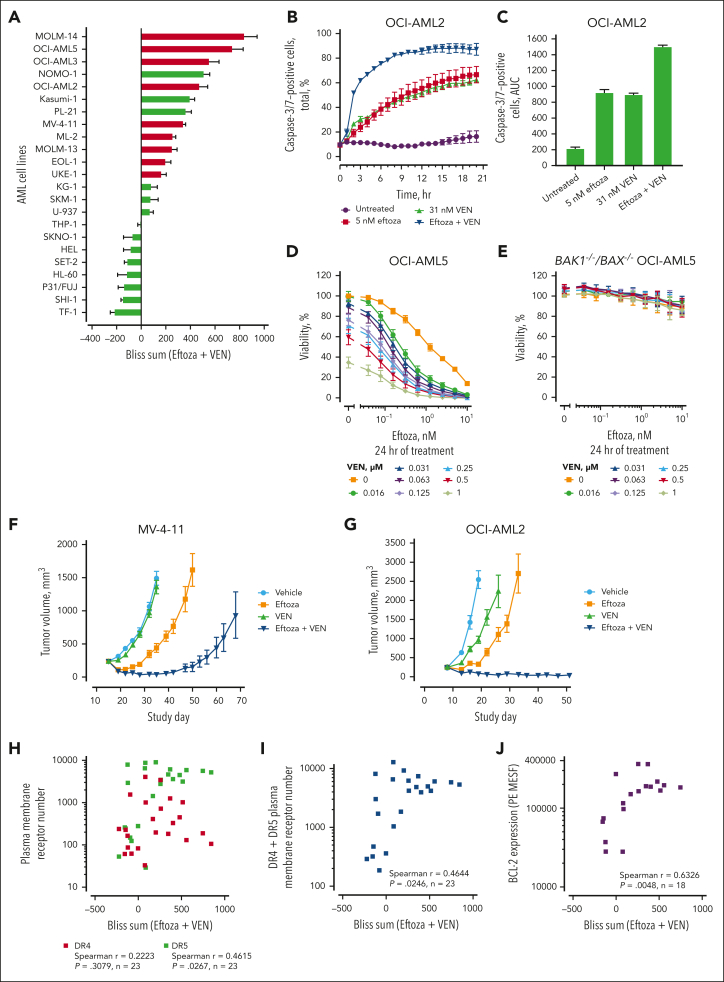
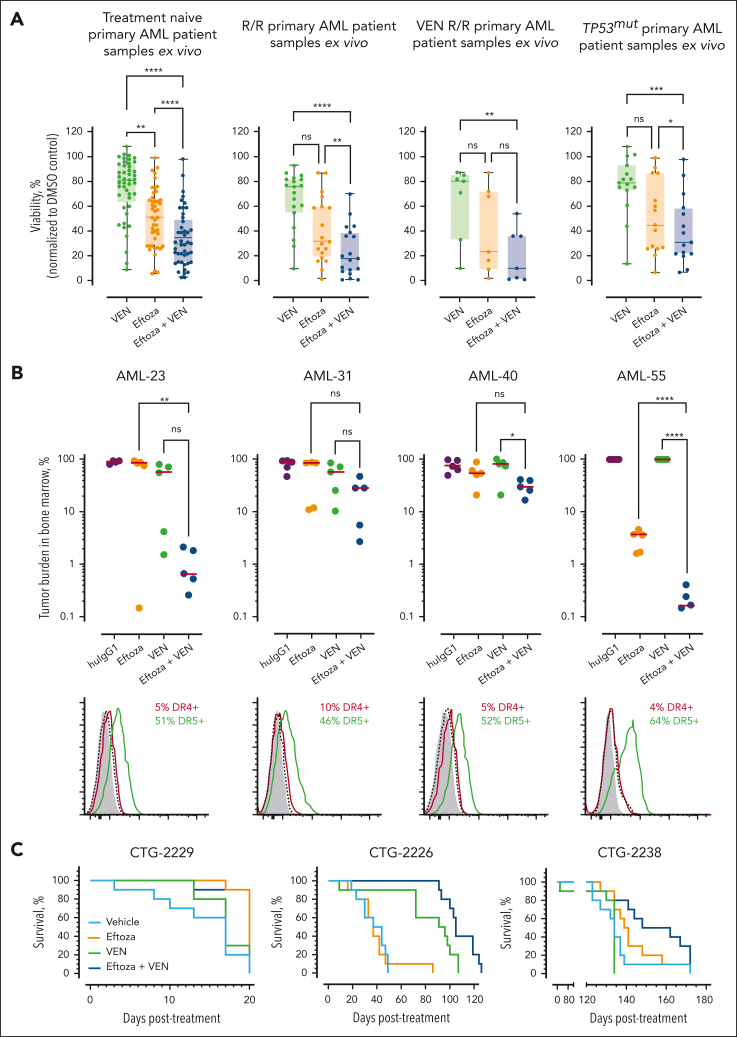
Activation of apoptosis in malignant cells is an established strategy for controlling cancer and is potentially curative. To assess the impact of concurrently inducing the extrinsic and intrinsic apoptosis-signaling pathways in acute myeloid leukemia (AML), we evaluated activity of the TRAIL receptor agonistic fusion protein eftozanermin alfa (eftoza; ABBV-621) in combination with the B-cell lymphoma protein-2 selective inhibitor venetoclax in preclinical models and human patients. Simultaneously stimulating intrinsic and extrinsic apoptosis-signaling pathways with venetoclax and eftoza, respectively, enhanced their activities in AML cell lines and patient-derived ex vivo/in vivo models. Eftoza activity alone or plus venetoclax required death receptor 4/5 (DR4/DR5) expression on the plasma membrane but was independent of TP53 or FLT3-ITD status. The safety/tolerability of eftoza as monotherapy and in combination with venetoclax was demonstrated in patients with relapsed/refractory AML in a phase 1 clinical trial. Treatment-related adverse events were reported in 2 of 4 (50%) patients treated with eftoza monotherapy and 18 of 23 (78%) treated with eftoza plus venetoclax. An overall response rate of 30% (7/23; 4 complete responses [CRs], 2 CRs with incomplete hematologic recovery, and 1 morphologic leukemia-free state) was reported in patients who received treatment with eftoza plus venetoclax and 67% (4/6) in patients with myoblasts positive for DR4/DR5 expression; no tumor responses were observed with eftoza monotherapy. These data indicate that combination therapy with eftoza plus venetoclax to simultaneously activate the extrinsic and intrinsic apoptosis-signaling pathways may improve clinical benefit compared with venetoclax monotherapy in relapsed/refractory AML with an acceptable toxicity profile. This trial was registered at www.clinicaltrials.gov as #NCT03082209.
激活恶性细胞的细胞凋亡是控制癌症的一种既定策略,具有潜在的治愈效果。为了评估同时诱导急性髓细胞白血病 (AML) 中细胞外和细胞内凋亡信号通路的影响,我们评估了 TRAIL 受体激动性融合蛋白 eftozanermin alfa(eftoza;ABBV-621)与 B 细胞淋巴瘤蛋白-2 选择性抑制剂 venetoclax 在临床前模型和人类患者中的活性。分别用 venetoclax 和 eftoza 同时刺激内在和外在的凋亡信号通路,增强了它们在 AML 细胞系和患者衍生的体外/体内模型中的活性。eftoza 单独或联合 venetoclax 的活性需要质膜上的死亡受体 4/5(DR4/DR5)表达,但与 TP53 或 FLT3-ITD 状态无关。在复发/难治性 AML 患者中进行的一项 1 期临床试验中,证明了 eftoza 单药治疗和联合 venetoclax 治疗的安全性/耐受性。在接受 eftoza 单药治疗的 4 名患者中有 2 名(50%)和接受 eftoza 联合 venetoclax 治疗的 23 名患者中有 18 名(78%)报告了与治疗相关的不良事件。接受 eftoza 联合 venetoclax 治疗的患者总体缓解率为 30%(23 例中有 7 例;4 例完全缓解[CR],2 例 CR 伴不完全血液学恢复,1 例形态白血病无状态),而 DR4/DR5 表达阳性的肌母细胞患者的缓解率为 67%(4/6);eftoza 单药治疗未观察到肿瘤反应。这些数据表明,与 venetoclax 单药治疗相比,eftoza 联合 venetoclax 同时激活细胞外和细胞内凋亡信号通路的联合治疗可能会改善复发/难治性 AML 的临床获益,且具有可接受的毒性特征。该试验在 www.clinicaltrials.gov 上注册为 #NCT03082209。