Laboratory of Adipose Tissue Biology, Institute of Physiology of the Czech Academy of Sciences, Videnska 1083, 142 00, Prague, Czech Republic.
Laboratory of Developmental Epileptology, Institute of Physiology of the Czech Academy of Sciences, Videnska 1083, 142 20, Prague, Czech Republic.
Mol Metab. 2023 Mar;69:101683. doi: 10.1016/j.molmet.2023.101683. Epub 2023 Jan 30.
Non-shivering thermogenesis (NST) mediated by uncoupling protein 1 (UCP1) in brown adipose tissue (BAT) can be activated via the adrenergic system in response to cold or diet, contributing to both thermal and energy homeostasis. Other mechanisms, including metabolism of skeletal muscle, may also be involved in NST. However, relative contribution of these energy dissipating pathways and their adaptability remain a matter of long-standing controversy.
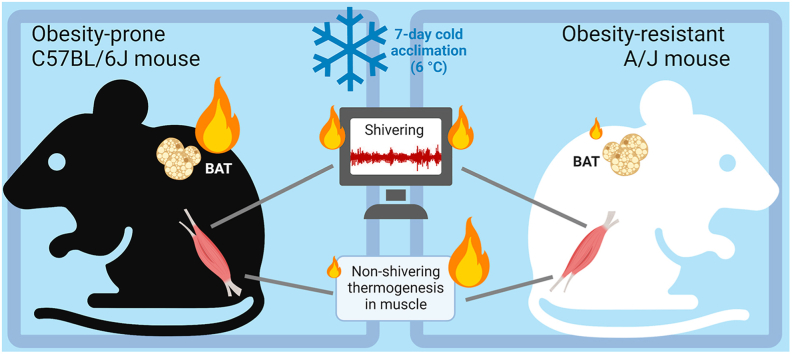
We used warm-acclimated (30 °C) mice to characterize the effect of an up to 7-day cold acclimation (6 °C; CA) on thermoregulatory thermogenesis, comparing inbred mice with a genetic background conferring resistance (A/J) or susceptibility (C57BL/6 J) to obesity.
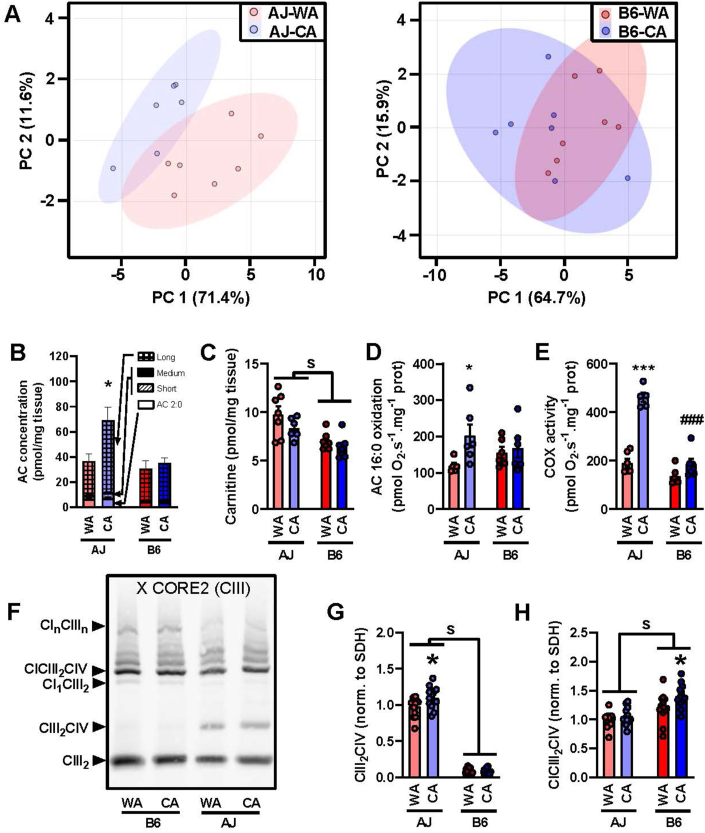
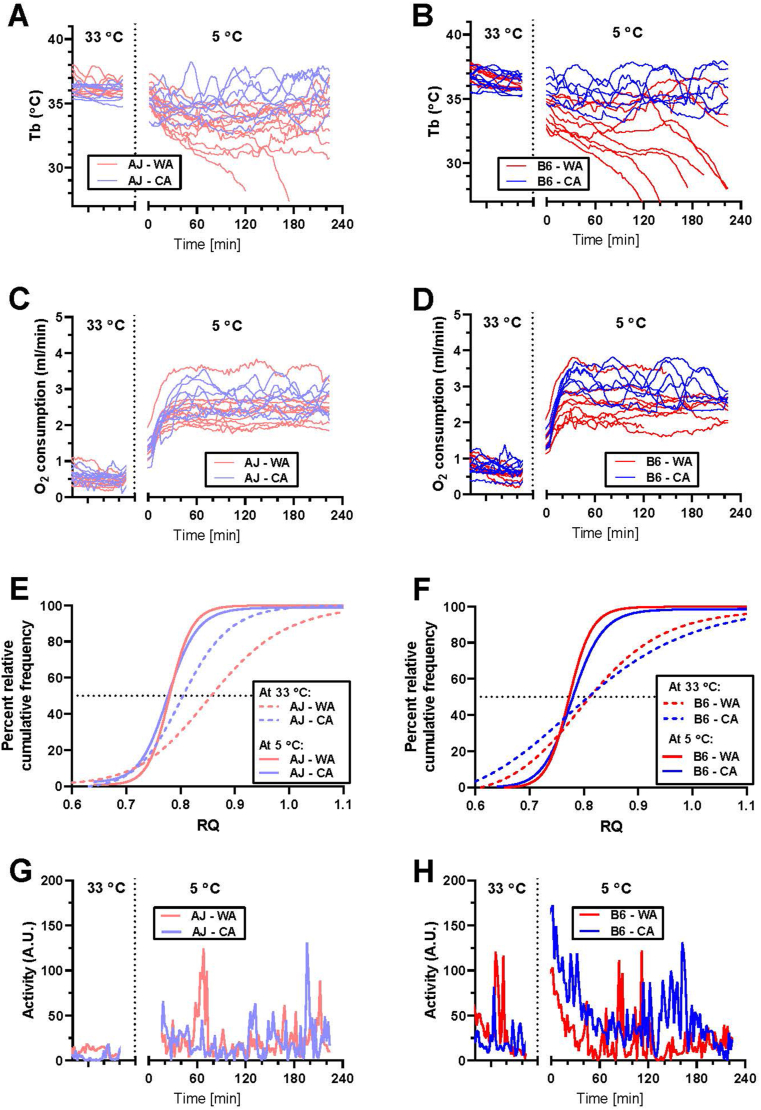
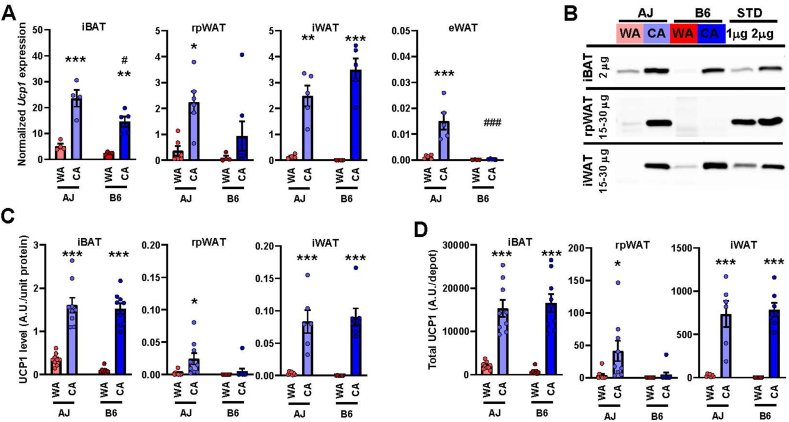
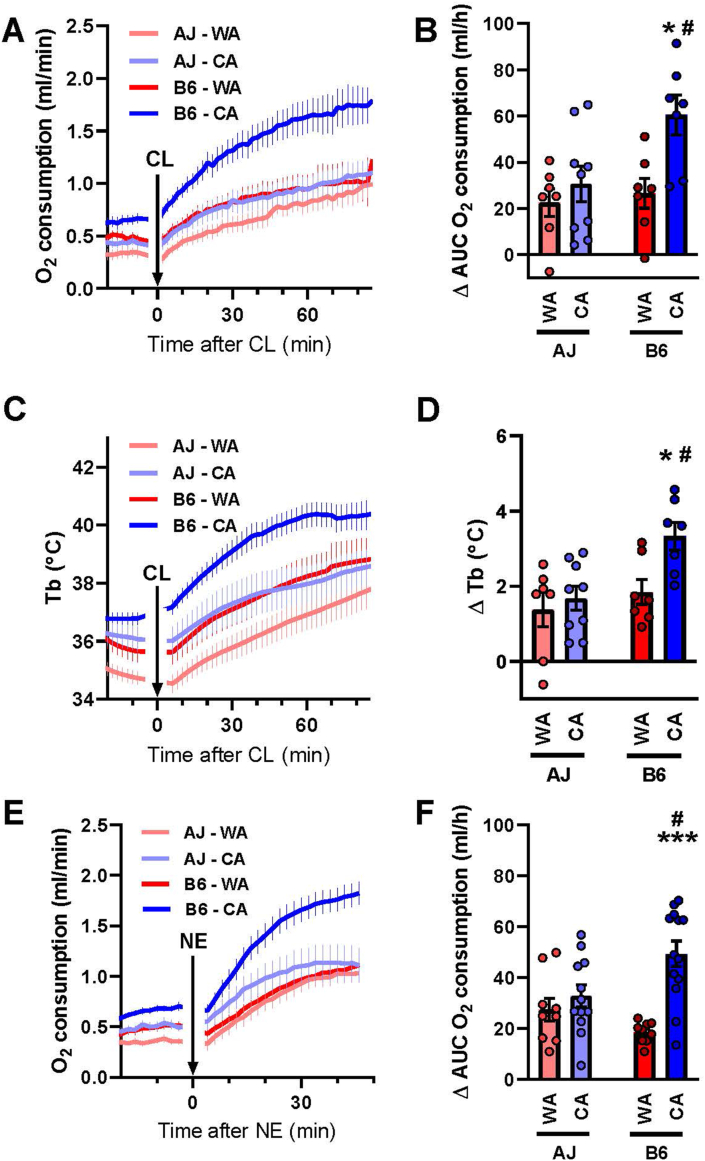
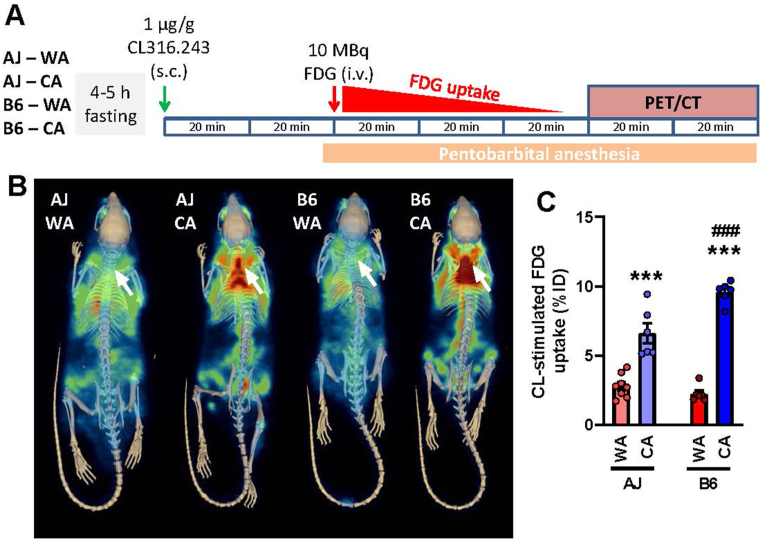
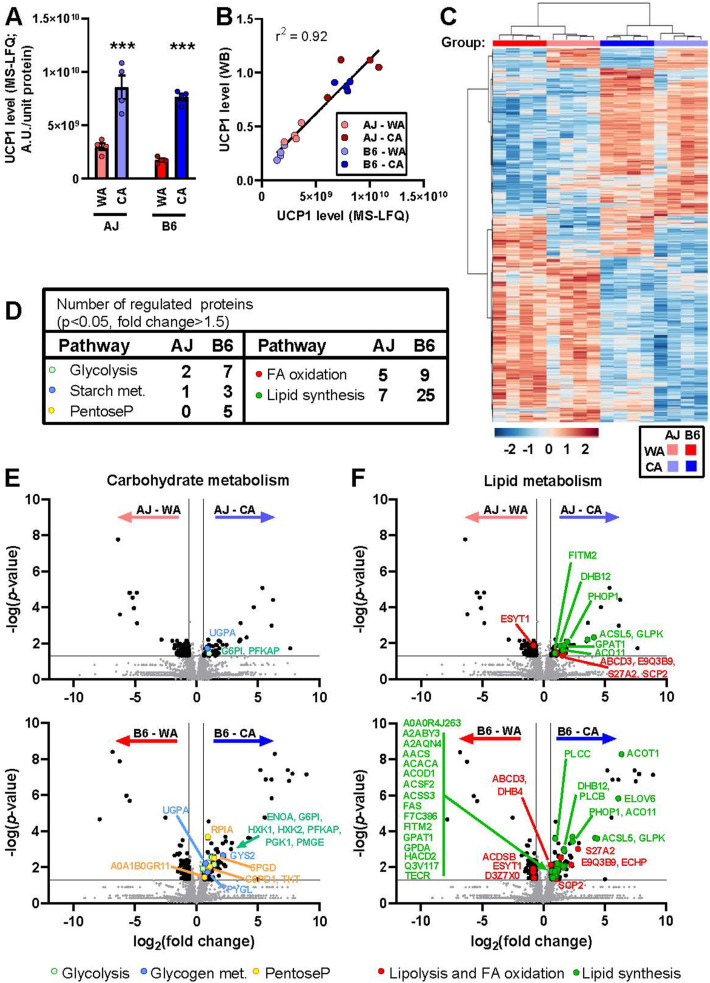
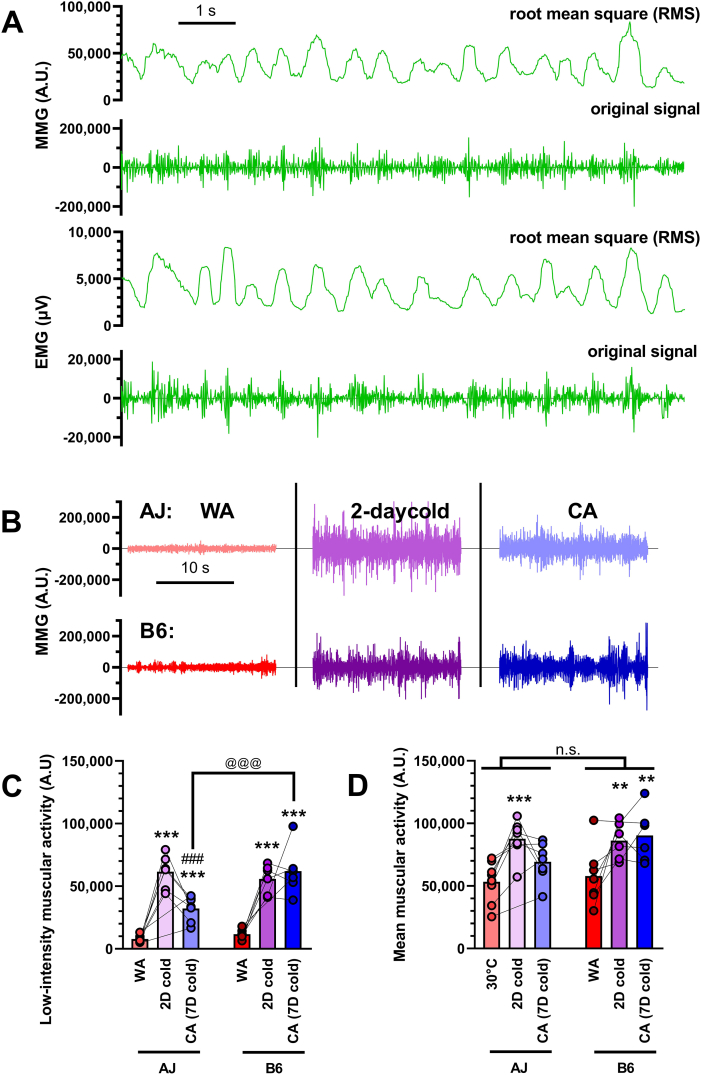
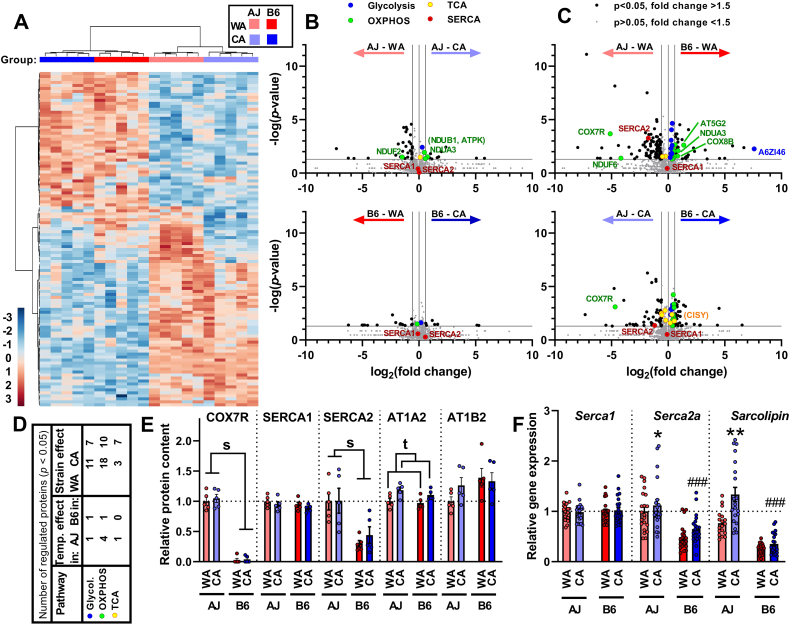
Both warm-acclimated C57BL/6 J and A/J mice exhibited similar cold endurance, assessed as a capability to maintain core body temperature during acute exposure to cold, which improved in response to CA, resulting in comparable cold endurance and similar induction of UCP1 protein in BAT of mice of both genotypes. Despite this, adrenergic NST in BAT was induced only in C57BL/6 J, not in A/J mice subjected to CA. Cold tolerance phenotype of A/J mice subjected to CA was not based on increased shivering, improved insulation, or changes in physical activity. On the contrary, lipidomic, proteomic and gene expression analyses along with palmitoyl carnitine oxidation and cytochrome c oxidase activity revealed induction of lipid oxidation exclusively in skeletal muscle of A/J mice subjected to CA. These changes appear to be related to skeletal muscle NST, mediated by sarcolipin-induced uncoupling of sarco(endo)plasmic reticulum calcium ATPase pump activity and accentuated by changes in mitochondrial respiratory chain supercomplexes assembly.
Our results suggest that NST in skeletal muscle could be adaptively augmented in the face of insufficient adrenergic NST in BAT, depending on the genetic background of the mice. It may provide both protection from cold and resistance to obesity, more effectively than BAT.
棕色脂肪组织(BAT)中解偶联蛋白 1(UCP1)介导的非颤抖产热(NST)可通过肾上腺素能系统在冷或饮食刺激下被激活,有助于体温和能量稳态。其他机制,包括骨骼肌代谢,也可能参与 NST。然而,这些能量消耗途径的相对贡献及其适应性仍然是一个长期存在的争议问题。
我们使用热适应(30°C)的小鼠来描述长达 7 天的冷适应(6°C;CA)对体温调节产热的影响,将具有肥胖抗性(A/J)或易感性(C57BL/6J)遗传背景的近交系小鼠进行比较。
在急性冷暴露期间,温暖适应的 C57BL/6J 和 A/J 小鼠均表现出相似的耐寒能力,这可作为维持核心体温的能力来评估,这种能力在 CA 后得到改善,导致两种基因型小鼠的耐寒能力相当,BAT 中的 UCP1 蛋白诱导也相似。尽管如此,只有 C57BL/6J 而不是 CA 后的 A/J 小鼠中 BAT 的肾上腺素能 NST 被诱导。CA 后 A/J 小鼠的耐寒表型不是基于增加颤抖、改善绝缘或体力活动的变化。相反,脂质组学、蛋白质组学和基因表达分析以及棕榈酰肉毒碱氧化和细胞色素 c 氧化酶活性表明,仅在 CA 后的 A/J 小鼠的骨骼肌中诱导了脂质氧化。这些变化似乎与骨骼肌 NST 有关,由肌浆网钙 ATP 酶泵活性的肌联蛋白诱导解偶联介导,并受线粒体呼吸链超级复合物组装变化的影响。
我们的结果表明,在 BAT 中肾上腺素能 NST 不足的情况下,骨骼肌 NST 可以适应性增强,这取决于小鼠的遗传背景。它可能比 BAT 更有效地提供对寒冷的保护和对肥胖的抵抗力。