Center for Clinical Evidence, ECRI, Plymouth Meeting, Pennsylvania, USA
Center for Evidence Synthesis in Health, Brown University, Providence, Rhode Island, USA.
BMJ Open. 2023 Jan 31;13(1):e066872. doi: 10.1136/bmjopen-2022-066872.
Epilepsy treatment decision making is complex and understanding what informs caregiver decision making about treatment for childhood epilepsy is crucial to better support caregivers and their children. We synthesised evidence on caregivers' perspectives and experiences of treatments for childhood epilepsy.
Systematic review of qualitative studies using a best-fit framework and Grading of Recommendations Assessment, Development and Evaluation Confidence in the Evidence from Reviews of Qualitative Research (GRADE-CERQual) approach.
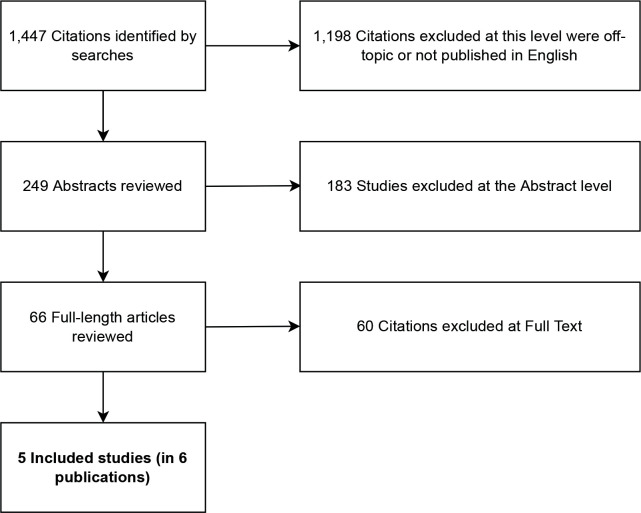
Searched Embase, PubMed, CINAHL, PsycINFO, SocINDEX and Web of Science from 1 January 1999 to 19 August 2021.
We included qualitative studies examining caregiver's perspectives on antiseizure medication, diet or surgical treatments for childhood epilepsy. We excluded studies not reported in English.
We extracted qualitative evidence into 1 of 14 domains defined by the Theoretical Domains Framework (TDF). One reviewer extracted study data and methodological characteristics, and two reviewers extracted qualitative findings. The team verified all extractions. We identified themes within TDF domains and synthesised summary statements of these themes. We assessed our confidence in our summary statements using GRADE-CERQual.
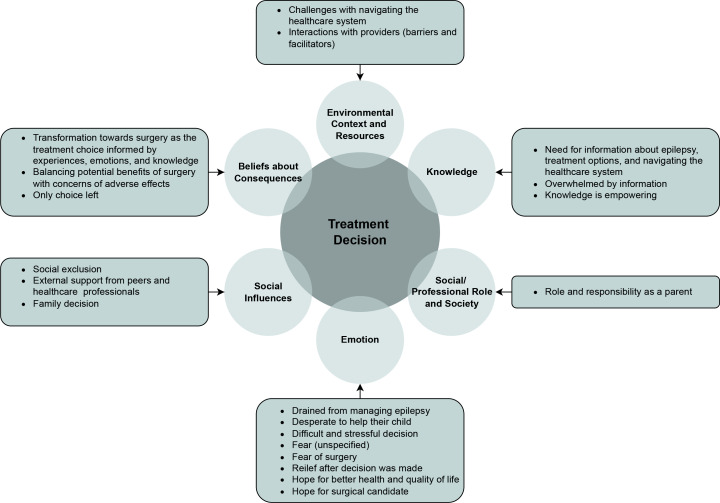
We identified five studies (in six reports) of good methodological quality focused on parent perceptions of neurosurgery; we found limited indirect evidence on parents' perceptions of medications or diet. We identified themes within 6 of the 14 TDF domains relevant to treatment decisions: knowledge, emotion; social/professional role and identity; social influence; beliefs about consequences; and environmental context and resources.
Parents of children with epilepsy navigate a complex process to decide whether to have their child undergo surgery. Educational resources, peer support and patient navigators may help support parents through this process. More qualitative studies are needed on non-surgical treatments for epilepsy and among caregivers from different cultural and socioeconomic backgrounds to fully understand the diversity of perspectives that informs treatment decision making.
癫痫治疗决策较为复杂,了解照顾者在儿童癫痫治疗方面的决策依据对于更好地支持照顾者及其子女至关重要。本研究旨在综合照顾者对儿童癫痫治疗的看法和经验。
采用最佳拟合框架和推荐评估、制定与评价分级(Grading of Recommendations Assessment, Development and Evaluation,GRADE)证据质量评价工具——定性研究的信心(Grading of Recommendations Assessment, Development and Evaluation Confidence in the Evidence from Reviews of Qualitative Research,GRADE-CERQual)对定性研究进行系统综述。
从 1999 年 1 月 1 日至 2021 年 8 月 19 日,检索了 Embase、PubMed、CINAHL、PsycINFO、SocINDEX 和 Web of Science 数据库。
纳入研究考察了照顾者对儿童癫痫抗癫痫药物、饮食或手术治疗的看法。排除非英文发表的研究。
研究数据和方法学特征由理论框架(Theoretical Domains Framework,TDF)中的 14 个领域之一提取。一名研究者提取研究数据和方法学特征,两名研究者提取定性发现。团队对所有提取内容进行了验证。我们在 TDF 领域内确定了主题,并综合了这些主题的总结陈述。我们使用 GRADE-CERQual 评估了我们总结陈述的信心。
共纳入了五项(六篇报道)方法学质量较好的研究,重点关注了家长对神经外科手术的看法;我们发现有关父母对药物或饮食看法的间接证据有限。我们确定了与治疗决策相关的 TDF 领域中的 6 个主题:知识、情绪;社会/职业角色和身份;社会影响;对后果的信念;以及环境背景和资源。
患有癫痫的儿童的父母在决定是否让孩子接受手术时,需要经历一个复杂的过程。教育资源、同伴支持和患者导航员可能有助于父母顺利度过这一过程。需要开展更多关于癫痫非手术治疗和来自不同文化和社会经济背景的照顾者的定性研究,以充分了解治疗决策依据的多样性。