Department of Child Sensitive Social Policies, Faculty of Social and Gender Transformative Sciences, Women's University in Africa, Harare,.
Afr J Prim Health Care Fam Med. 2020 Jun 30;12(1):e1-e5. doi: 10.4102/phcfm.v12i1.2162.
This study is coming against the background of people with epilepsy who are abandoning anti-epilepsy medication in developing countries, such as Zimbabwe.
The aim of this article was therefore to review the general side effects and challenges associated with these anti-epilepsy medications.
The researchers reviewed literature related to the general side effects, psychological, social and economic challenges associated with anti- epilepsy medication.
To answer the research questions, the researchers used a narrative approach.
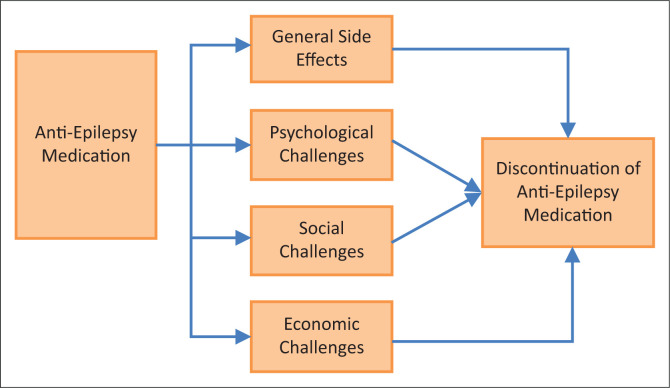
Findings of the study reflected that the general side effects associated with anti- epilepsy medication include feelings of tiredness, stomach upset, dizziness or blurred vision, which usually happen during the first weeks of taking medicines. Psychologically, an individual with epilepsy may suffer cognitive problems that are associated with thinking, remembering, paying attention or concentrating and finding the right words to use. Socially, people with epilepsy experience social isolation, dependent behaviour, low rates of marriages, unemployment and reduced quality of life. Using anti-epilepsy medication is also associated with economic challenges.
The researchers concluded that some people with epilepsy have discontinued using anti-epilepsy medications because of these side effects and challenges.
这项研究的背景是发展中国家(如津巴布韦)的癫痫患者正在放弃抗癫痫药物。
本文旨在综述这些抗癫痫药物相关的一般副作用和挑战。
研究人员回顾了与抗癫痫药物相关的一般副作用、心理、社会和经济挑战有关的文献。
为了回答研究问题,研究人员使用了叙述方法。
研究结果反映出抗癫痫药物相关的一般副作用包括疲劳感、胃部不适、头晕或视力模糊,这些通常发生在开始服用药物的最初几周内。从心理层面来看,癫痫患者可能会出现认知问题,包括思维、记忆、注意力或集中力以及找到合适的词语来表达。在社会层面,癫痫患者会经历社交孤立、依赖性行为、低结婚率、失业和生活质量下降。使用抗癫痫药物也与经济挑战有关。
研究人员得出结论,由于这些副作用和挑战,一些癫痫患者已经停止使用抗癫痫药物。