Helmholtz Institute for RNA-based Infection Research (HIRI), Helmholtz-Center for Infection Research (HZI), Würzburg, Germany.
Mildred Scheel Early Career Center, University Hospital of Würzburg, Würzburg, Germany.
Leukemia. 2023 Mar;37(3):650-658. doi: 10.1038/s41375-023-01824-0. Epub 2023 Jan 31.
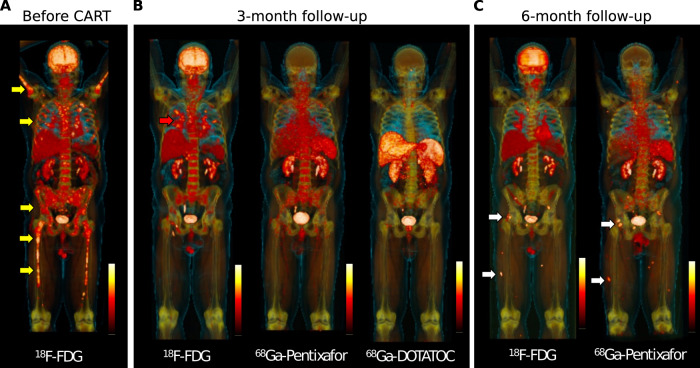
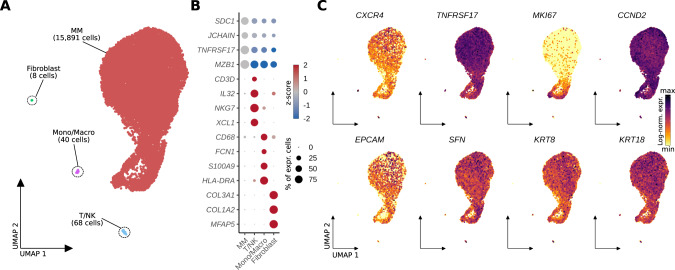
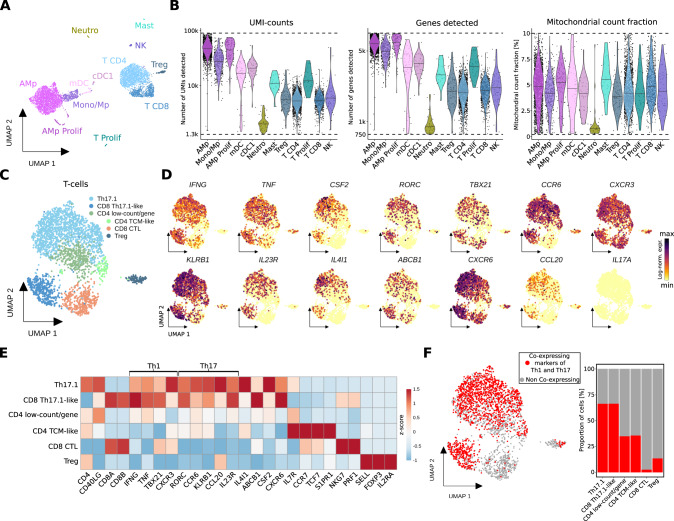
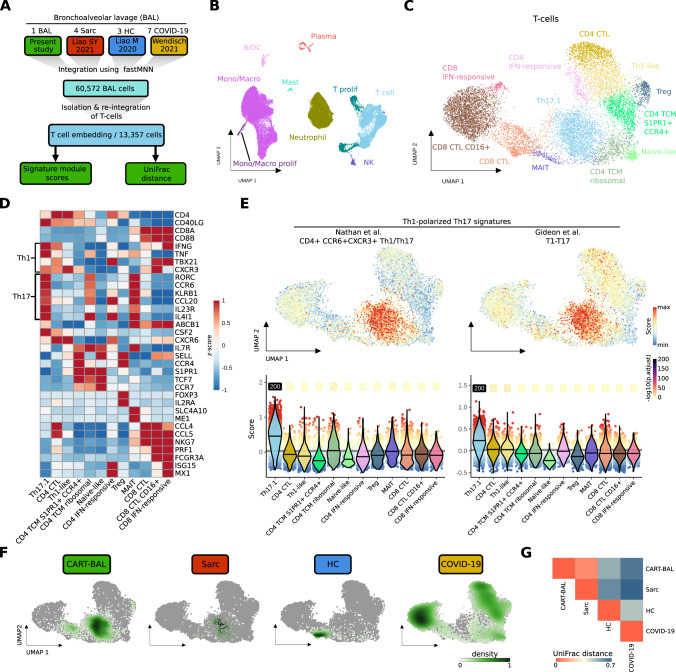
Pseudo-progression and flare-up phenomena constitute a novel diagnostic challenge in the follow-up of patients treated with immune-oncology drugs. We present a case study on pulmonary flare-up after Idecabtagen Vicleucel (Ide-cel), a BCMA targeting CAR T-cell therapy, and used single-cell RNA-seq (scRNA-seq) to identify a Th17.1 driven autoimmune mechanism as the biological underpinning of this phenomenon. By integrating datasets of various lung pathological conditions, we revealed transcriptomic similarities between post CAR T pulmonary lesions and sarcoidosis. Furthermore, we explored a noninvasive PET based diagnostic approach and showed that tracers binding to CXCR4 complement FDG PET imaging in this setting, allowing discrimination between immune-mediated changes and true relapse after CAR T-cell treatment. In conclusion, our study highlights a Th17.1 driven autoimmune phenomenon after CAR T, which may be misinterpreted as disease relapse, and that imaging with multiple PET tracers and scRNA-seq could help in this diagnostic dilemma.
假性进展和爆发现象构成了接受免疫肿瘤药物治疗的患者随访中的一个新的诊断挑战。我们报告了一例 Idecabtagen Vicleucel(Ide-cel)治疗后肺部爆发的病例研究,该药物是一种针对 BCMA 的 CAR T 细胞疗法,并使用单细胞 RNA 测序(scRNA-seq)来确定 Th17.1 驱动的自身免疫机制是这种现象的生物学基础。通过整合各种肺部病理条件的数据集,我们揭示了 CAR T 后肺部病变与结节病之间的转录组相似性。此外,我们探索了一种非侵入性的基于 PET 的诊断方法,并表明在这种情况下,结合 CXCR4 的示踪剂可以补充 FDG PET 成像,有助于区分免疫介导的变化和 CAR T 细胞治疗后的真正复发。总之,我们的研究强调了 CAR T 后 Th17.1 驱动的自身免疫现象,这可能被误解为疾病复发,并且使用多种 PET 示踪剂和 scRNA-seq 进行成像可能有助于解决这一诊断难题。