Department of Epidemiology, Johns Hopkins Bloomberg School of Public Health, Baltimore, Maryland, USA.
TB HIV Care, Cape Town South Africa.
AIDS. 2023 May 1;37(6):977-986. doi: 10.1097/QAD.0000000000003500. Epub 2023 Jan 31.
Female sex workers (FSW) and adolescent girls and young women (AGYW) face a disproportionately high risk of HIV in South Africa. Oral preexposure prophylaxis (PrEP) can avert new infections, but its effectiveness is linked to consistent use. Early discontinuation of PrEP in this population is high, but less is known about longitudinal patterns of PrEP use, including patterns of re-initiation and cycling.
Longitudinal descriptive analysis of routine program data.
Between 2016 and 2021, 40 681 FSW and AGYW initiated PrEP at TB HIV Care, the largest PrEP provider to this population in South Africa and were included. Using survival analyses and group-based trajectory modeling, we described patterns of initiation, discontinuation, re-initiation, and cycling.
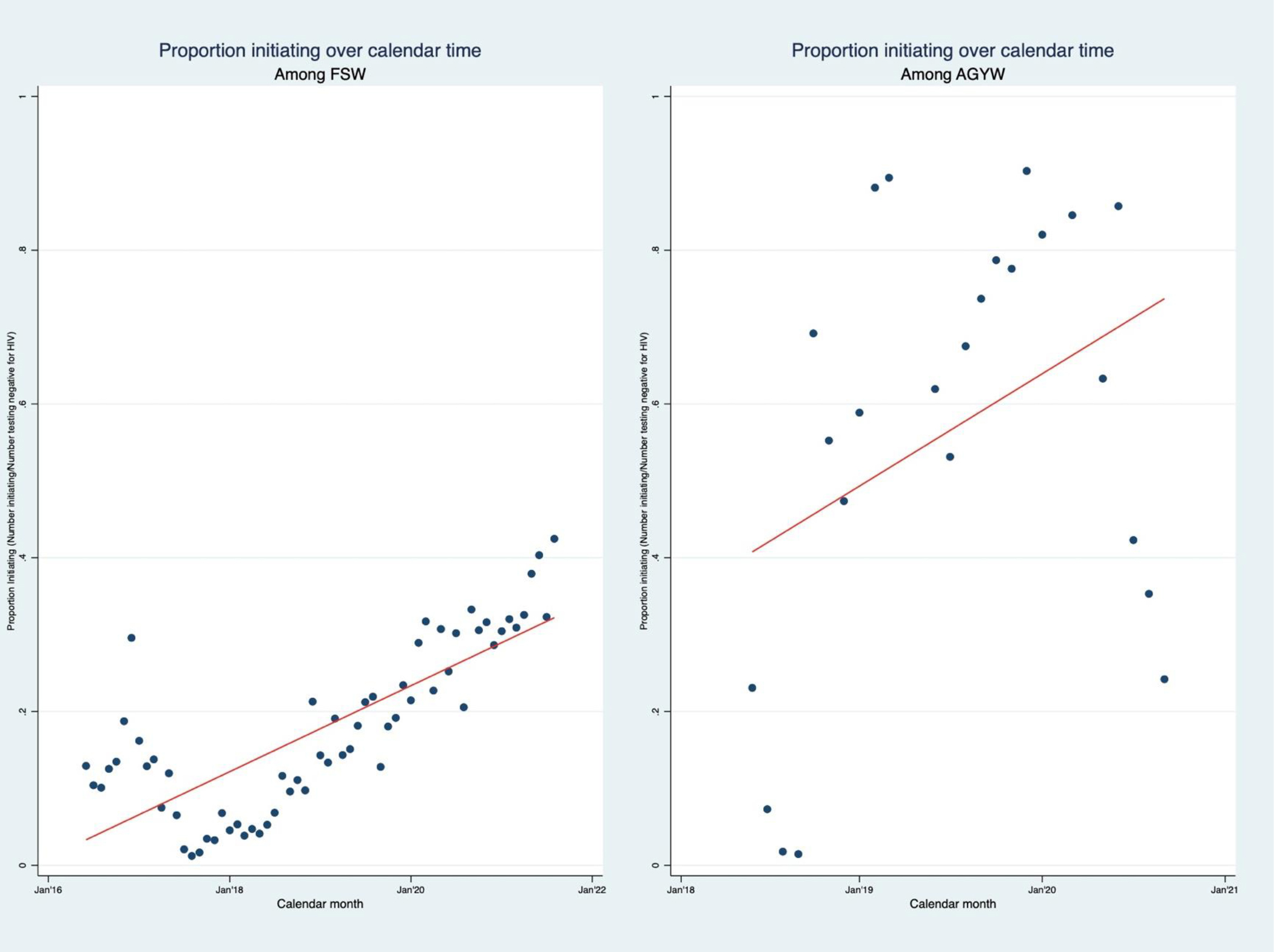
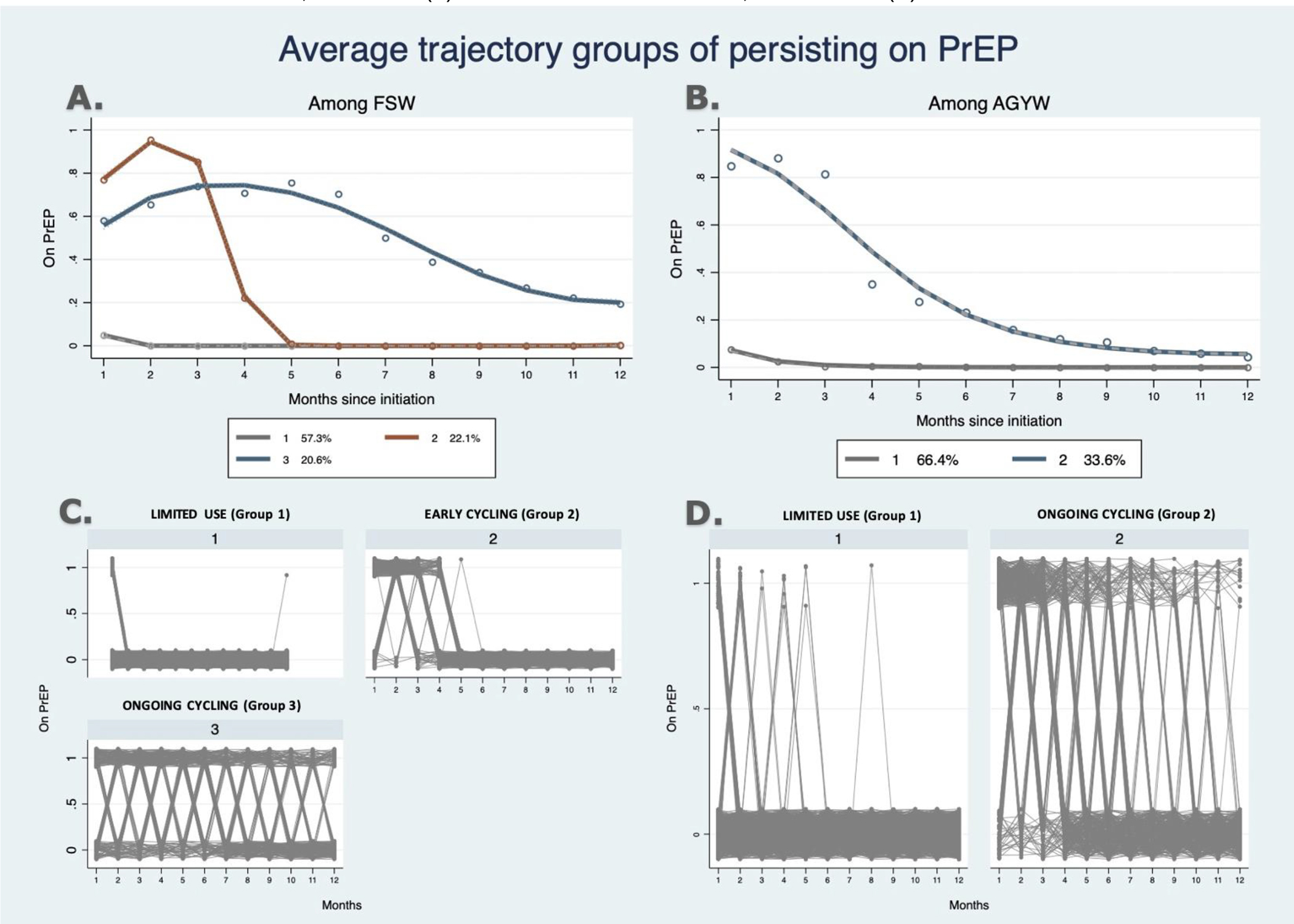
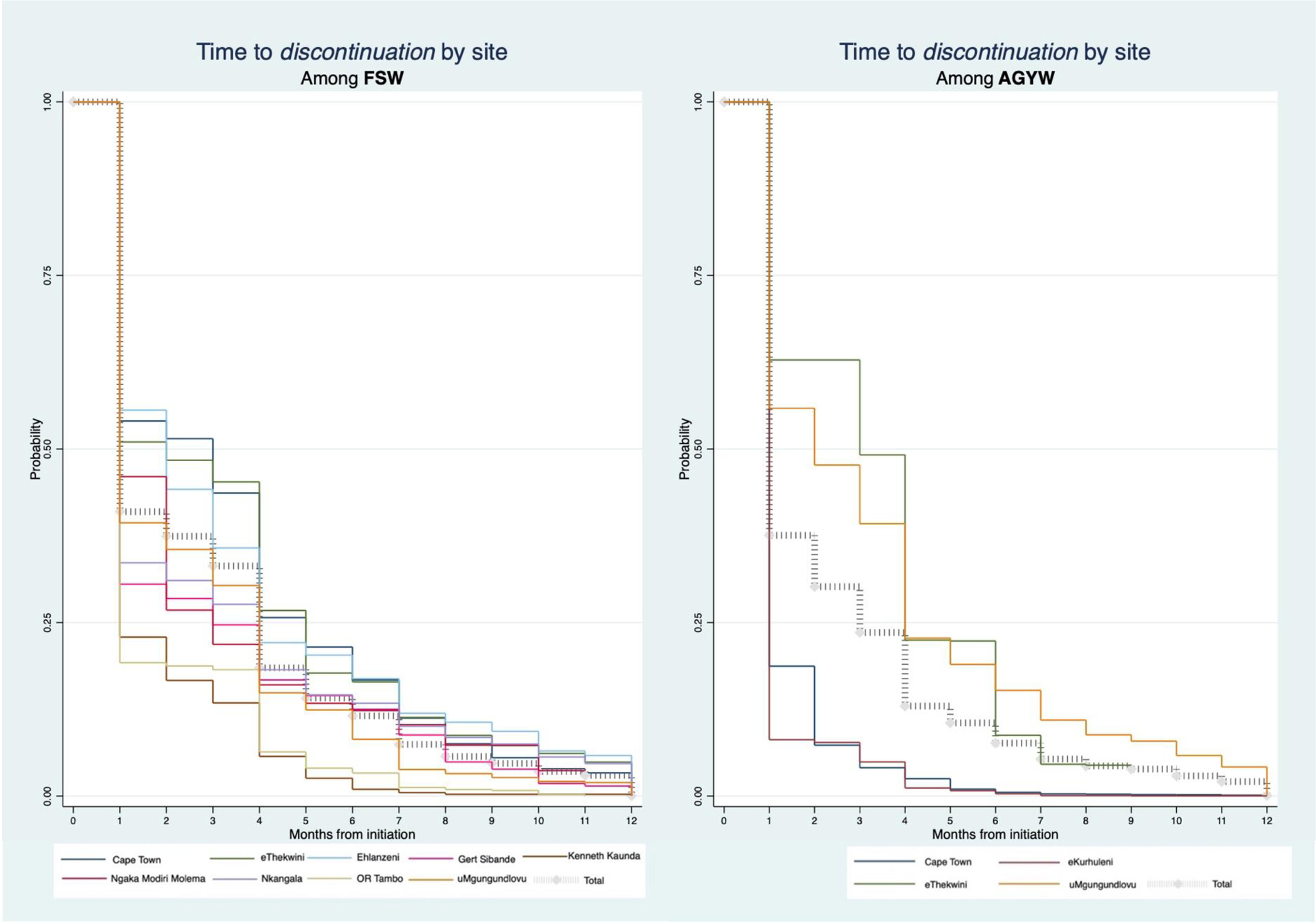
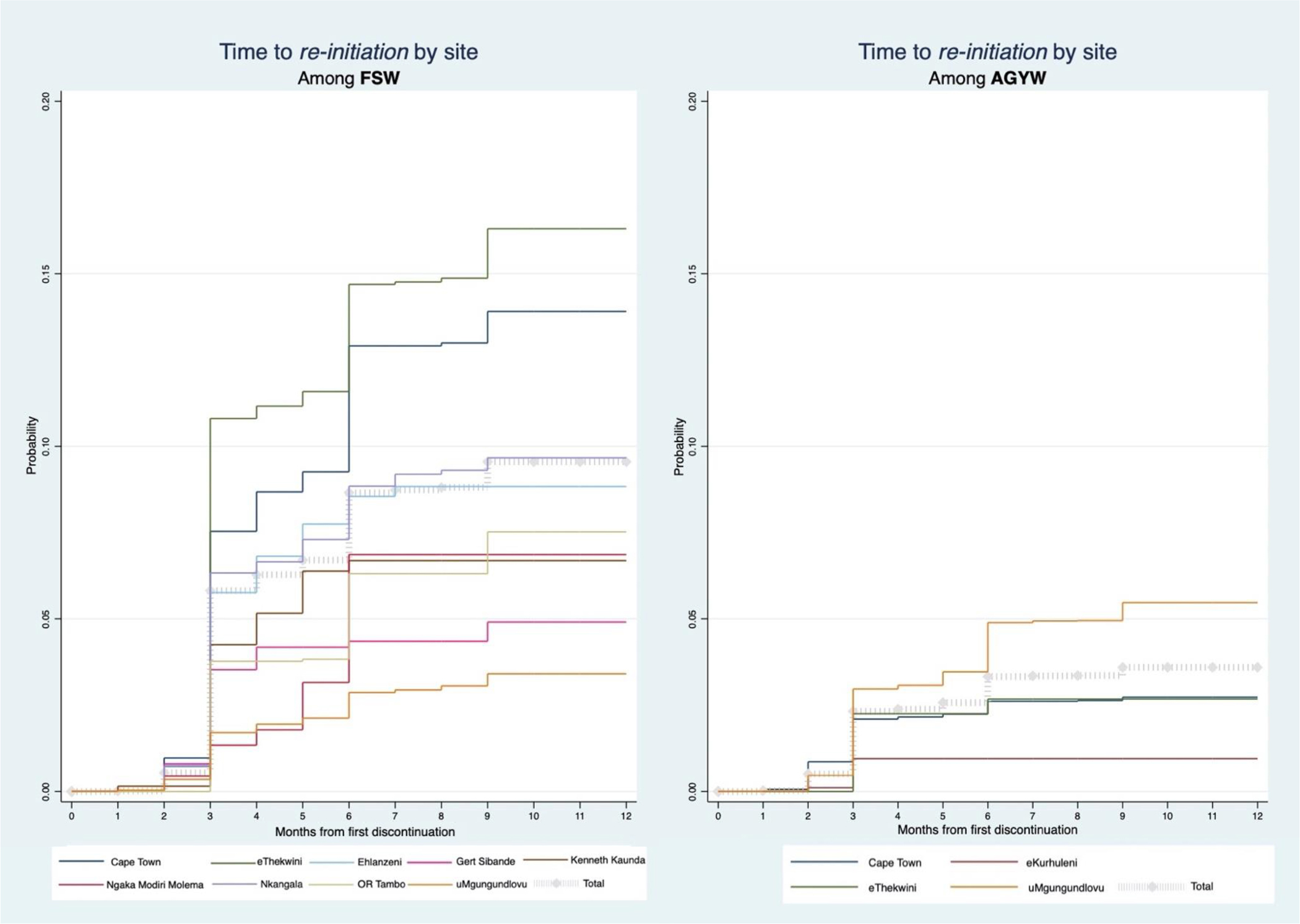
Total initiations increased over the life of the program for both FSW and AGYW. About 40% of FSW [0.41, 95% confidence interval (CI) [0.40-0.42]] and AGYW (0.38, 95% CI [0.37-0.38]) remained on PrEP at one month. FSW were more likely to restart PrEP, however <10% restarted PrEP within a year of initiation. Three latent trajectory groups of PrEP use were identified for FSW (low use, early cycling, and ongoing cycling) and two for AGYW (low use and ongoing cycling). Persistence was negatively associated with initiation among AGYW, but there was no clear relationship among FSW. Those initiating later in the program and older women had a reduced risk of discontinuation.
Persistence on PrEP was low, but cycling on and off PrEP was common, with early missed visits and inconsistent, but ongoing use. A push to increase PrEP initiations needs to factor in readiness and persistence support, to achieve public health impact.
在南非,性工作者(FSW)和青少年女孩及年轻女性(AGYW)面临着不成比例的高艾滋病毒感染风险。口服暴露前预防(PrEP)可以避免新的感染,但它的有效性与持续使用有关。在这一人群中,PrEP 的早期停药率很高,但人们对 PrEP 使用的纵向模式知之甚少,包括重新开始和循环的模式。
对常规项目数据的纵向描述性分析。
在 2016 年至 2021 年期间,共有 40681 名 FSW 和 AGYW 在南非最大的 PrEP 提供者 TB HIV Care 启动了 PrEP,他们被纳入研究。我们使用生存分析和基于群组的轨迹建模,描述了启动、停药、重新启动和循环的模式。
在项目的整个生命周期内,FSW 和 AGYW 的总启动量都有所增加。大约 40%的 FSW [0.41,95%置信区间(CI)[0.40-0.42]]和 AGYW(0.38,95%CI [0.37-0.38])在一个月内仍在服用 PrEP。FSW 更有可能重新开始 PrEP,但不到 10%的人在开始一年内重新开始 PrEP。为 FSW 确定了三种 PrEP 使用的潜在轨迹组(低使用、早期循环和持续循环)和两种 AGYW(低使用和持续循环)。在 AGYW 中,持续使用与开始使用呈负相关,但在 FSW 中没有明显的关系。在项目后期开始和年龄较大的女性,停药的风险降低。
PrEP 的持续使用率较低,但 PrEP 的循环使用很常见,表现为早期错过就诊和使用不规律但持续。为了实现公共卫生的影响,增加 PrEP 启动需要考虑到准备和持续支持。