Roche Innovation Center Zurich, Roche Pharma Research and Early Development (pRED), Schlieren, Switzerland.
MAbs. 2023 Jan-Dec;15(1):2167189. doi: 10.1080/19420862.2023.2167189.
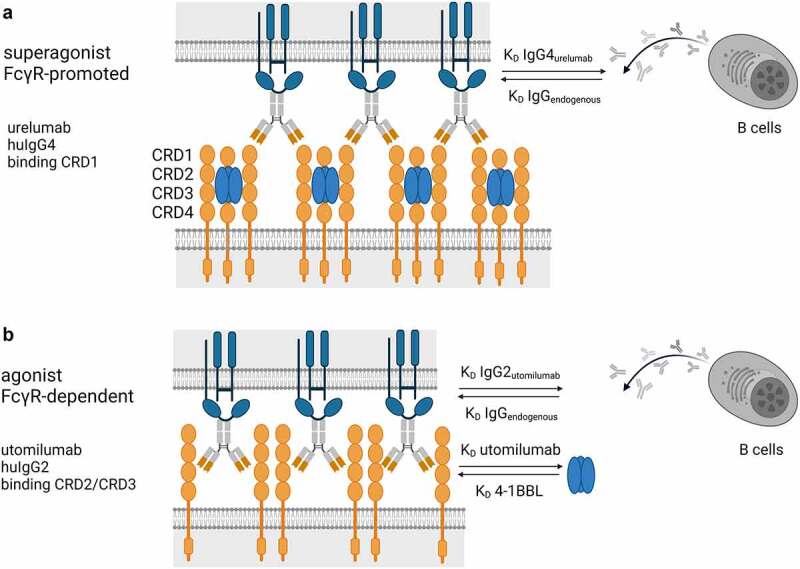
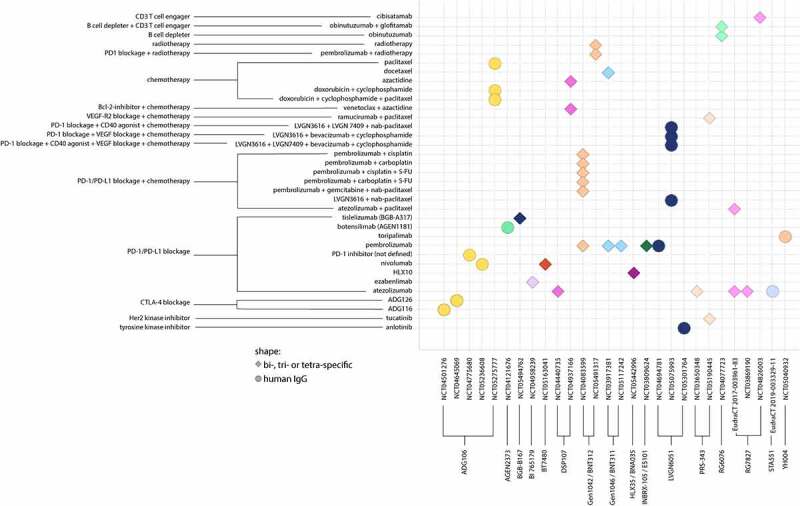
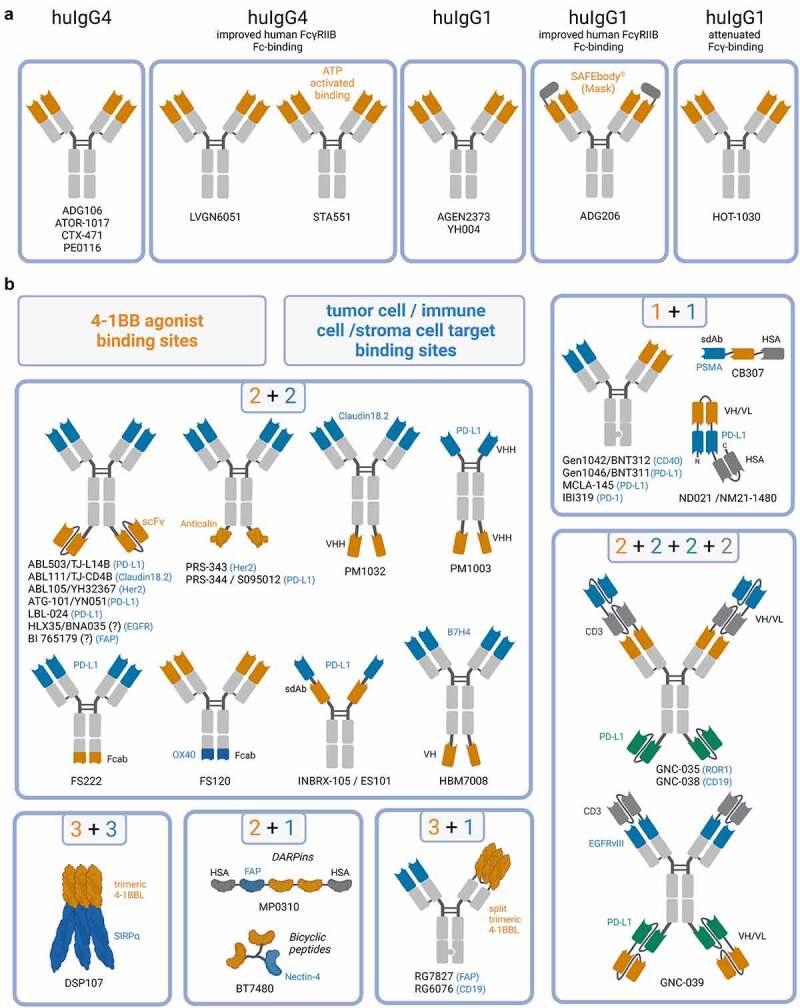
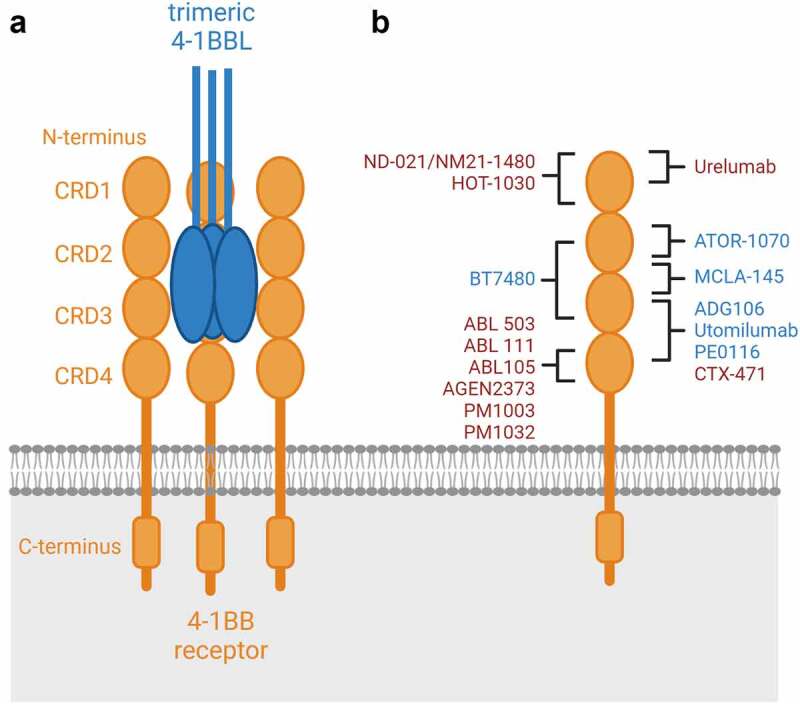
The clinical development of 4-1BB agonists for cancer immunotherapy has raised substantial interest during the past decade. The first generation of 4-1BB agonistic antibodies entering the clinic, urelumab (BMS-663513) and utomilumab (PF-05082566), failed due to (liver) toxicity or lack of efficacy, respectively. The two antibodies display differences in the affinity and the 4-1BB receptor epitope recognition, as well as the isotype, which determines the Fc-gamma-receptor (FcγR) crosslinking activity. Based on this experience a very diverse landscape of second-generation 4-1BB agonists addressing the liabilities of first-generation agonists has recently been developed, with many entering clinical Phase 1 and 2 studies. This review provides an overview focusing on differences and their scientific rationale, as well as challenges foreseen during the clinical development of these molecules.
在过去十年中,4-1BB 激动剂在癌症免疫治疗的临床开发中引起了极大的兴趣。第一代进入临床的 4-1BB 激动性抗体,urelumab(BMS-663513)和utomilumab(PF-05082566),分别由于(肝脏)毒性或缺乏疗效而失败。这两种抗体在亲和力和 4-1BB 受体表位识别以及决定 FcγR 交联活性的同种型方面存在差异。基于这一经验,最近开发了一种非常多样化的第二代 4-1BB 激动剂,用于解决第一代激动剂的缺陷,其中许多已进入临床 1 期和 2 期研究。这篇综述提供了一个概述,重点介绍了这些分子在临床开发过程中预见的差异及其科学依据,以及挑战。