
自噬在创伤后骨关节炎发病机制及治疗潜力中的作用
Autophagy in the pathogenesis and therapeutic potential of post-traumatic osteoarthritis.
作者信息
Gong Yunquan, Li Song, Wu Jinghui, Zhang Tongyi, Fang Shunzheng, Feng Daibo, Luo Xiaoqing, Yuan Jing, Wu Yaran, Yan Xiaojing, Zhang Yan, Zhu Jun, Wu Jiangyi, Lian Jiqin, Xiang Wei, Ni Zhenhong
机构信息
State Key Laboratory of Trauma, Burns and Combined Injury, Department of Rehabilitation Medicine, Daping Hospital, Army Medical University, Changjiang Street, Yuzhong District, Chongqing 400042, China.
Department of Orthopedics, Shanghai Hospital, Shanghai Street, Wanzhou District, Chongqing 404000, China.
出版信息
Burns Trauma. 2023 Jan 31;11:tkac060. doi: 10.1093/burnst/tkac060. eCollection 2023.
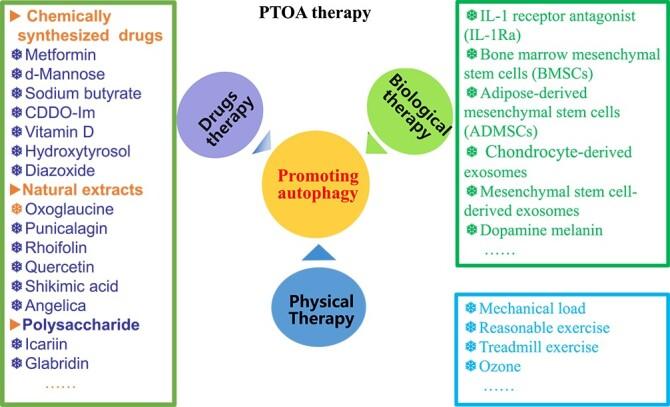
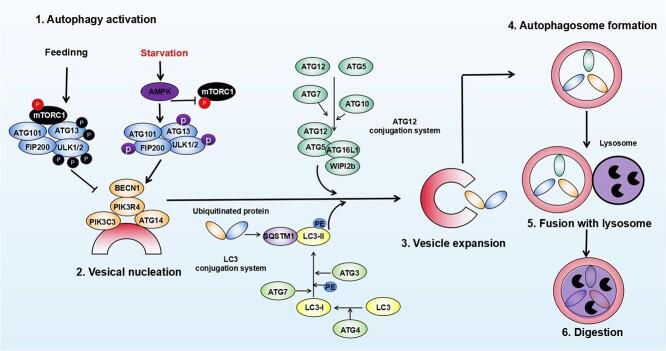
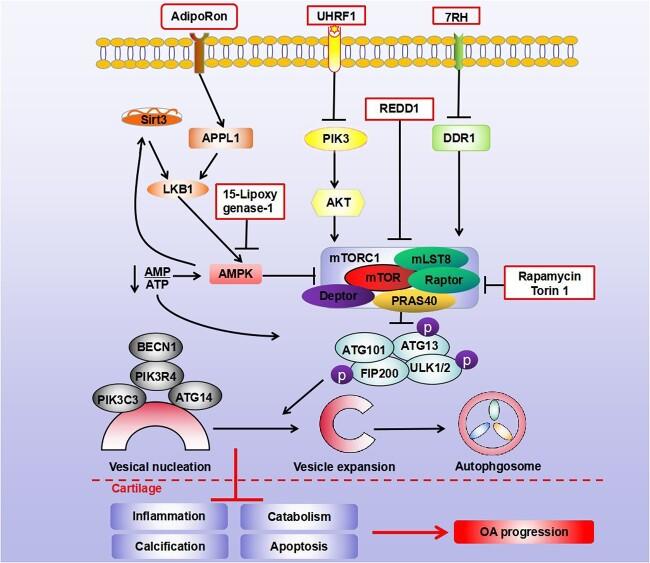
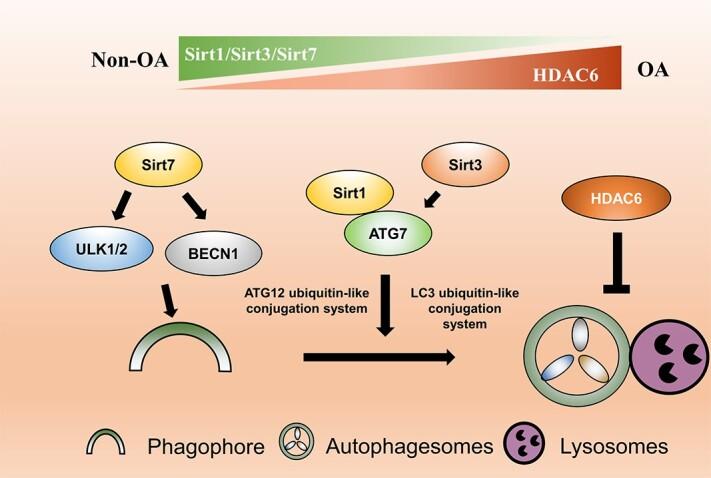
Autophagy, as a fundamental mechanism for cellular homeostasis, is generally involved in the occurrence and progression of various diseases. Osteoarthritis (OA) is the most common musculoskeletal disease that often leads to pain, disability and economic loss in patients. Post-traumatic OA (PTOA) is a subtype of OA, accounting for >12% of the overall burden of OA. PTOA is often caused by joint injuries including anterior cruciate ligament rupture, meniscus tear and intra-articular fracture. Although a variety of methods have been developed to treat acute joint injury, the current measures have limited success in effectively reducing the incidence and delaying the progression of PTOA. Therefore, the pathogenesis and intervention strategy of PTOA need further study. In the past decade, the roles and mechanisms of autophagy in PTOA have aroused great interest in the field. It was revealed that autophagy could maintain the homeostasis of chondrocytes, reduce joint inflammatory level, prevent chondrocyte death and matrix degradation, which accordingly improved joint symptoms and delayed the progression of PTOA. Moreover, many strategies that target PTOA have been revealed to promote autophagy. In this review, we summarize the roles and mechanisms of autophagy in PTOA and the current strategies for PTOA treatment that depend on autophagy regulation, which may be beneficial for PTOA patients in the future.
自噬作为细胞稳态的一种基本机制,通常参与各种疾病的发生和发展。骨关节炎(OA)是最常见的肌肉骨骼疾病,常导致患者疼痛、残疾和经济损失。创伤后骨关节炎(PTOA)是OA的一种亚型,占OA总负担的12%以上。PTOA通常由包括前交叉韧带断裂、半月板撕裂和关节内骨折在内的关节损伤引起。尽管已经开发出多种方法来治疗急性关节损伤,但目前的措施在有效降低PTOA的发病率和延缓其进展方面取得的成功有限。因此,PTOA的发病机制和干预策略需要进一步研究。在过去十年中,自噬在PTOA中的作用和机制引起了该领域的极大兴趣。研究表明,自噬可以维持软骨细胞的稳态,降低关节炎症水平,防止软骨细胞死亡和基质降解,从而改善关节症状并延缓PTOA的进展。此外,许多针对PTOA的策略已被证明可促进自噬。在本综述中,我们总结了自噬在PTOA中的作用和机制以及目前依赖自噬调节的PTOA治疗策略,这可能对未来的PTOA患者有益。
 Zotero 插件