Department of Psychiatry & Taylor Family Institute for Innovative Psychiatric Research, Washington University School of Medicine, St. Louis, MO, USA.
Center for Brain Research in Mood Disorders, Washington University School of Medicine, St. Louis, MO, USA.
Transl Psychiatry. 2023 Feb 3;13(1):39. doi: 10.1038/s41398-023-02343-3.
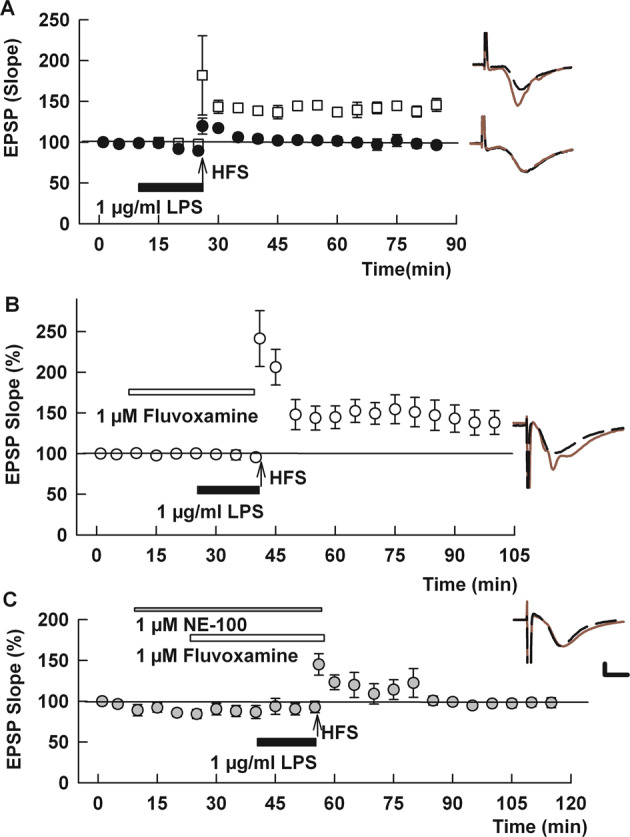
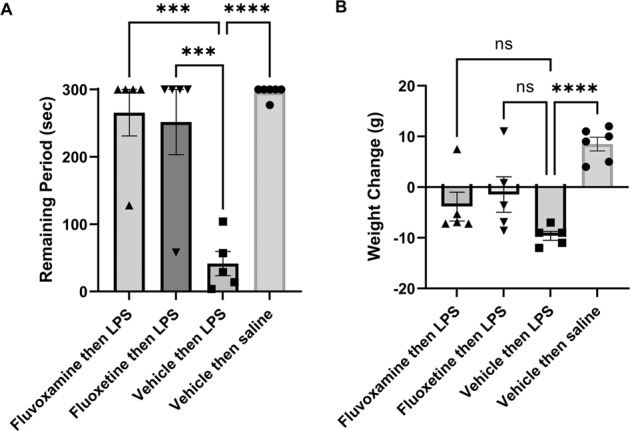
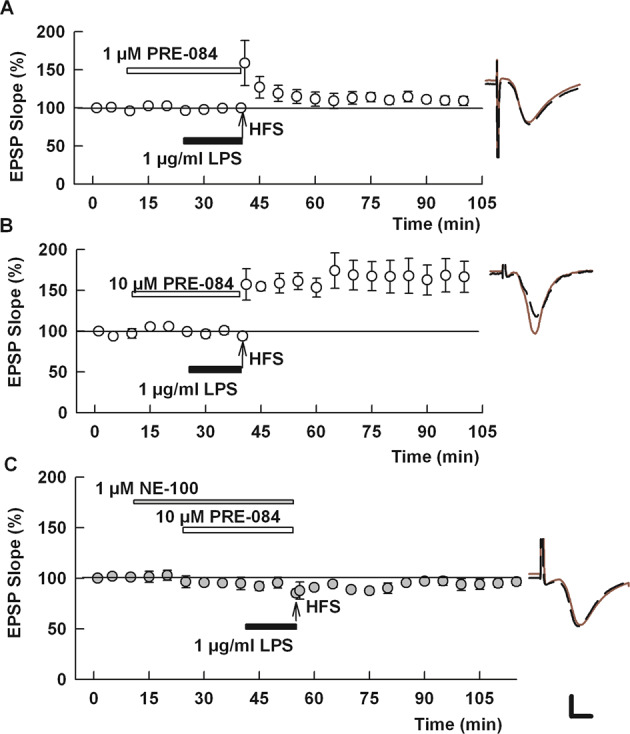
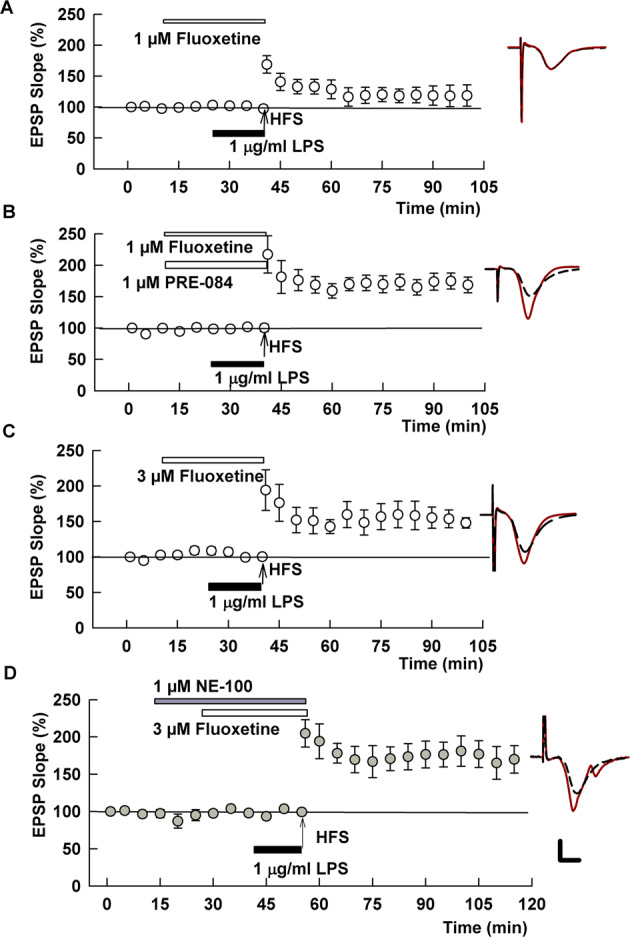
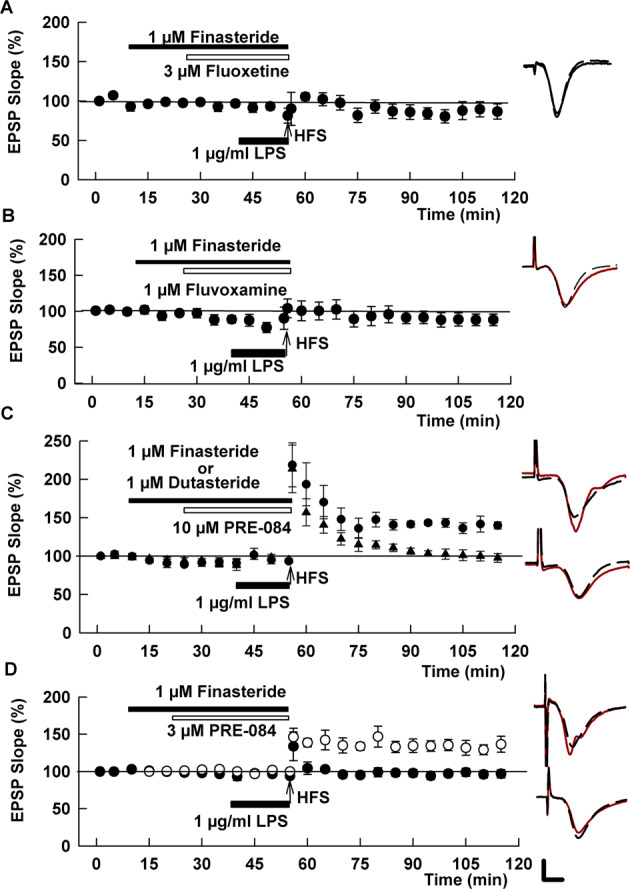
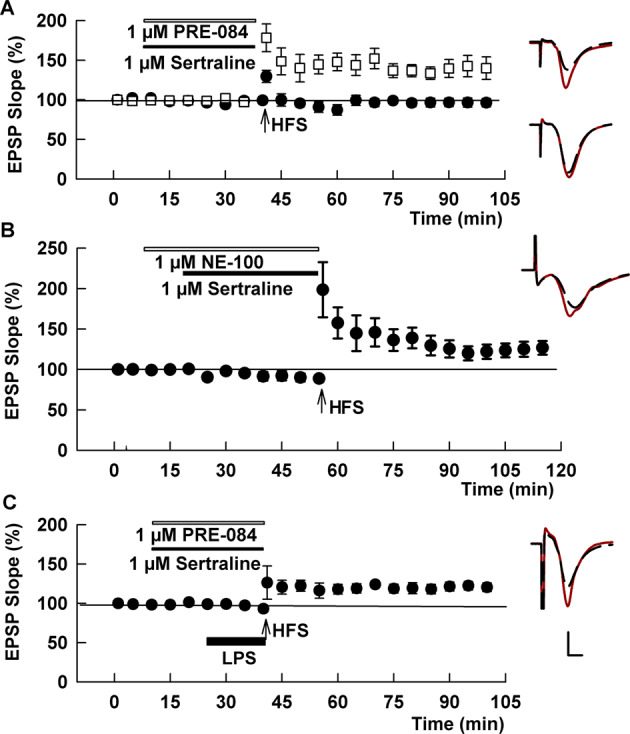
Certain selective serotonin reuptake inhibitors (SSRIs) have anti-inflammatory effects in preclinical models, and recent clinical studies suggest that fluvoxamine can prevent deterioration in patients with COVID-19, possibly through activating sigma 1 receptors (S1Rs). Here we examined potential mechanisms contributing to these effects of fluvoxamine and other SSRIs using a well-characterized model of pro-inflammatory stress in rat hippocampal slices. When hippocampal slices are exposed acutely to lipopolysaccharide (LPS), a strong pro-inflammatory stimulus, basal synaptic transmission in the CA1 region remains intact, but induction of long-term potentiation (LTP), a form of synaptic plasticity thought to contribute to learning and memory, is completely disrupted. Administration of low micromolar concentrations of fluvoxamine and fluoxetine prior to and during LPS administration overcame this LTP inhibition. Effects of fluvoxamine required both activation of S1Rs and local synthesis of 5-alpha reduced neurosteroids. In contrast, the effects of fluoxetine did not involve S1Rs but required neurosteroid production. The ability of fluvoxamine to modulate LTP and neurosteroid production was mimicked by a selective S1R agonist. Additionally, fluvoxamine and fluoxetine prevented learning impairments induced by LPS in vivo. Sertraline differed from the other SSRIs in blocking LTP in control slices likely via S1R inverse agonism. These results provide strong support for the hypothesis that S1Rs and neurosteroids play key roles in the anti-inflammatory effects of certain SSRIs and that these SSRIs could be beneficial in disorders involving inflammatory stress including psychiatric and neurodegenerative illnesses.
某些选择性 5-羟色胺再摄取抑制剂(SSRIs)在临床前模型中具有抗炎作用,最近的临床研究表明,氟伏沙明可以预防 COVID-19 患者病情恶化,可能是通过激活 sigma 1 受体(S1Rs)。在这里,我们使用大鼠海马切片中经过充分表征的促炎应激模型,研究了氟伏沙明和其他 SSRIs 产生这些作用的潜在机制。当海马切片急性暴露于脂多糖(LPS)这种强烈的促炎刺激物时,CA1 区的基础突触传递保持完整,但长时程增强(LTP)的诱导,即一种被认为有助于学习和记忆的突触可塑性形式,完全被破坏。在 LPS 给药前和给药期间给予低微摩尔浓度的氟伏沙明和氟西汀,克服了这种 LTP 抑制。氟伏沙明的作用需要 S1Rs 的激活和 5-α 还原神经甾体的局部合成。相比之下,氟西汀的作用不涉及 S1Rs,但需要神经甾体的产生。氟伏沙明调节 LTP 和神经甾体产生的能力被选择性 S1R 激动剂模拟。此外,氟伏沙明和氟西汀可预防 LPS 在体内引起的学习障碍。与其他 SSRIs 不同,舍曲林在对照切片中阻断 LTP 可能是通过 S1R 反向激动。这些结果强烈支持了这样一种假设,即 S1Rs 和神经甾体在某些 SSRIs 的抗炎作用中发挥关键作用,并且这些 SSRIs 在涉及炎症应激的疾病中可能有益,包括精神和神经退行性疾病。