Department for Functional Materials in Medicine and Dentistry, Institute of Functional Materials and Biofabrication, University of Würzburg, Pleicherwall 2, 97070, Würzburg, Germany.
Department of Biotechnology and Biophysics, University of Würzburg, Am Hubland, 97074, Würzburg, Germany.
Adv Healthc Mater. 2023 May;12(13):e2201794. doi: 10.1002/adhm.202201794. Epub 2023 Feb 24.
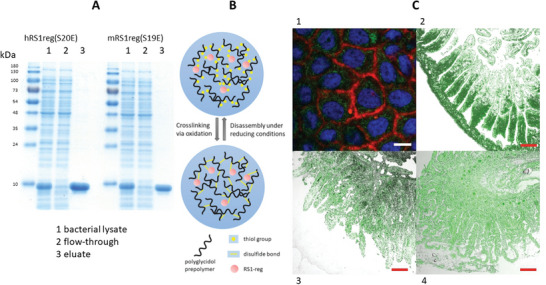
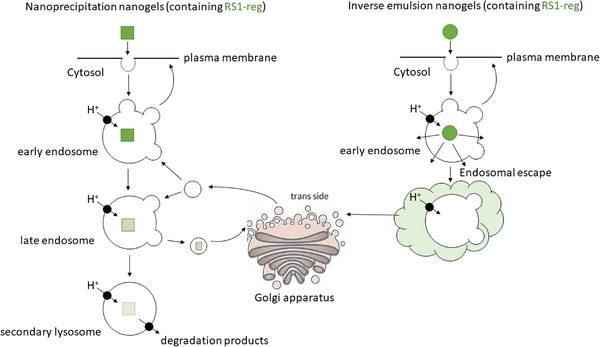
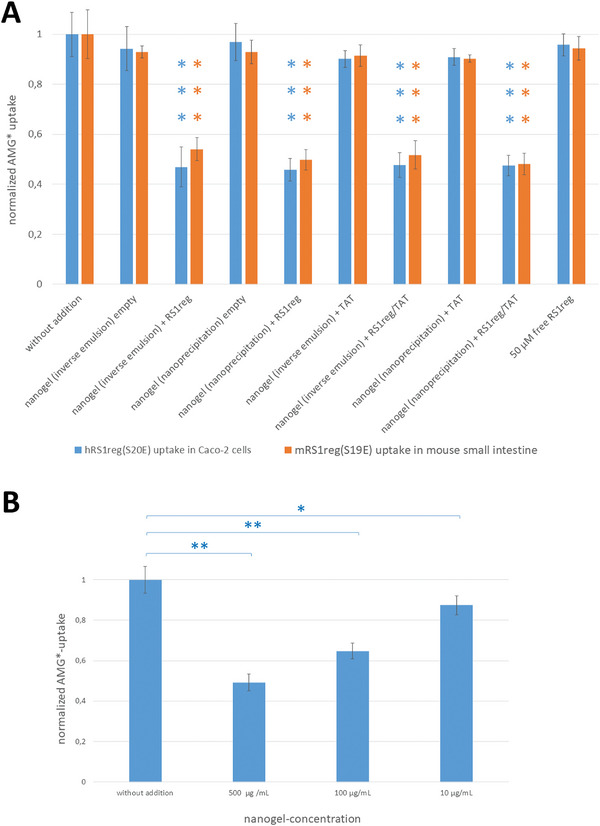
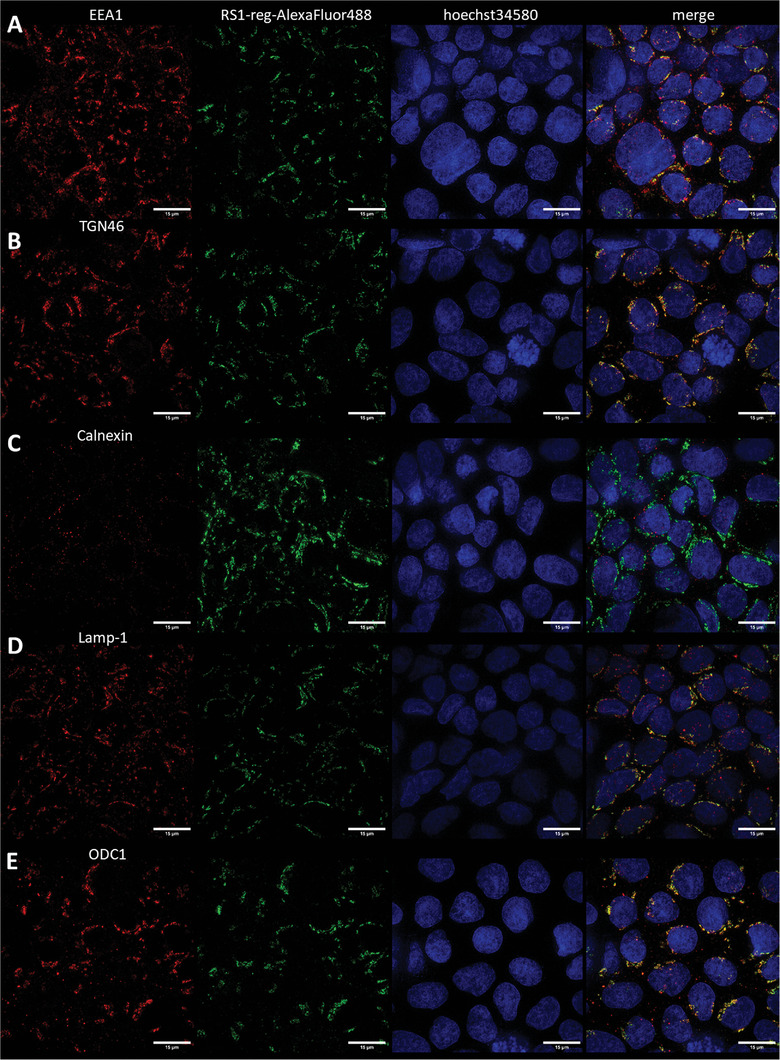
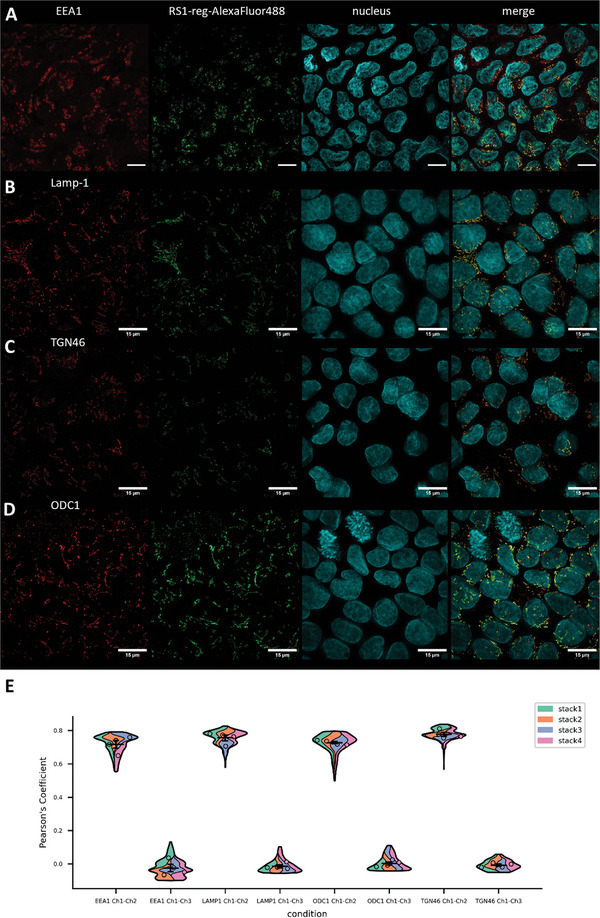
Nanohydrogels combine advantages of hydrogels and nanoparticles. In particular, they represent promising drug delivery systems. Nanogel synthesis by oxidative condensation of polyglycidol prepolymers, that are modified with thiol groups, results in crosslinking by disulfide bonds. Hereby, biomolecules like the antidiabetic peptide RS1-reg, derived from the regulatory protein RS1 of the Na -D-glucose cotransporter SGLT1, can be covalently bound by cysteine residues to the nanogel in a hydrophilic, stabilizing environment. After oral uptake, the acid-stable nanogels protect their loading during gastric passage from proteolytic degradation. Under alkaline conditions in small intestine the nanohydrogels become mucoadhesive, pass the intestinal mucosa and are taken up into small intestinal enterocytes by endocytosis. Using Caco-2 cells as a model for small intestinal enterocytes, by confocal laser scanning microscopy and structured illumination microscopy, the colocalization of fluorescent-labeled RS1-reg with markers of endosomes, lysosomes, and trans-Golgi-network after uptake with polyglycidol-based nanogels formed by precipitation polymerization is demonstrated. This indicates that RS1-reg follows the endosomal pathway. In the following, the design of bespoken nanohydrogels for specific targeting of RS1-reg to its site of action at the trans-Golgi network is described that might also represent a way of targeted transport for other drugs to their targets at the Golgi apparatus.
纳米水凝胶结合了水凝胶和纳米粒子的优点。特别是,它们代表了有前途的药物传递系统。通过带有巯基的聚缩水甘油醚预聚物的氧化缩合来合成纳米凝胶,导致通过二硫键交联。由此,生物分子如抗糖尿病肽 RS1-reg,可以通过半胱氨酸残基在亲水环境中与纳米凝胶共价结合,RS1-reg 来自 Na+-D-葡萄糖共转运蛋白 SGLT1 的调节蛋白 RS1。口服摄取后,在胃通过过程中,酸性稳定的纳米凝胶保护其负载免受蛋白水解降解。在小肠中的碱性条件下,纳米水凝胶变得具有粘膜粘附性,穿过肠粘膜并通过内吞作用被小肠肠细胞吸收。使用 Caco-2 细胞作为小肠肠细胞的模型,通过共聚焦激光扫描显微镜和结构光照明显微镜,在用沉淀聚合形成的基于聚缩水甘油的纳米凝胶摄取后,荧光标记的 RS1-reg 与内体、溶酶体和反式高尔基体网络的标志物的共定位被证明。这表明 RS1-reg 遵循内体途径。在接下来的内容中,描述了专门设计的纳米水凝胶,用于将 RS1-reg 靶向其在反式高尔基体网络上的作用部位,这也可能代表了将其他药物靶向输送到其在高尔基体中的靶部位的一种方法。