Zhou Ziyan, Chen Gang, Shen Mingjun, Li Jixi, Liu Kang, Liu Ming, Shi Shuo, Yang Dong, Chen Wei, Chen Sixia, Yin Yuanxiu, Qin Yating, Su Xuejin, Chen Weimin, Kang Min
Department of Radiation Oncology, the First Affiliated Hospital of Guangxi Medical University, Nanning, 530021, Guangxi, China; Key Laboratory of Early Prevention and Treatment for Regional High Frequency Tumor (Guangxi Medical University), Ministry of Education, Nanning, 530021, Guangxi, China; Guangxi Key Laboratory of Immunology and Metabolism for Liver Diseases, Nanning, 530021, Guangxi, China.
Department of Pathology, The First Affiliated Hospital of Guangxi Medical University, Nanning, Guangxi, China.
Transl Oncol. 2023 Apr;30:101625. doi: 10.1016/j.tranon.2023.101625. Epub 2023 Feb 3.
Genome-scale CRISPR-Cas9 knockout screening may provide new insights into the mechanism underlying clinical radioresistance in nasopharyngeal carcinoma (NPC), which is remain largely unknown. Our objective was to screen the functional genes associated with radiosensitivity and radioresistance in NPC, laying a foundation for further research on its functional mechanismand.
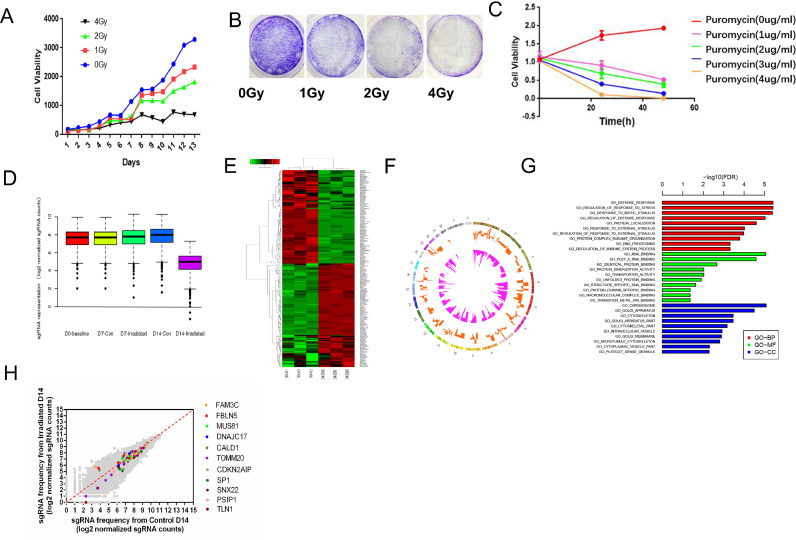
CRISPR-Cas9 library lentivirus screening in radiation-treated NPC cells was combined with second-generation sequence technology to identify functional genes, which were further validated in radioresistant NPC cells and patient tissues.
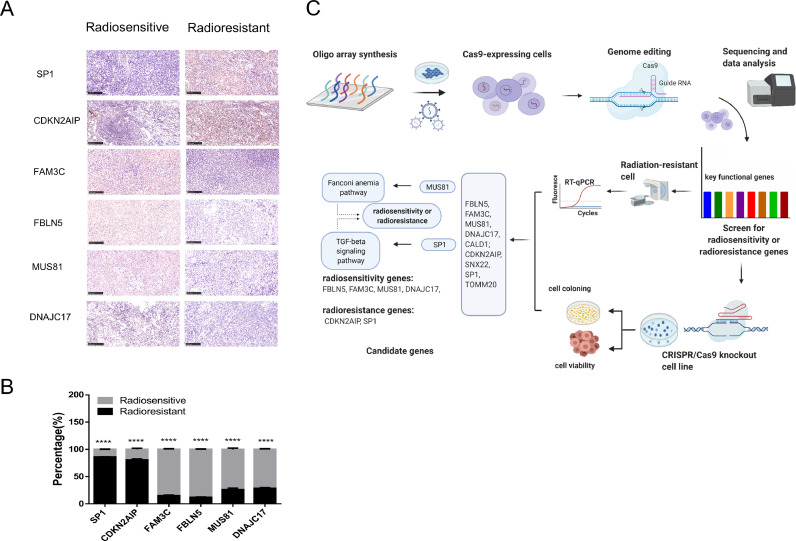
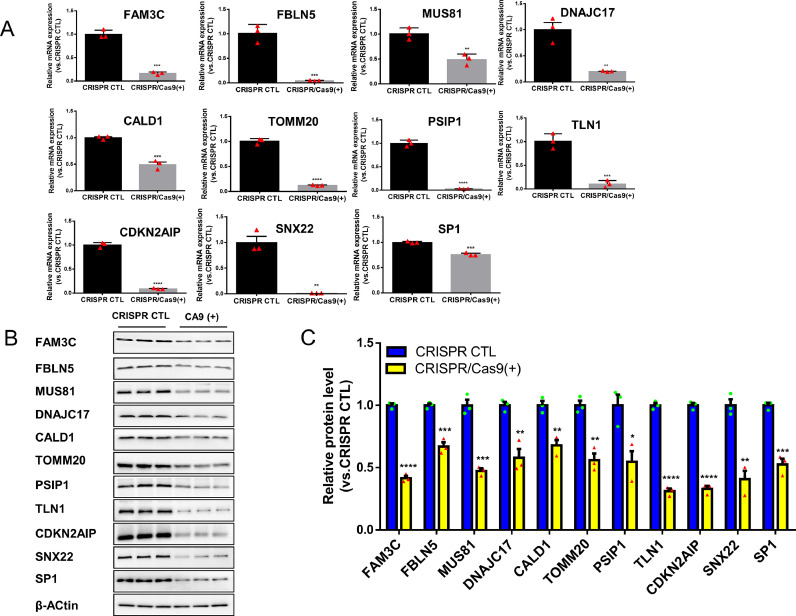
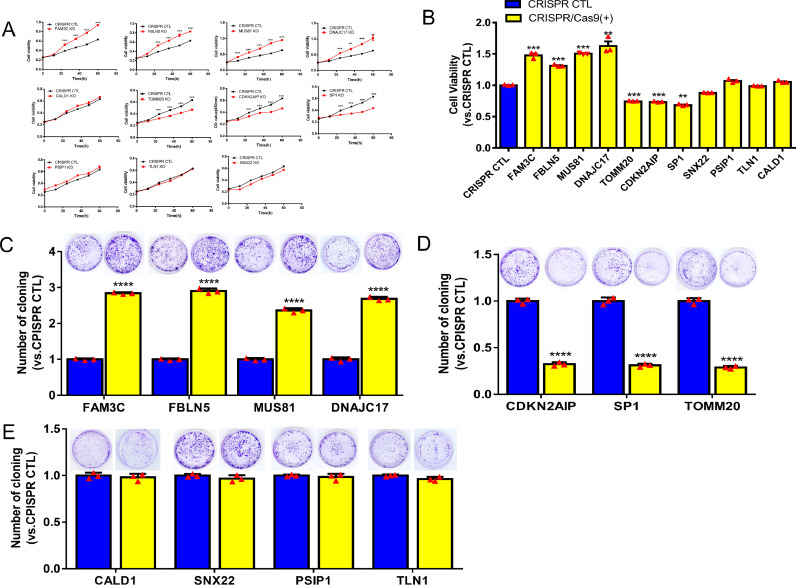
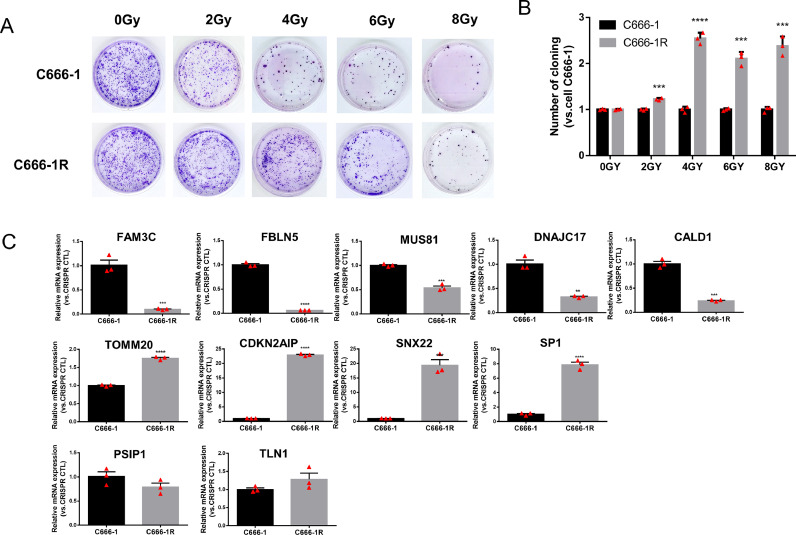
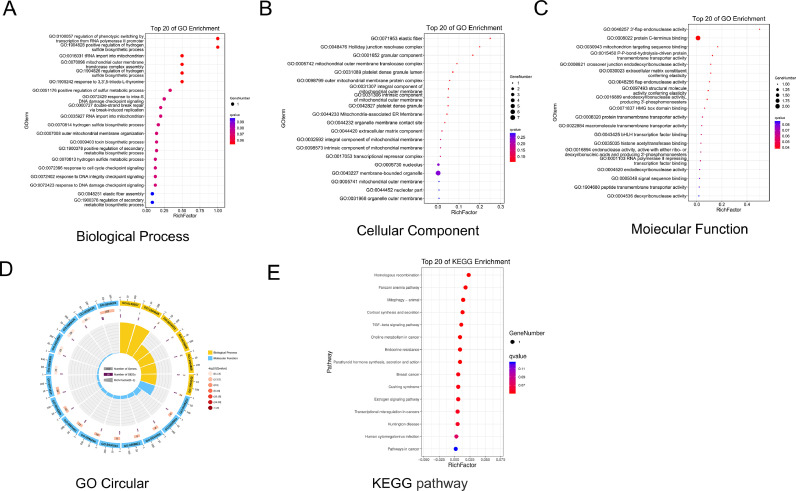
Eleven radiosensitive and radioresistant genes were screened. Among these genes, the expression of FBLN5, FAM3C, MUS81, and DNAJC17 were significantly lower and TOMM20, CDKN2AIP, SNX22, and SP1 were higher in the radioresistant NPC cells (C666-1R, 5-8FR) (p < 0.05). CALD1 was highly expressed in C666-1R. Furthermore, we found knockout of FBLN5, FAM3C, MUS81 and DNAJC17 promoted the proliferation of NPC cells, while CDKN2AIP and SP1 had the opposed results (p < 0.05). This result was verified in NPC patient tissues. Meanwhile, KEGG analysis showed that the Fanconi anemia pathway and the TGF-β signaling pathway possibly contributed to radiosensitivity or radioresistance in NPC.
Nine genes involved in the radiosensitivity or radioresistance of NPC: four genes for radiosensitivity (FBLN5, FAM3C, MUS81, and DNAJC17), two genes for radioresistance (CDKN2AIP, SP1), two potential radioresistant genes (TOMM20, SNX22), and a potential radiosensitive gene (CALD1). Genome-scale CRISPR-Cas9 knockout screening for radiosensitive and radioresistant genes in NPC may provide new insights into the mechanisms underlying clinical radioresistance to improve the efficacy of radiotherapy for NPC.
全基因组规模的CRISPR-Cas9基因敲除筛选可能为鼻咽癌(NPC)临床放射抵抗的潜在机制提供新见解,而该机制目前仍 largely unknown。我们的目的是筛选与NPC放射敏感性和放射抵抗相关的功能基因,为进一步研究其功能机制奠定基础。
将经辐射处理的NPC细胞中的CRISPR-Cas9文库慢病毒筛选与二代测序技术相结合,以鉴定功能基因,并在放射抵抗性NPC细胞和患者组织中进一步验证。
筛选出11个放射敏感和放射抵抗基因。在这些基因中,放射抵抗性NPC细胞(C666-1R、5-8FR)中FBLN5、FAM3C、MUS81和DNAJC17的表达显著较低,而TOMM20、CDKN2AIP、SNX22和SP1的表达较高(p < 0.05)。CALD1在C666-1R中高表达。此外,我们发现敲除FBLN5、FAM3C、MUS81和DNAJC17可促进NPC细胞增殖,而CDKN2AIP和SP1则产生相反结果(p < 0.05)。这一结果在NPC患者组织中得到验证。同时,KEGG分析表明范可尼贫血途径和TGF-β信号通路可能与NPC的放射敏感性或放射抵抗有关。
9个基因参与NPC的放射敏感性或放射抵抗:4个放射敏感基因(FBLN5、FAM3C、MUS81和DNAJC17)、2个放射抵抗基因(CDKN2AIP、SP1)、2个潜在放射抵抗基因(TOMM20、SNX22)和1个潜在放射敏感基因(CALD1)。全基因组规模的CRISPR-Cas9基因敲除筛选NPC中的放射敏感和放射抵抗基因,可能为临床放射抵抗的机制提供新见解,以提高NPC放疗的疗效。