Radiobiology and Health, Canadian Nuclear Laboratories, Chalk River, ON K0J 1J0, Canada.
Department of Biochemistry, Microbiology and Immunology, University of Ottawa, Ottawa, ON K1N 6N5, Canada.
Int J Mol Sci. 2022 Aug 7;23(15):8774. doi: 10.3390/ijms23158774.
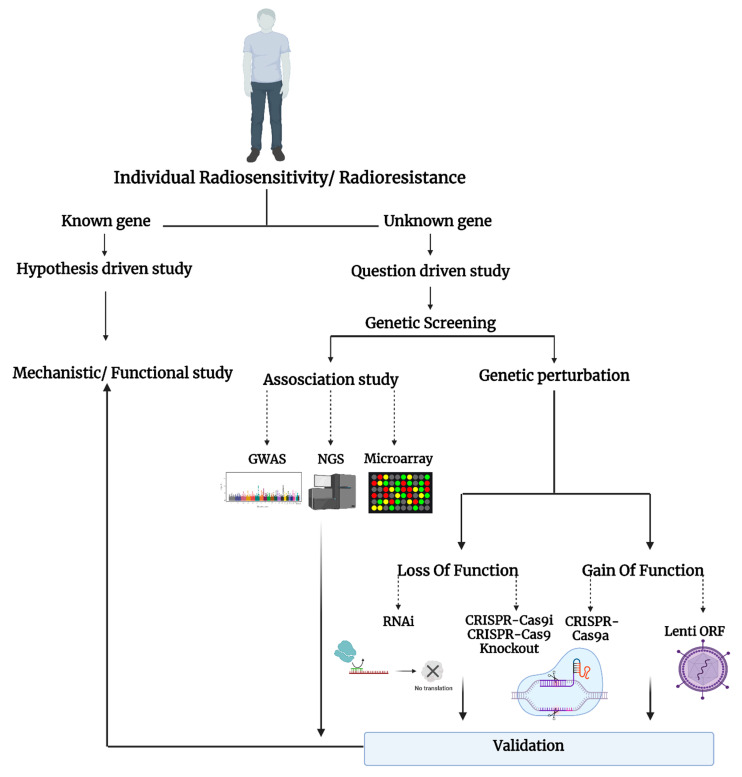
The biological impact of ionizing radiation (IR) on humans depends not only on the physical properties and absorbed dose of radiation but also on the unique susceptibility of the exposed individual. A critical target of IR is DNA, and the DNA damage response is a safeguard mechanism for maintaining genomic integrity in response to the induced cellular stress. Unrepaired DNA lesions lead to various mutations, contributing to adverse health effects. Cellular sensitivity to IR is highly correlated with the ability of cells to repair DNA lesions, in particular coding sequences of genes that affect that process and of others that contribute to preserving genomic integrity. However, accurate profiling of the molecular events underlying individual sensitivity requires techniques with sensitive readouts. Here we summarize recent studies that have used whole-genome analysis and identified genes that impact individual radiosensitivity. Whereas microarray and RNA-seq provide a snapshot of the transcriptome, RNA interference (RNAi) and CRISPR-Cas9 techniques are powerful tools that enable modulation of gene expression and characterizing the function of specific genes involved in radiosensitivity or radioresistance. Notably, CRISPR-Cas9 has altered the landscape of genome-editing technology with its increased readiness, precision, and sensitivity. Identifying critical regulators of cellular radiosensitivity would help tailor regimens that enhance the efficacy of therapeutic treatments and fast-track prediction of clinical outcomes. It would also contribute to occupational protection based on average individual sensitivity, as well as the formulation of countermeasures to the harmful effects of radiation.
电离辐射(IR)对人类的生物学影响不仅取决于辐射的物理性质和吸收剂量,还取决于暴露个体的独特易感性。IR 的一个关键靶标是 DNA,而 DNA 损伤反应是一种保护机制,用于维持基因组完整性以应对诱导的细胞应激。未修复的 DNA 损伤会导致各种突变,从而导致不良的健康影响。细胞对 IR 的敏感性与细胞修复 DNA 损伤的能力高度相关,特别是影响该过程的基因的编码序列,以及有助于维持基因组完整性的其他基因。然而,要准确分析个体敏感性的分子事件,需要使用具有灵敏读数的技术。在这里,我们总结了最近使用全基因组分析并确定影响个体放射敏感性的基因的研究。虽然微阵列和 RNA-seq 提供了转录组的快照,但 RNA 干扰(RNAi)和 CRISPR-Cas9 技术是强大的工具,可用于调节基因表达并表征参与放射敏感性或放射抗性的特定基因的功能。值得注意的是,CRISPR-Cas9 以其更高的可用性、精度和灵敏度改变了基因组编辑技术的格局。鉴定细胞放射敏感性的关键调节因子将有助于定制增强治疗效果的方案,并快速预测临床结果。它还有助于基于平均个体敏感性进行职业保护,以及制定针对辐射有害影响的对策。