Molecular Biology Department, Genetic Engineering and Biotechnology Research Institute, 392053Sadat City University, Egypt.
Rheumatology and Rehabilitation Department, Faculty of Medicine, 63527Cairo University, Cairo, Egypt.
Int J Immunopathol Pharmacol. 2023 Jan-Dec;37:3946320231154998. doi: 10.1177/03946320231154998.
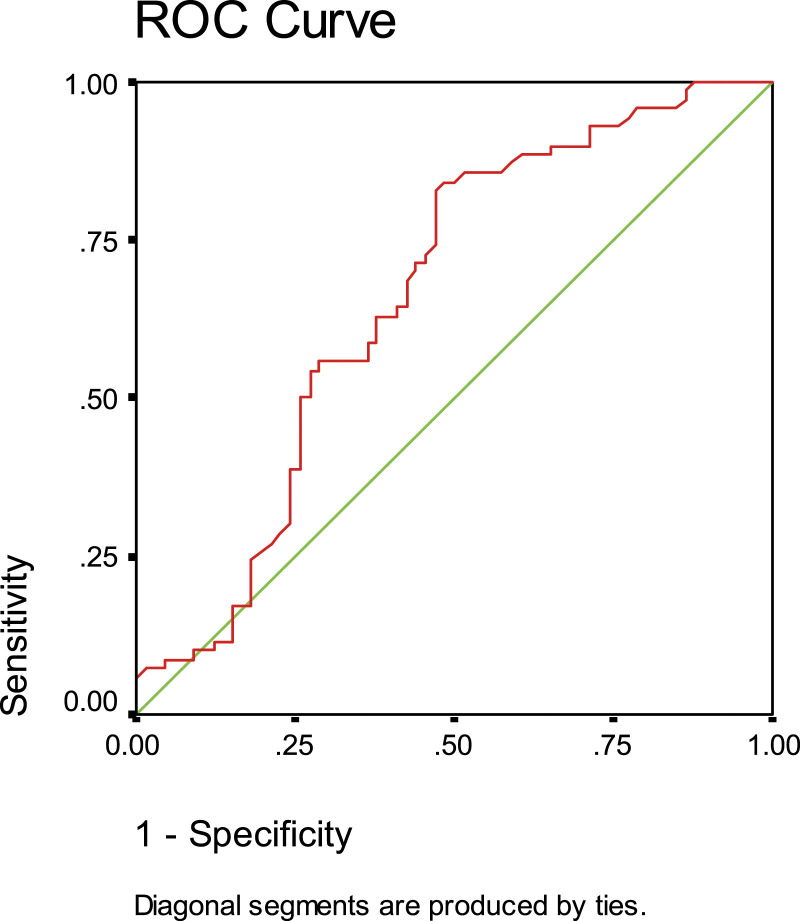
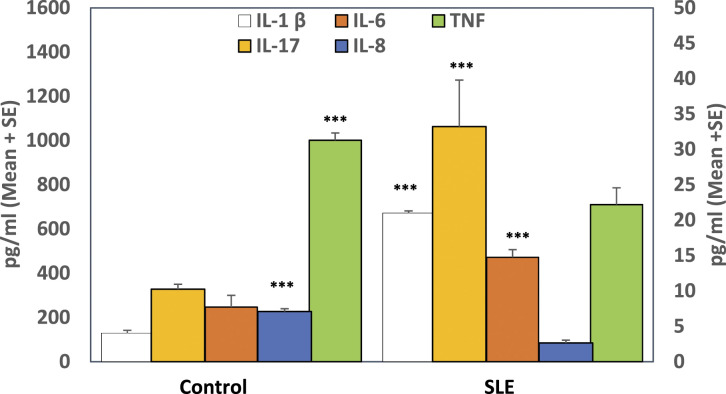
microRNA-146a (miR-146a) plays an essential role in immune anomalies and organ injury of systemic lupus erythematosus (SLE) by regulating the disease's inflammation and complications. Here, we analyzed the expression of miR-146a in SLE and a panel of pro-inflammatory cytokines (IL-1, IL-6, IL-8, IL-17, and TNF-α). Association between all measured parameters and the disease's clinical manifestation and response to treatment was monitored. Our study populations were 113 SLE patients and 104 healthy volunteers. miR-146a expression in peripheral blood mononuclear cells (PBMCs) was measured by quantitative real-time PCR (RT-qPCR). The content of the plasma cytokines (IL-1β, IL-6, IL-8, IL-17, and TNF-α) was detected by enzyme-linked immunosorbent assay (ELISA). Compared with healthy controls, miR-146a expression was significantly increased ( < 0.05) in lupus patients. The analysis of the receiver operator characteristic curve (ROC) of miR-146a showed 91% sensitivity and 70% specificity. IL-1β, IL-6, and IL-17 cytokines were significantly increased ( < 0.001), while IL-8 and TNF-α were significantly decreased ( < 0.001) in SLE patients against controls. The expression of miR-146a and TNF-α was upregulated considerably in SLE patients with severe disease activity. miR-146a expression was positively correlated with IL-6. Our results pointed to the elevation of miR-146a as a trade marker of SLE patients. Reduction of IL-8 and TNF-α in combination with an elevation of IL-1β, IL-6, and IL-17 might refer to miR-146a's dual effect in controlling inflammation in lupus. Although we shed some light on the role of miR-146a in SLE, further study is recommended to improve our results.
miR-146a(miR-146a)通过调节疾病的炎症和并发症,在系统性红斑狼疮(SLE)的免疫异常和器官损伤中发挥重要作用。在这里,我们分析了 miR-146a 在 SLE 和一系列促炎细胞因子(IL-1、IL-6、IL-8、IL-17 和 TNF-α)中的表达。监测所有测量参数与疾病临床表现和治疗反应之间的关系。我们的研究人群包括 113 例 SLE 患者和 104 名健康志愿者。通过定量实时 PCR(RT-qPCR)测量外周血单个核细胞(PBMC)中的 miR-146a 表达。通过酶联免疫吸附试验(ELISA)检测血浆细胞因子(IL-1β、IL-6、IL-8、IL-17 和 TNF-α)的含量。与健康对照组相比,狼疮患者的 miR-146a 表达明显增加(<0.05)。miR-146a 的受试者工作特征曲线(ROC)分析显示,敏感性为 91%,特异性为 70%。与对照组相比,SLE 患者的 IL-1β、IL-6 和 IL-17 细胞因子显著增加(<0.001),而 IL-8 和 TNF-α 显著降低(<0.001)。在疾病活动度严重的 SLE 患者中,miR-146a 和 TNF-α 的表达明显上调。miR-146a 的表达与 IL-6 呈正相关。我们的结果表明,miR-146a 的升高可作为 SLE 患者的标志物。IL-8 和 TNF-α 的减少与 IL-1β、IL-6 和 IL-17 的升高相结合可能反映了 miR-146a 对狼疮炎症的双重调节作用。尽管我们对 miR-146a 在 SLE 中的作用有所了解,但仍需要进一步研究以改善我们的结果。