Harvard Ophthalmology AI Lab, Schepens Eye Research Institute of Massachusetts Eye and Ear, Harvard Medical School, Boston, MA, USA.
Massachusetts Eye and Ear Infirmary, Harvard Medical School, Boston, MA, USA.
Transl Vis Sci Technol. 2023 Feb 1;12(2):6. doi: 10.1167/tvst.12.2.6.
Artificial intelligence (AI) methods are changing all areas of research and have a variety of capabilities of analysis in ophthalmology, specifically in visual fields (VFs) to detect or predict vision loss progression. Whereas most of the AI algorithms are implemented in Python language, which offers numerous open-source functions and algorithms, the majority of algorithms in VF analysis are offered in the R language. This paper introduces PyVisualFields, a developed package to address this gap and make available VF analysis in the Python language.
For the first version, the R libraries for VF analysis provided by vfprogression and visualFields packages are analyzed to define the overlaps and distinct functions. Then, we defined and translated this functionality into Python with the help of the wrapper library rpy2. Besides maintaining, the subsequent versions' milestones are established, and the third version will be R-independent.
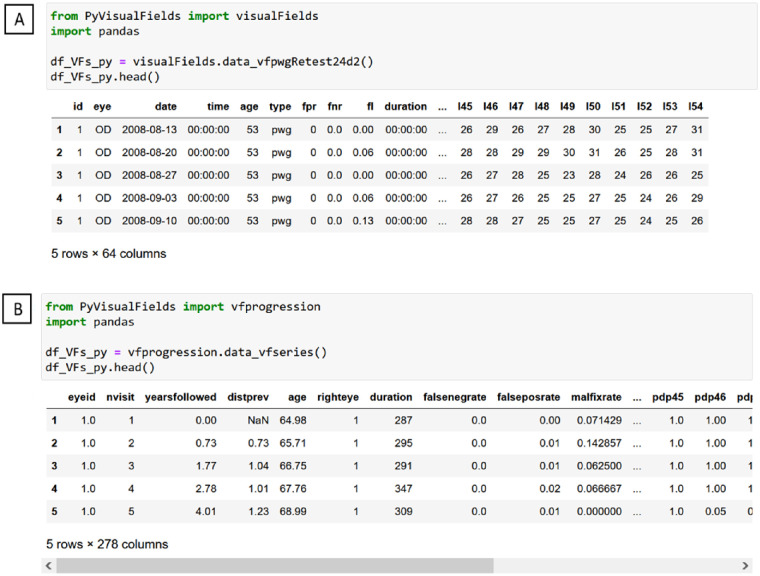
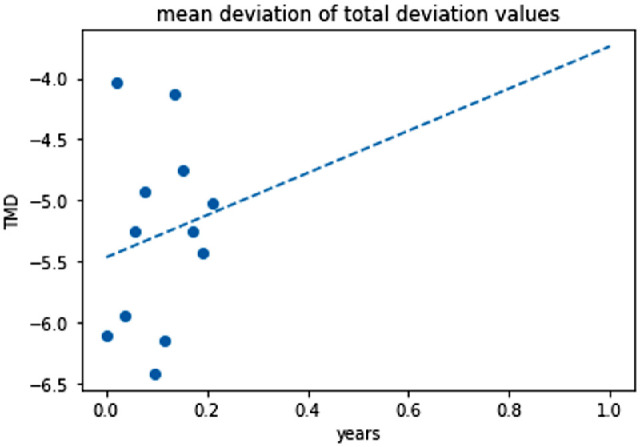
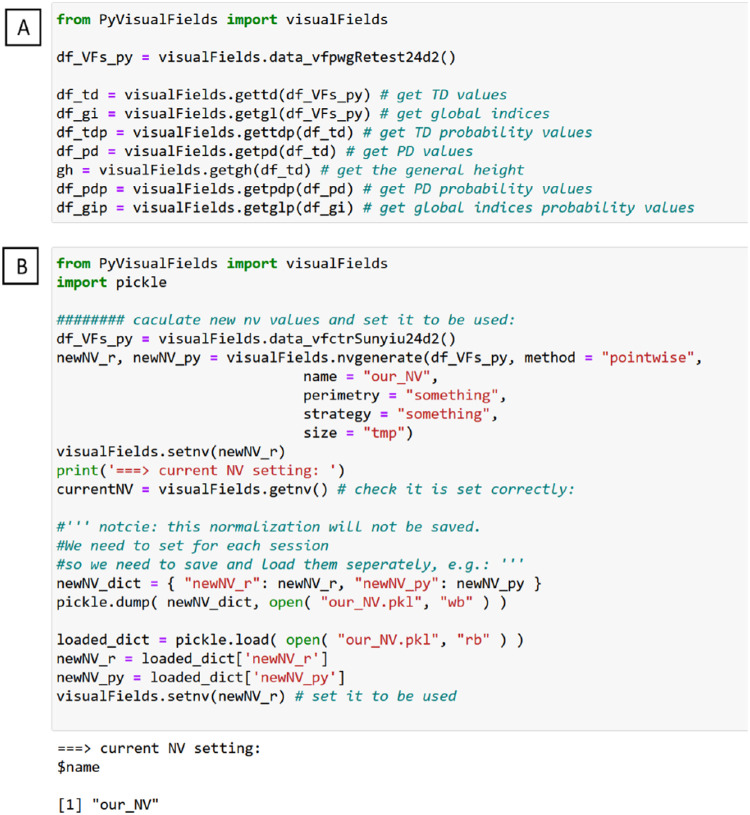
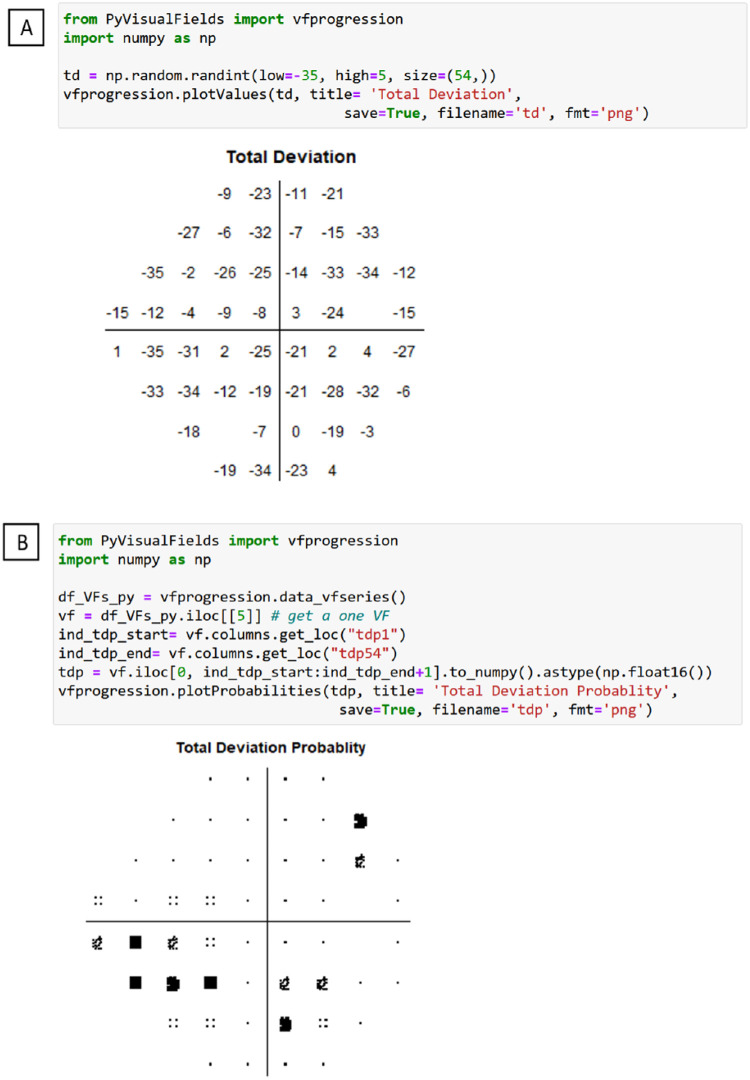
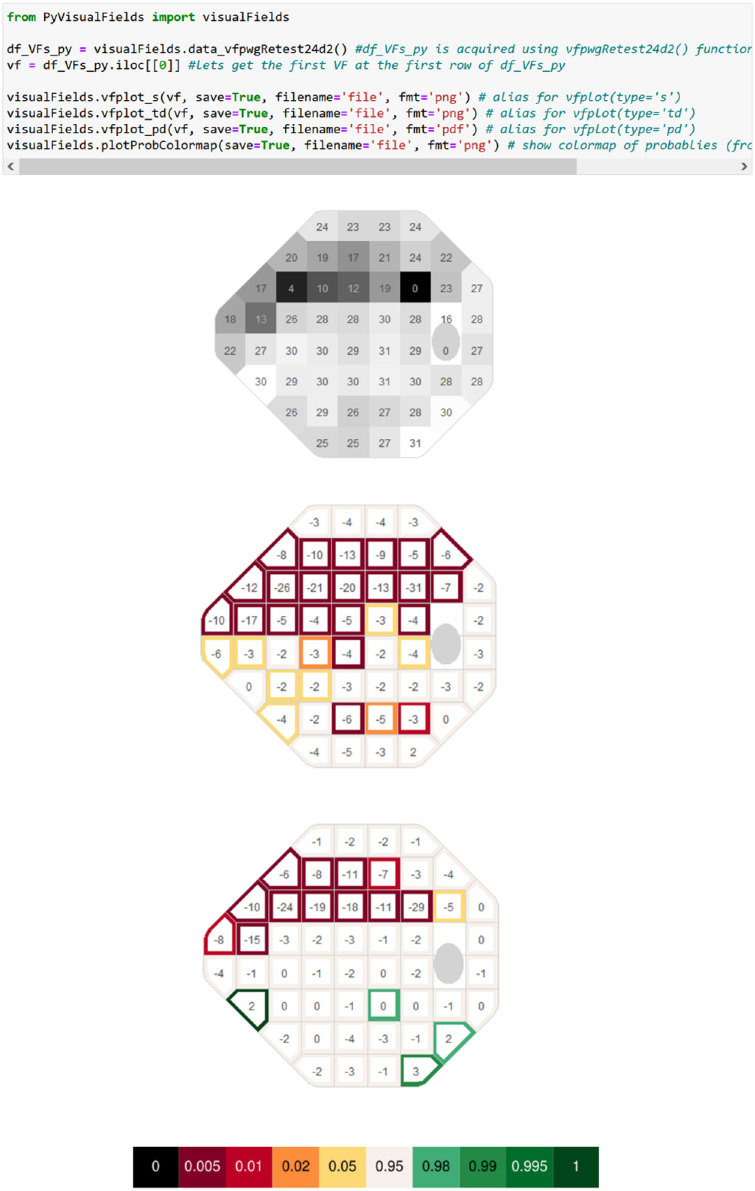
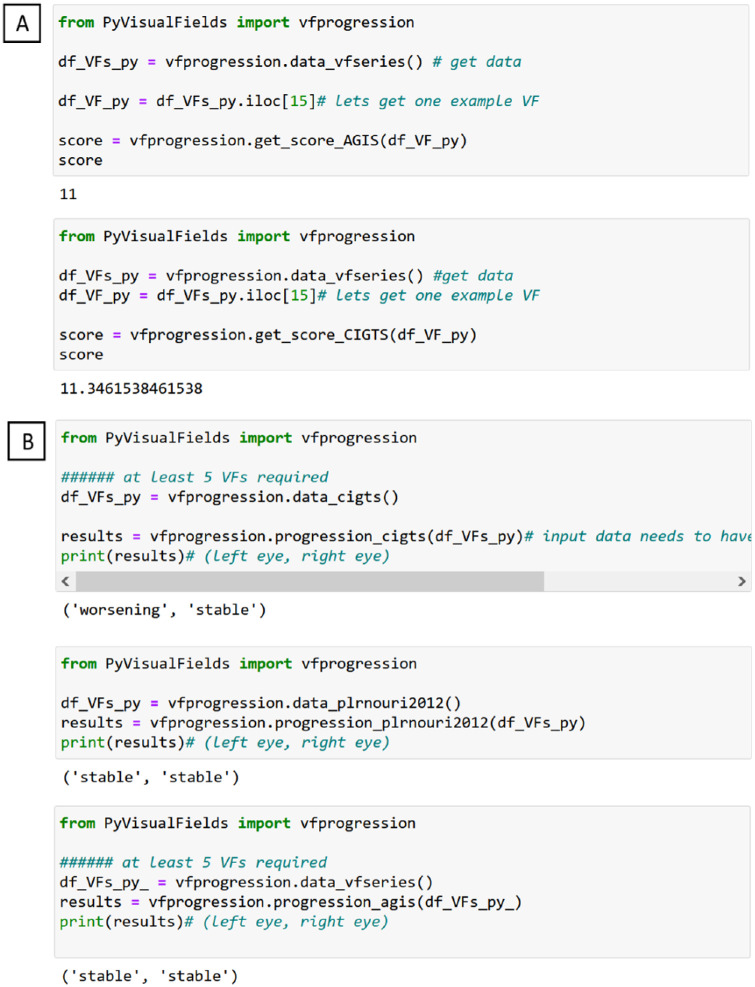
The developed Python package is available as open-source software via the GitHub repository and is ready to be installed from PyPI. Several Jupyter notebooks are prepared to demonstrate and describe the capabilities of the PyVisualFields package in the categories of data presentation, normalization and deviation analysis, plotting, scoring, and progression analysis.
We developed a Python package and demonstrated its functionality for VF analysis and facilitating ophthalmic research in VF statistical analysis, illustration, and progression prediction.
Using this software package, researchers working on VF analysis can more quickly create algorithms for clinical applications using cutting-edge AI techniques.
人工智能(AI)方法正在改变各个研究领域,并在眼科领域具有多种分析能力,特别是在视野(VF)中,用于检测或预测视力丧失的进展。虽然大多数 AI 算法是用提供了众多开源功能和算法的 Python 语言实现的,但 VF 分析中的大多数算法是用 R 语言提供的。本文介绍了 PyVisualFields,这是一个开发的软件包,旨在填补这一空白,并在 Python 语言中提供 VF 分析功能。
对于第一个版本,我们分析了 vfprogression 和 visualFields 包提供的用于 VF 分析的 R 库,以确定重叠和独特的功能。然后,我们借助 rpy2 封装库定义并翻译了此功能。除了维护之外,还确定了后续版本的里程碑,第三个版本将不再依赖于 R。
开发的 Python 包可通过 GitHub 存储库作为开源软件使用,并可通过 PyPI 进行安装。我们准备了几个 Jupyter 笔记本,以演示和描述 PyVisualFields 包在数据呈现、归一化和偏差分析、绘图、评分和进展分析等类别中的功能。
我们开发了一个 Python 包,并演示了它在 VF 分析中的功能,为 VF 统计分析、说明和进展预测中的眼科研究提供了便利。
机器翻译