Department of Information Science, Cornell University, Ithaca, NY, USA.
Department of Computer Science, Cornell University, Ithaca, NY, USA.
Sci Rep. 2023 Feb 6;13(1):2074. doi: 10.1038/s41598-023-29268-7.
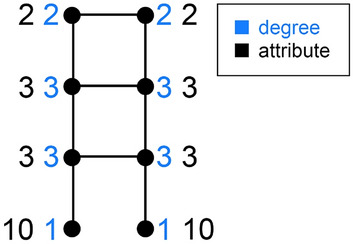
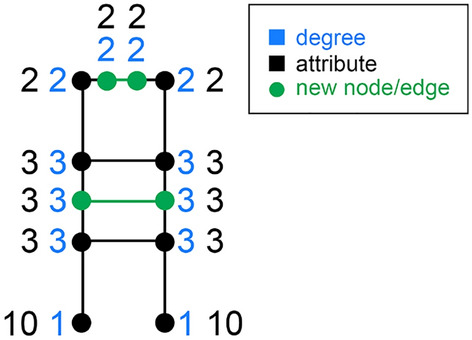
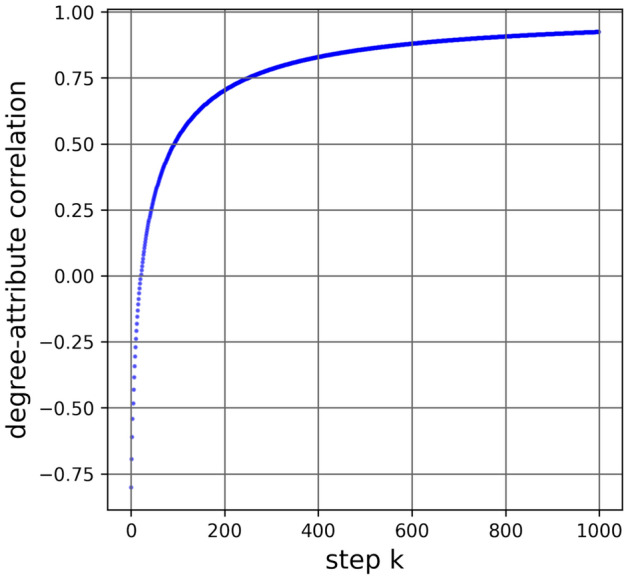
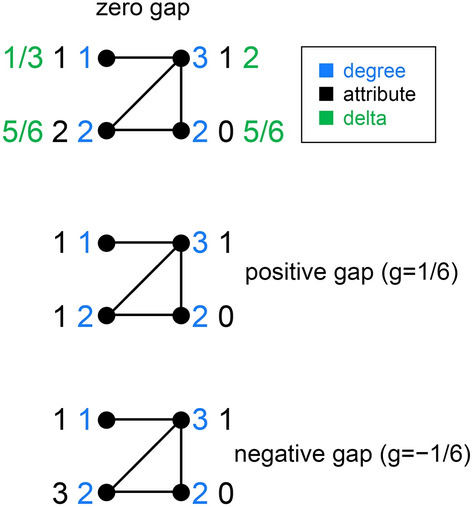
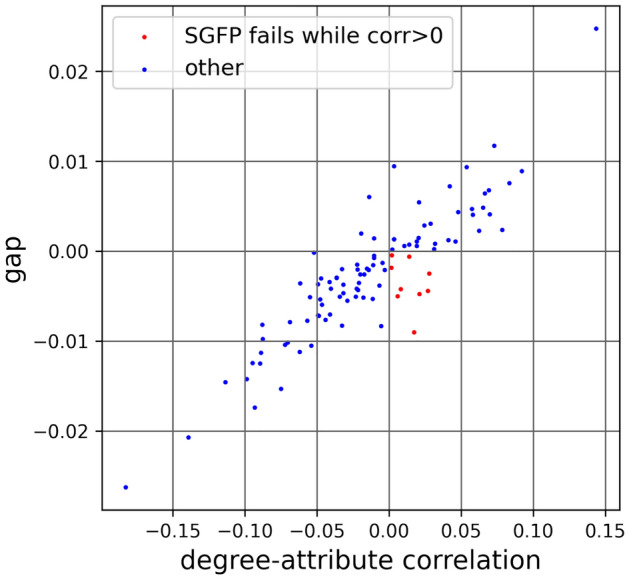
The Friendship Paradox-the principle that "your friends have more friends than you do"-is a combinatorial fact about degrees in a graph; but given that many web-based social activities are correlated with a user's degree, this fact has been taken more broadly to suggest the empirical principle that "your friends are also more active than you are." This Generalized Friendship Paradox, the notion that any attribute positively correlated with degree obeys the Friendship Paradox, has been established mathematically in a network-level version that essentially aggregates uniformly over all the edges of a network. Here we show, however, that the natural node-based version of the Generalized Friendship Paradox-which aggregates over nodes, not edges-may fail, even for degree-attribute correlations approaching 1. Whether this version holds depends not only on degree-attribute correlations, but also on the underlying network structure and thus can't be said to be a universal phenomenon. We establish both positive and negative results for this node-based version of the Generalized Friendship Paradox and consider its implications for social-network data.
友谊悖论——即“你的朋友比你拥有更多的朋友”——是关于图中度数的组合事实;但是,由于许多基于网络的社交活动与用户的度数相关,这个事实被更广泛地解释为经验法则,即“你的朋友也比你更活跃”。这种广义的友谊悖论,即任何与度数正相关的属性都服从友谊悖论的观点,已经在网络层面上以数学方式得到了证明,该观点从本质上对网络的所有边进行了统一的聚合。然而,我们在这里表明,广义友谊悖论的自然节点版本——即对节点而不是边进行聚合——可能会失败,即使是在与度数相关的属性接近 1 的情况下。这个版本是否成立不仅取决于度数-属性相关性,还取决于底层网络结构,因此不能说这是一种普遍现象。我们为这个基于节点的广义友谊悖论版本建立了正反两方面的结果,并考虑了它对社交网络数据的影响。