Faculty of Biology, Universitas Gadjah Mada, Yogyakarta, 55281, Indonesia.
Center for Tropical Biodiversity, Faculty of Biology, Universitas Gadjah Mada, Yogyakarta, 55281, Indonesia.
Global Health. 2023 Feb 6;19(1):9. doi: 10.1186/s12992-023-00906-z.
ASEAN (Association of Southeast Asian Nations) is composed of ten Southeast Asian countries bound by socio-cultural ties that promote regional peace and stability. South Asia, located in the southern subregion of Asia, includes nine countries sharing similarities in geographical and ethno-cultural factors. Chikungunya is one of the most significant problems in Southeast and South Asian countries. Much of the current chikungunya epidemic in Southeast Asia is caused by the emergence of a virus strain that originated in Africa and spread to Southeast Asia. Meanwhile, in South Asia, three confirmed lineages are in circulation. Given the positive correlation between research activity and the improvement of the clinical framework of biomedical research, this article aimed to examine the growth of chikungunya virus-related research in ASEAN and South Asian countries.
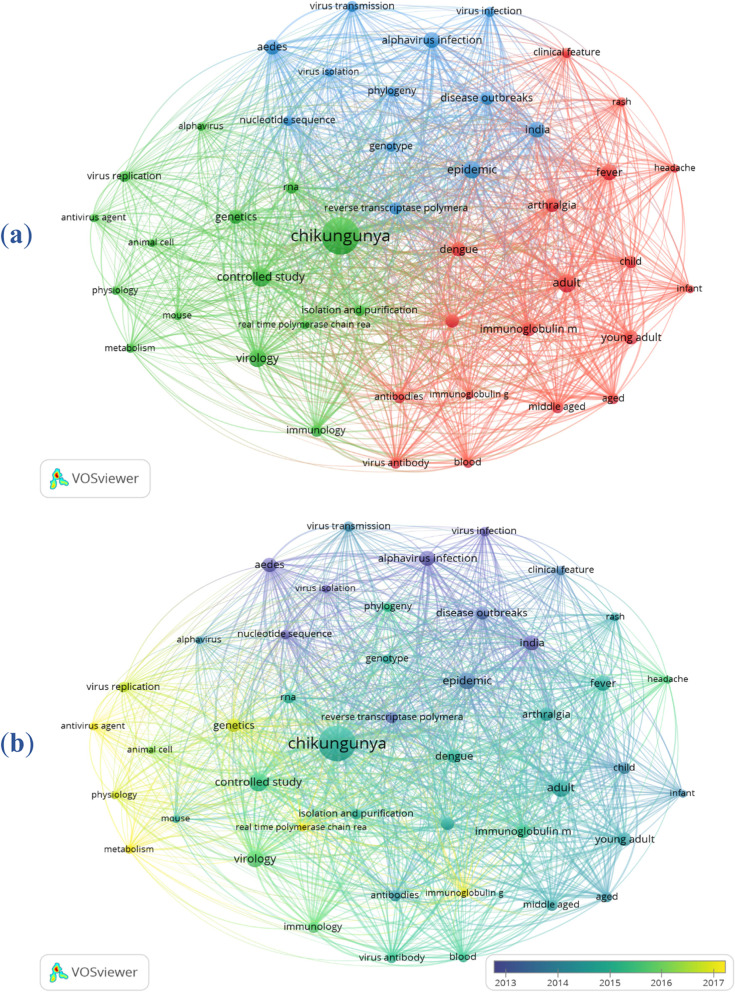
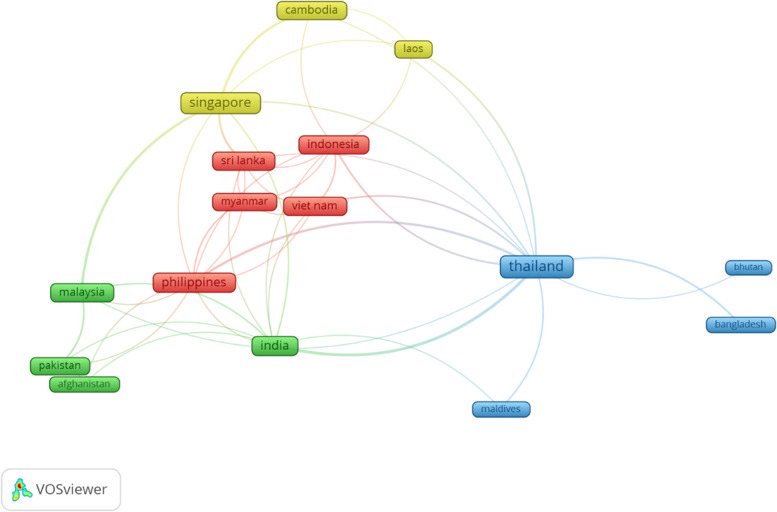
The Scopus database was used for this bibliometric analysis. The retrieved publications were subjected to a number of analyses, including those for the most prolific countries, journals, authors, institutions, and articles. Co-occurrence mapping of terms and keywords was used to determine the current state, emerging topics, and future prospects of chikungunya virus-related research. Bibliometrix and VOSviewer were used to analyze the data and visualize the collaboration network mapping.
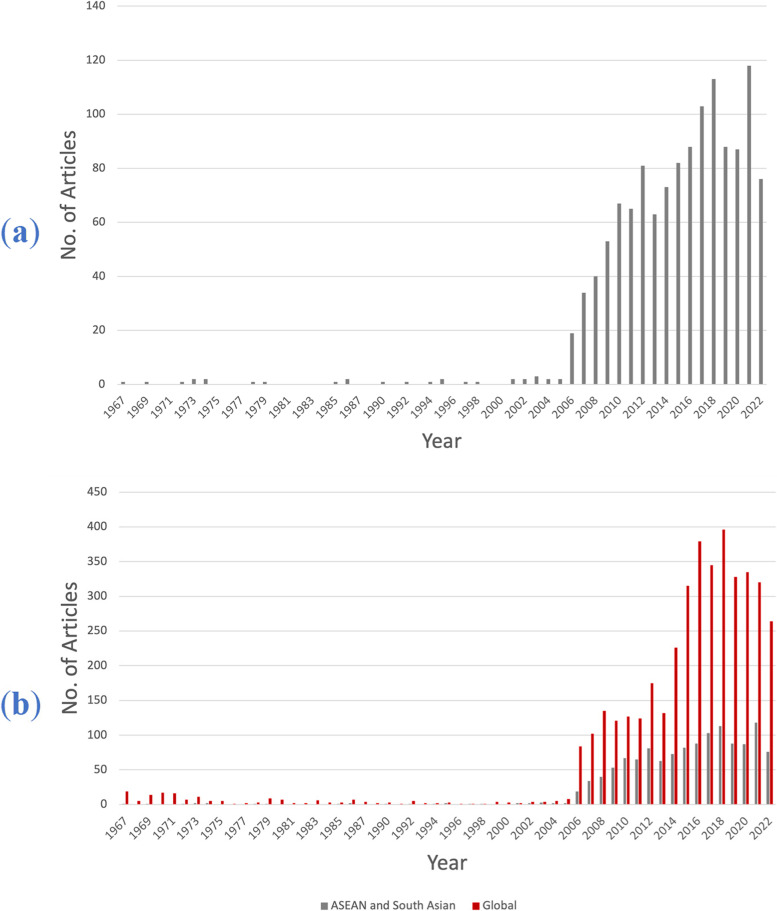
The Scopus search engine identified 1280 chikungunya-related documents published by ASEAN and South Asian countries between 1967 and 2022. According to our findings, India was the most productive country in South Asia, and Thailand was the most productive country in Southeast Asia. In the early stages of the study, researchers investigated the vectors and outbreaks of the chikungunya virus. In recent years, the development of antivirus agents has emerged as a prominent topic.
Our study is the first to present the growth of chikungunya virus-related research in ASEAN and South Asian countries from 1967 to 2022. In this study, the evaluation of the comprehensive profile of research on chikungunya can serve as a guide for future studies. In addition, a bibliometric analysis may serve as a resource for healthcare policymakers.
东盟(东南亚国家联盟)由十个东南亚国家组成,这些国家之间有着促进地区和平与稳定的社会文化联系。南亚位于亚洲的南部次区域,包括九个在地理和民族文化因素方面具有相似性的国家。基孔肯雅热是东南亚和南亚国家面临的一个重要问题。目前,东南亚大部分地区的基孔肯雅热疫情是由一种起源于非洲并传播到东南亚的病毒株引起的。与此同时,在南亚,有三种已确认的谱系在流行。鉴于研究活动与改善生物医学研究的临床框架之间存在正相关关系,本文旨在考察东盟和南亚国家与基孔肯雅热病毒相关的研究进展。
本研究采用文献计量学分析方法,利用 Scopus 数据库进行分析。对检索到的文献进行了多项分析,包括对最具影响力的国家、期刊、作者、机构和文章的分析。还使用共现分析方法对术语和关键词进行分析,以确定与基孔肯雅热病毒相关研究的现状、新兴主题和未来前景。本研究使用 Bibliometrix 和 VOSviewer 对数据进行分析,并绘制合作网络图谱。
通过 Scopus 搜索引擎共检索到 1967 年至 2022 年间东盟和南亚国家发表的 1280 篇与基孔肯雅热相关的文献。研究结果显示,在南亚,印度是最具影响力的国家,而在东南亚,泰国是最具影响力的国家。在研究的早期阶段,研究人员主要研究基孔肯雅热病毒的媒介和暴发情况。近年来,抗病毒药物的开发成为一个热门话题。
本研究首次对 1967 年至 2022 年间东盟和南亚国家与基孔肯雅热病毒相关的研究进展进行了分析。该研究对基孔肯雅热病毒相关研究的综合概况进行了评价,可为未来的研究提供参考。此外,文献计量分析还可以为医疗保健政策制定者提供资源。